What you'll learn
- What parenthesis is and how to test it by taking it out
- How to place a pair of brackets around extra information
- Using a pair of dashes, and how a dash differs from a hyphen
- Why commas for parenthesis always come in a pair
- How to choose brackets, dashes or commas and avoid ambiguity
- What relative clause, relative pronoun, modal verb and cohesion mean
Chapter by chapter
- What is parenthesis? Adding extra information to a sentence Free to try
Years 5–6 english · 1 Year 5 english · 2 Year 5 english · 3
- Brackets: adding extra information with a pair of brackets
Years 5–6 english · 1 Year 5 english · 2 Year 5 english · 3
- Dashes: adding extra information with a pair of dashes
Years 5–6 english · 1 Year 5 english · 2 Year 5 english · 3
- Commas for parenthesis, including relative clauses
Years 5–6 english · 1 Year 5 english · 2 Year 5 english · 3
- Choosing brackets, dashes or commas and avoiding ambiguity
Years 5–6 english · 1 Year 5 english · 2 Year 5 english · 3
- Grammar words: parenthesis, bracket, dash, relative pronoun, relative clause, modal verb, cohesion and ambiguity
Year 5 english · 3
- Parenthesis Express final challenge (10 questions)
What the chapters cover in the national curriculum in England:
- Years 5–6 english: Indicate grammatical and other features by: using brackets, dashes or commas to indicate parenthesis
- Year 5 english: Punctuation: brackets, dashes or commas to indicate parenthesis
- Year 5 english: Terminology: modal verb, relative pronoun, relative clause, parenthesis, bracket, dash, cohesion, ambiguity
About this adventure
Parenthesis Express is an interactive game that teaches children aged 9–11 how to use parenthesis: adding extra information to a sentence with a pair of brackets, dashes or commas. It matches the Year 5 grammar and punctuation objectives in the national curriculum for England.
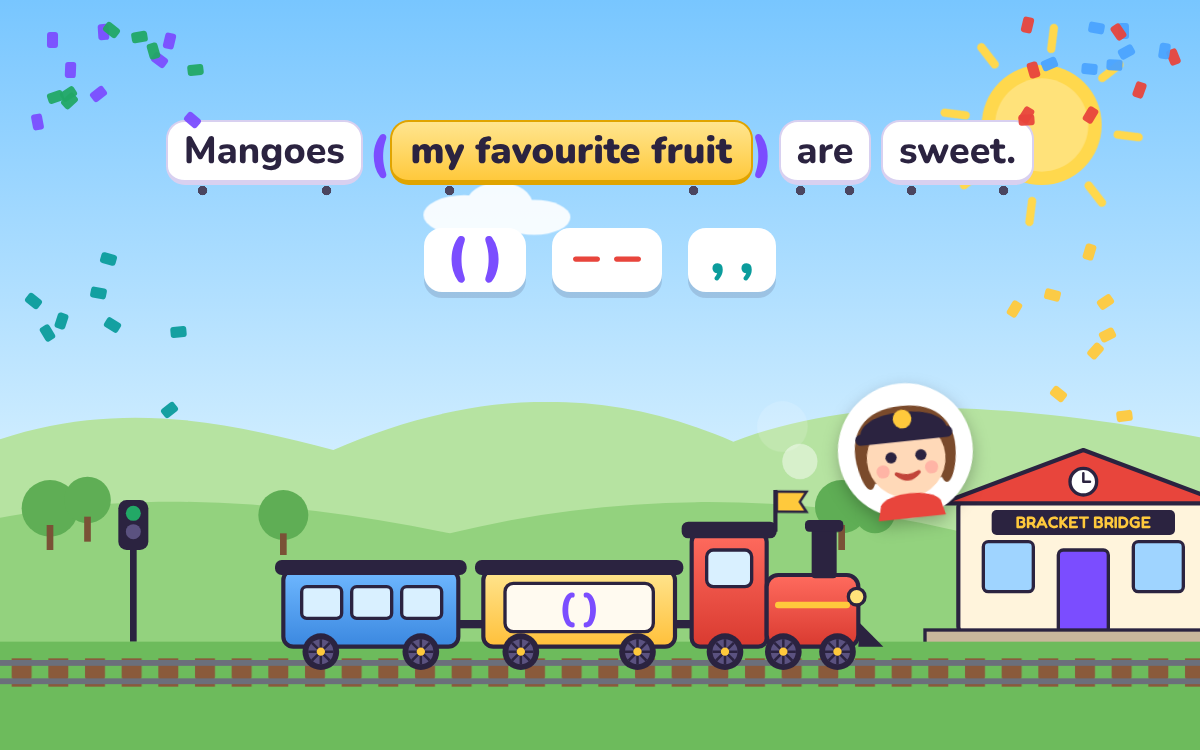
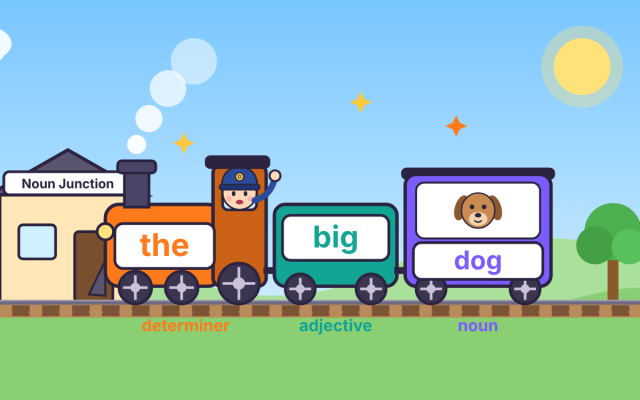
Each word is a train carriage, and the extra information rides in a golden carriage held in place by a matching pair of marks. Players lift that carriage out to check the sentence still makes sense, tap gaps to place opening and closing marks, and fix sentences missing their second mark.
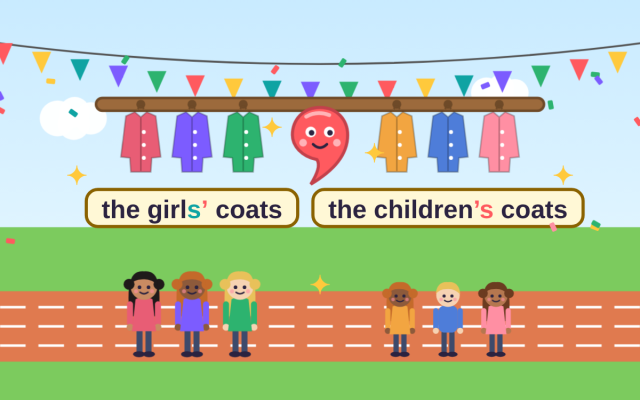
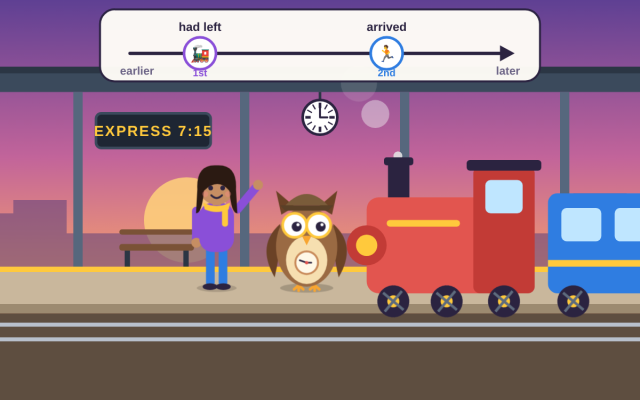
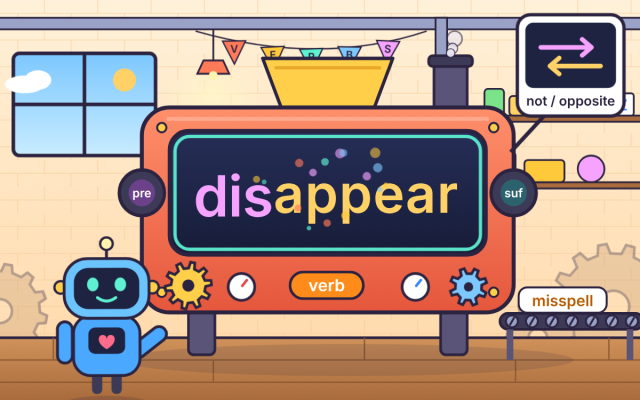
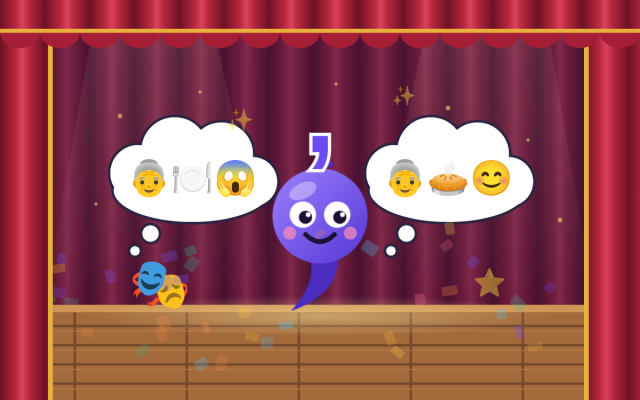
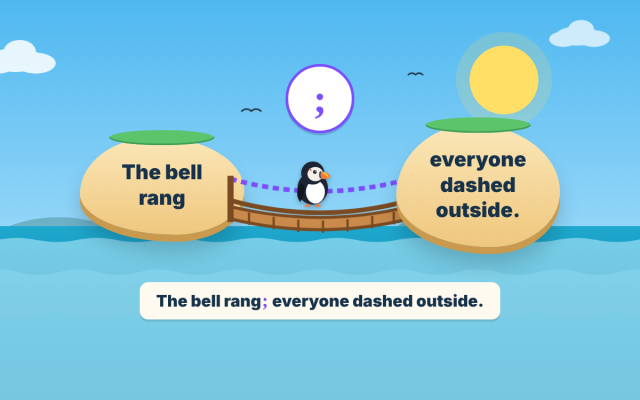
They compare calm brackets, dramatic dashes and smooth commas, tell a dash from a hyphen, and use relative clauses that start with who or which. They also see how clear punctuation removes ambiguity, write their own sentence with parenthesis and meet Year 5 grammar words such as modal verb and cohesion.
Questions and answers
What is parenthesis in simple words?
Parenthesis is a word or phrase added to a sentence to give extra information. If you take it out, the sentence still makes sense, as in: Max, my cheeky puppy, ran into the park.
When should you use brackets, dashes or commas for parenthesis?
All three can hold extra information, as long as you use a matching pair. Brackets suit quiet facts such as dates, dashes add drama, and commas keep the sentence flowing smoothly.
What is the most common mistake with parenthesis?
The most common mistake is forgetting the second mark, especially the second comma. Extra information in the middle of a sentence needs one mark just before it and one just after it.
What age is this parenthesis game for?
The game is designed for children aged 9 to 11 and follows the Year 5 grammar and punctuation curriculum in England. Older children revising for KS2 grammar tests will also find it useful practice.
What does the Parenthesis Express game include and how long does it take?
It has six chapters, an optional warm-up and a 10-question final challenge, taking about 45 minutes in total. Every line is read aloud, and children can start at any chapter and return to the map at any time.
 TapLearn