Weekly spelling lists
Most primary schools send home a weekly list, often based on a rule or pattern taught that week, such as adding "-ing" or words ending in "-tion". If the pattern isn't clear, ask the teacher. Knowing the rule makes a list much easier to learn than a set of unrelated words.
Spread practice across the week: five minutes on three or four days tends to work better than half an hour the night before. Come back to the words a week or two later as well. Spellings that are right on Friday often slip by the following month, and a quick revisit helps them last.
Look, say, cover, write, check, and how to get more from it
Many schools use this routine:
- Look at the word carefully.
- Say it aloud, sounding it out.
- Cover it up.
- Write it from memory.
- Check it, letter by letter.
It's a sound method, but it can slip into copying on autopilot. These additions make it more useful:
- Spot the tricky part. Most of a word is usually spelt the way it sounds. Ask, "Which bit could catch you out?" In "friend" it's the "ie"; in "February" it's the first "r". Underline or colour just that part.
- Say it as it's spelt. Some children remember "Wed-nes-day" or "bus-i-ness" by saying the hidden letters in a silly voice.
- Use word families. "Signal" and "signature" explain the "g" in "sign". "Medical" helps with "medicine".
- Learn the rule. "Hop" becomes "hopping" (double the last letter after a short vowel), but "hope" becomes "hoping" (drop the "e"). One rule covers many words.
- Write it in a sentence. Using the word in a sentence they've made up shows they can spell it in real writing, not just in a list.
- Make a memory hook for stubborn words: "necessary" has one collar and two sleeves (one "c", two "s"s).
The statutory word lists for Years 3 to 6
The national curriculum includes two lists of words children are expected to learn to spell: one for Years 3 and 4, and one for Years 5 and 6. They include words such as "believe", "different" and "February" (Years 3 and 4) and "accommodate", "necessary" and "rhythm" (Years 5 and 6). Before that, children in Years 1 and 2 learn "common exception words" such as "said", "because" and "people".
Both lists, with the spelling rules for each year, are in English appendix 1: spelling, part of the national curriculum on GOV.UK. Schools usually spread the words across the two years, so there's no need to drill a whole list at once. A few words a week, used in sentences, is enough.
Homophones
Homophones are words that sound the same but have different spellings and meanings: "there", "their" and "they're"; "to", "too" and "two"; "here" and "hear". They start in Year 2 and come up throughout Key Stage 2.
Sounding out can't help here, so your child needs to link each spelling to its meaning. Memory hooks work well: "hear" has an "ear" in it, and "here" is hiding in "there" and "where", which are all about places. A short sentence for each ("Their dog is over there") helps them choose the right one.
Right in the test, wrong in their writing?
This is very common. In a spelling test, all your child's attention is on spelling. In a story, they're also juggling ideas, handwriting and punctuation, so spellings slip. It doesn't mean the practice was wasted. Encourage them to reread their writing afterwards and check one or two words they know are tricky for them. Keep praise for their ideas separate from spelling corrections, so they keep wanting to write.
If spelling seems much harder for your child than for others, or isn't moving on, talk to the class teacher.
Spelling games on TapLearn
TapLearn has spelling games for each year group, following the rules and word lists in the national curriculum. Flip's quick review brings back words your child met earlier, which is designed for the "knew it on Friday, forgot it by Monday" problem.
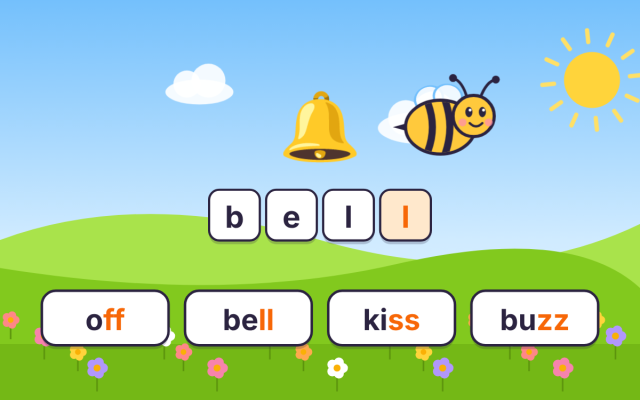
Year 1 Spelling Rules: A Garden Adventure with Bea
Learn Year 1 spelling rules, from ff, ll, ss, zz and ck to –s, –es, –ing, –ed and un–, by building words with…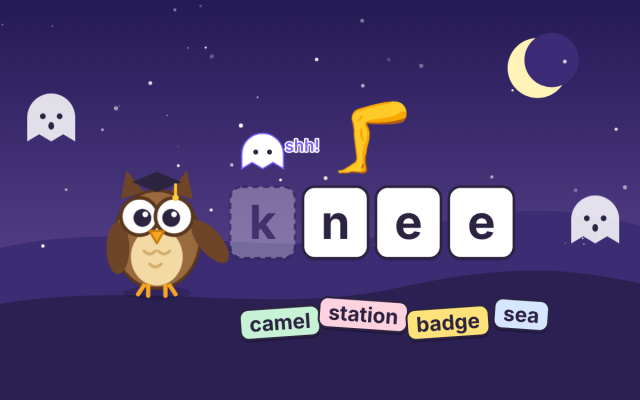
Year 2 Spelling Rules: Explore Spelling Village with Quill
Learn the Year 2 spelling rules, from silent letters to -tion and homophones, by sorting, building and fixing…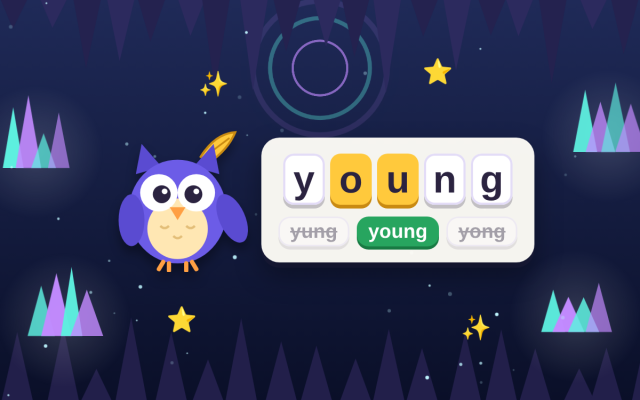
Year 3 Spelling Words: A Spellwood Quest with Quill
Learn Year 3 spelling words and why each is spelt that way by tapping letters, building words and typing them…
Year 3 and 4 Spelling Words: A Space Mission with Nova
Learn the Year 3 and 4 spelling words with a memory trick for each, then fly a rocket round nine planets of w…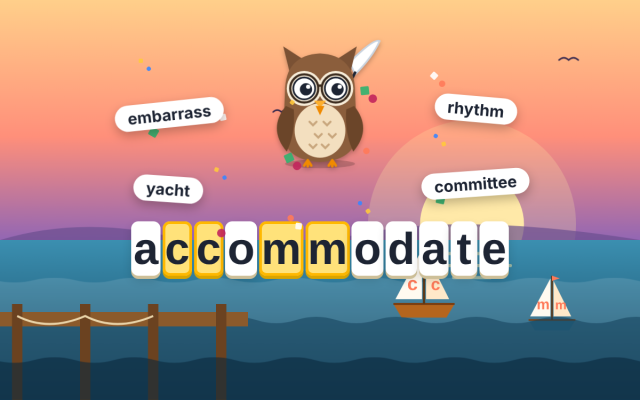
Year 5 and 6 Spelling Words: Sail the Spelling Isles
Learn the 100 Year 5 and 6 spelling words using word roots, word origins and memory tricks, then type them in…
 TapLearn