What you'll learn
- What a modal verb is and how it helps the main verb
- How to find the modal verb, even at the start of a question
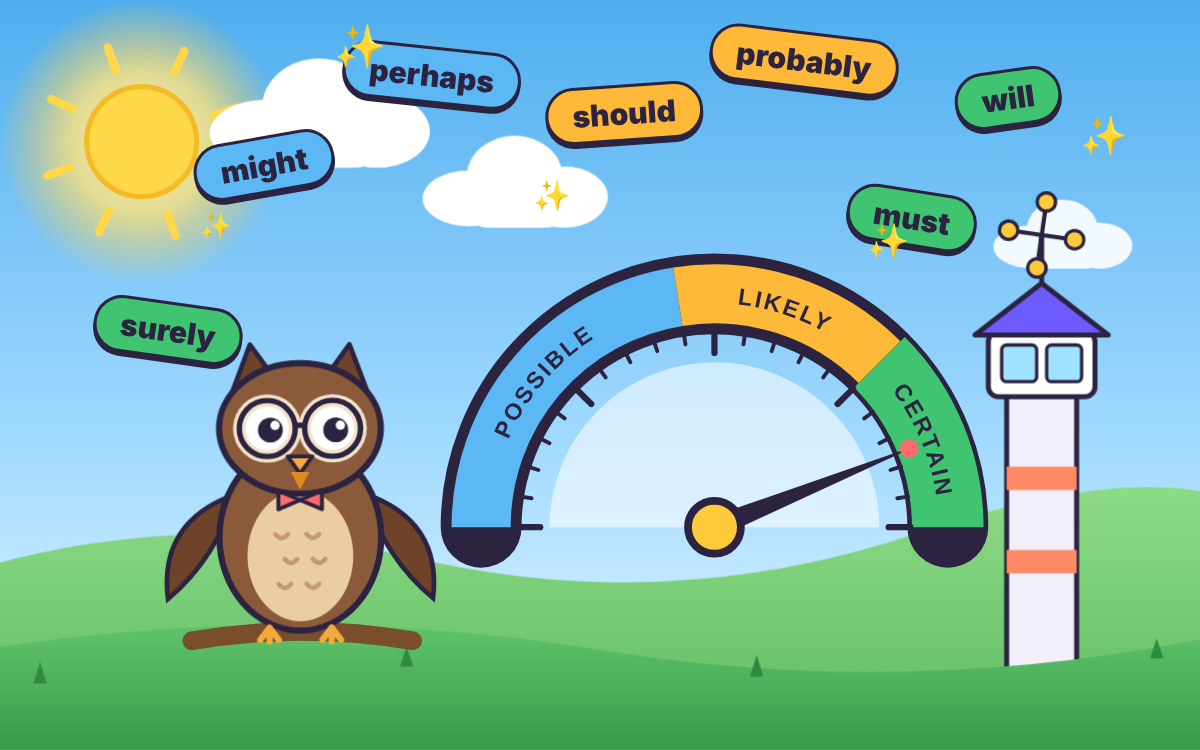
- How to order might, should, will and must from possible to certain
- What adverbs of possibility are, such as perhaps, probably and surely
- How to combine modal verbs and adverbs, as in 'will probably'
- How to choose words that match how strong the evidence is
Chapter by chapter
- What is a modal verb? Helper verbs that show how likely Free to try
Year 5 english · 1 Year 5 english · 2 Years 5–6 english · 3
- Might, should, will, must: ordering modal verbs by possibility
Year 5 english · 2 Years 5–6 english · 3 Year 5 english · 1
- Adverbs of possibility: perhaps, maybe, probably, surely
Year 5 english · 2 Years 5–6 english · 3
- Modal verbs and adverbs together: showing degrees of possibility
Years 5–6 english · 3 Year 5 english · 2
- Forecast Challenge: modal verbs and adverbs of possibility quiz (10 questions)
What the chapters cover in the national curriculum in England:
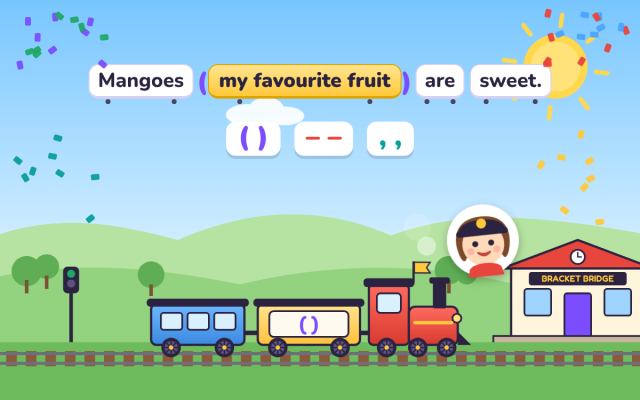
- Year 5 english: Terminology: modal verb, relative pronoun, relative clause, parenthesis, bracket, dash, cohesion, ambiguity
- Year 5 english: Sentence: indicating degrees of possibility using adverbs or modal verbs
- Years 5–6 english: Develop their understanding of the concepts set out in English appendix 2 by: using modal verbs or adverbs to indicate degrees of possibility
About this adventure
Modal Verbs and Possibility is an interactive grammar game that teaches children aged 9–11 how modal verbs and adverbs show how likely something is. It follows the Year 5 English grammar curriculum for England.
Players help Professor Hoot, an owl forecaster, run the Maybe-Meter, a gauge whose needle swings between possible, likely and certain as they choose words. A modal verb, such as might, should, will or must, is a helper verb placed before the main verb. Adverbs of possibility, such as perhaps and surely, do a similar job.
Children tap words in sentences, sort words into zones, read clues in the sky, solve a biscuit mystery and type their own answers, with spoken narration and captions throughout. A ten-question Forecast Challenge at the end checks what they have learned.
Questions and answers
What is a modal verb, in simple words?
A modal verb is a helper verb that sits in front of the main verb and changes its meaning, often to show how likely something is. In 'It might rain', rain is the main verb and might is the modal verb.
Which modal verbs show possibility and which show certainty?
Might, may and could show that something is possible. Should shows that it is likely but not certain. Will and must show certainty, for example 'It must be raining' when everyone outside has an umbrella up.
What are adverbs of possibility?
Adverbs of possibility are words such as perhaps, maybe, possibly, probably, surely, certainly and definitely that show how likely something is. They can start a sentence, as in 'Perhaps it will snow', or sit near the verb, as in 'It will probably snow'.
What age is this modal verbs game for?
The game is designed for children aged 9 to 11. It follows the Year 5 English grammar objectives for England, where modal verbs and adverbs of possibility are introduced, and it also works well as revision in Year 6.
What does the game include and how long does it take?
It has four guided chapters and a ten-question Forecast Challenge, and takes about 40 minutes to play through. Children tap words in sentences, sort words onto a gauge, type missing words and write their own forecast.

 TapLearn