Volume of Cubes and Cuboids: Crate-Packing with Pax
Learn to find the volume of cubes and cuboids in cm³ and m³ by building crates from cubes, multiplying length × width × height and splitting L-shapes.
Online game, chapter 1 free · Year 6 (KS2) · ages 9–11 · national curriculum in England · no adverts · plays on a phone, tablet or computer · no sign-up to start.
An online maths game for Year 6 (KS2). It covers the national curriculum in England, Year 6 maths: “Calculate, estimate and compare volume of cubes and cuboids using standard units, including cubic centimetres (cm³) and cubic metres (m³), and extending to other units”, and 1 more statement listed under the chapters.
5 short chapters, about 35 minutes in all. Children can stop after any chapter.
Start playing for free. Plays in the browser on phones, tablets and computers: no app, no adverts.
Free for teachers: every chapter on the whiteboard with a free teacher account.
Last updated · Checked against the national curriculum in England by the TapLearn team
What you'll learn
Volume is the space a 3-D shape takes up
Count cubes to find volume, including hidden ones
Use length × width × height to calculate cuboid volume
Choose sensible cubic units: mm³, cm³, m³ or km³
Estimate and compare volumes by rounding and calculating
Split L-shapes into cuboids and add their volumes
Chapter by chapter
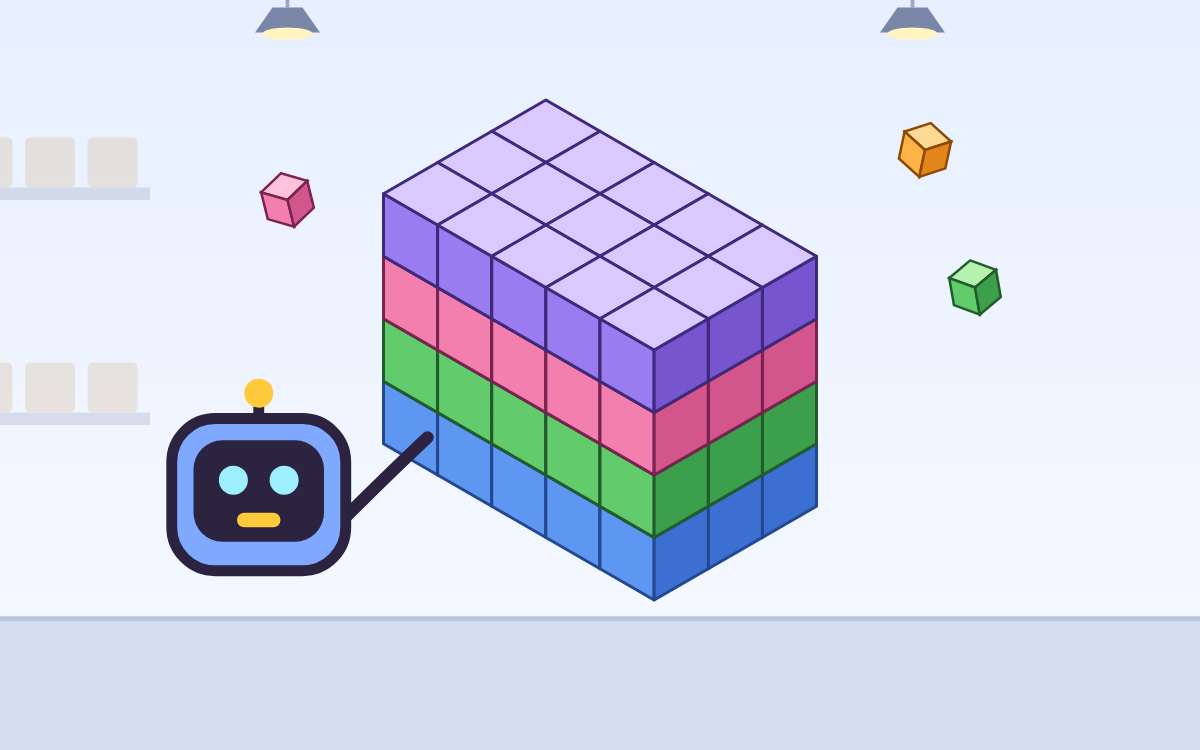
What volume is: counting cubes in cm³Start playing for free
Learn that volume is the space a shape takes up, measured in cubic centimetres (cm³), by building with 1 cm cubes, using X-ray to find hidden cubes and counting layer by layer.
Year 6 maths · 1
Cuboid volume: length × width × height
Discover why a cuboid's volume is length × width × height by stacking layers of cubes, then use the formula to calculate the volume of cuboids and cubes, multiplying in any order.
Year 6 maths · 1Year 6 maths · 2
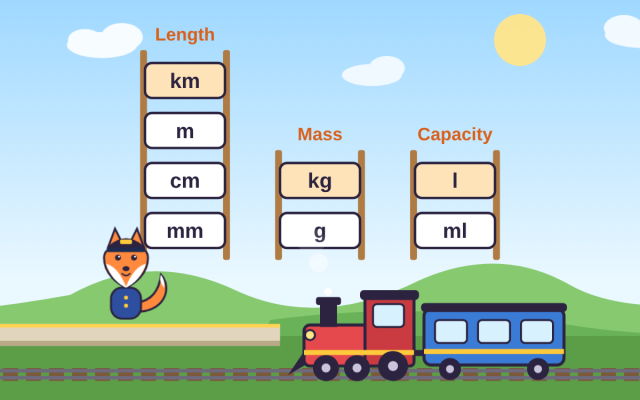
Cubic units: mm³, cm³, m³ and km³
Meet cubic millimetres, centimetres, metres and kilometres, see why one cubic metre holds a million cubic centimetres, choose sensible units for real objects and calculate volumes in m³.
Year 6 maths · 1
Estimating and comparing volumes
Compare cuboid volumes by calculating instead of judging by height, build different cuboids with the same volume, and estimate the volume of a cereal box and a fish tank by rounding first.
Year 6 maths · 1
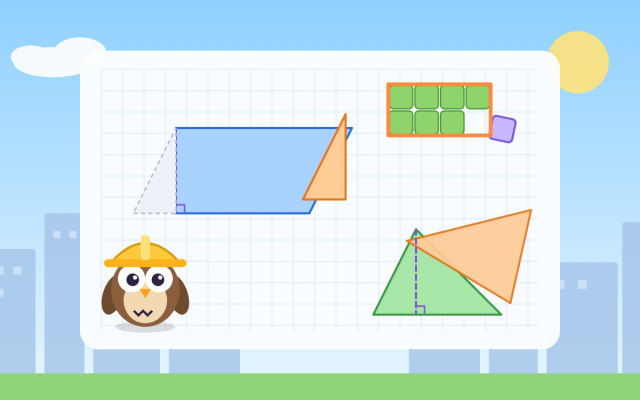
When the volume formula works, and L-shapes
Recognise when length × width × height can be used, split L-shaped blocks into two cuboids and add their volumes, and find a stone's volume from rising water (compound shapes).
What the chapters cover in the national curriculum in England:
Year 6 maths: Calculate, estimate and compare volume of cubes and cuboids using standard units, including cubic centimetres (cm³) and cubic metres (m³), and extending to other units
Year 6 maths: Recognise when it is possible to use formulae for area and volume of shapes
About this adventure
Volume of Cubes and Cuboids is an interactive maths game that teaches children aged 9–11 how to calculate, estimate and compare the volume of cubes and cuboids, matching Year 6 maths in England.
At Cube Crate Company, players help Pax the packing robot measure crates before they ship. They build shapes from 1 cm cubes, switch on X-ray to find hidden cubes, and stack layers to discover why volume = length × width × height. They then type their own answers for cuboids, cubes, skips and classrooms.
Along the way they meet cubic millimetres, centimetres, metres and kilometres, see that one cubic metre holds a million cubic centimetres, and learn when the formula works. They split L-shaped blocks into cuboids, round messy measurements to estimate, and find the volume of a stone from rising water, just as Archimedes is said to have done.
Questions and answers
How do you find the volume of a cuboid?
Multiply its length, width and height: volume = length × width × height. A box 5 cm long, 3 cm wide and 2 cm tall has a volume of 5 × 3 × 2 = 30 cm³, and you can multiply in any order.
Why is volume measured in cm³ instead of cm²?
Volume has three dimensions, length, width and height, so it is counted in cubes and written in cubic units such as cm³. Squared units like cm² are for area, which is flat and only has two dimensions.
How do you find the volume of an L-shaped block?
Split the L-shape into two cuboids, find each volume with length × width × height, then add them together. Using the outside measurements as if it were one big box gives an answer that is too large.
What age is this volume game for?
It is written for children aged 9 to 11 and matches Year 6 maths in England, where pupils calculate, estimate and compare the volume of cubes and cuboids. Confident Year 5 pupils can enjoy the counting cubes chapter too.
What does the volume game include, and how long does it take?
It has five hands-on chapters, from counting cubes to cubic units, estimating and L-shapes, plus a 10-question Volume Master Challenge. Playing everything takes about 35 minutes, and each chapter can be played on its own.
We count visits to make TapLearn better.We use one cookie, only on this site, to see how families find and use it. No adverts, and nothing is shared.One cookie, only on this site. No adverts.How we measure

 TapLearn