Parts of a Circle: Fix Wheels and Share Pizzas with Cog
Learn the parts of a circle and why the diameter is twice the radius by fixing a bike wheel, cutting fair pizza slices and drawing with compasses.
Online game, chapter 1 free · Year 6 (KS2) · ages 9–11 · national curriculum in England · no adverts · plays on a phone, tablet or computer · no sign-up to start.
An online maths game for Year 6 (KS2). It covers the national curriculum in England, Year 6 maths: “Illustrate and name parts of circles, including radius, diameter and circumference and know that the diameter is twice the radius”.
5 short chapters, about 30 minutes in all. Children can stop after any chapter.
Start playing for free. Plays in the browser on phones, tablets and computers: no app, no adverts.
Free for teachers: every chapter on the whiteboard with a free teacher account.
Last updated · Checked against the national curriculum in England by the TapLearn team
What you'll learn
The centre is the same distance from every point on the edge
A radius goes from the centre to the edge
A diameter goes edge to edge through the centre
The circumference is the distance all the way round
The diameter is twice the radius, so the radius is half
How to set compasses to the radius to draw a circle
Chapter by chapter
Find the centre and draw a radiusStart playing for free
Learn that the centre is the same distance from every point on the edge and that a radius joins the centre to the edge, by fitting a hub and spokes into a bike wheel.
Year 6 maths · 1
Spot and draw a diameter
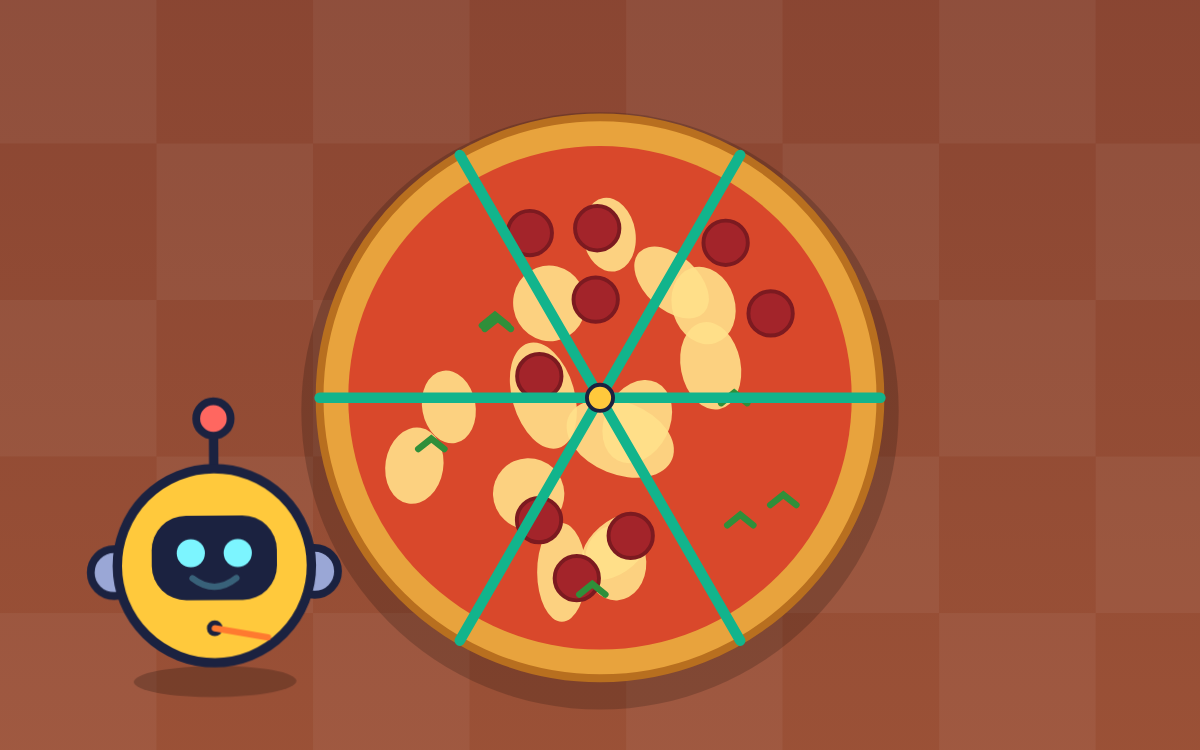
Discover that a diameter goes from edge to edge through the centre, is made of two radii and is the longest line across, by cutting a pizza into fair halves and six equal slices.
Year 6 maths · 1
The circumference: the distance round
Find out that the circumference is the distance once around a circle by tracing round a pond and rolling a wheel one full turn, then see it is just over three diameters long.
Year 6 maths · 1
The diameter is twice the radius
Explore how the diameter is always double the radius by resizing a circle, then double and halve to find missing radii and diameters, including decimals and word problems such as coins in a box.
Year 6 maths · 1
Draw circles with compasses and label them
Learn to draw a circle of a given radius or diameter by setting the gap of a pair of compasses to the radius, then label the centre, radius, diameter and circumference.
What the chapters cover in the national curriculum in England:
Year 6 maths: Illustrate and name parts of circles, including radius, diameter and circumference and know that the diameter is twice the radius
About this adventure
Parts of a Circle is an interactive maths game that teaches children aged 9 to 11 to name and draw the centre, radius, diameter and circumference of a circle, and to use the fact that the diameter is twice the radius.
Guided by Cog, a round robot, children drag a hub to the centre of a wheel and add spokes to see that every radius is the same length. They cut a pizza into fair halves to discover that a diameter must pass through the centre, then roll a wheel along a road to unroll its circumference, the distance all the way round.
Later they resize a circle to see the diameter is always double the radius, work out missing lengths by typing answers, and set a pair of compasses to the right radius to draw circles of a given size.
Questions and answers
What are the parts of a circle, in simple words?
The main parts are the centre, the radius, the diameter and the circumference. The centre is the middle point, a radius goes from the centre to the edge, a diameter goes across through the centre, and the circumference is the distance around the edge.
What is the difference between the radius and the diameter?
The radius goes from the centre of a circle to its edge, while the diameter goes all the way across through the centre. A diameter is made of two radii in a straight line, so it is always twice as long as the radius.
How do you find the radius if you know the diameter?
Halve the diameter to find the radius. For example, a circle with a diameter of 18 cm has a radius of 9 cm. To go the other way, double the radius to find the diameter.
What age is this circles game for?
The game is written for children aged 9 to 11, and matches the Year 6 maths curriculum in England on naming the parts of a circle. Younger confident learners and older children revising circles can enjoy it too.
What does the Parts of a Circle game include and how long does it take?
It has five chapters and a 10-question Circle Champion quiz, taking about 30 minutes in total. Children drag, draw, cut and type answers, with spoken instructions, hints and a quick refresher on doubling and halving.
We count visits to make TapLearn better.We use one cookie, only on this site, to see how families find and use it. No adverts, and nothing is shared.One cookie, only on this site. No adverts.How we measure

 TapLearn