Column Addition and Subtraction for Year 5: Starship Sums Mission
Learn column addition and subtraction with 5- and 6-digit numbers, then solve exchanging and multi-step puzzles aboard the Starship Sums.
Online game, chapter 1 free · Year 5 (KS2) · ages 8–11 · national curriculum in England · no adverts · plays on a phone, tablet or computer · no sign-up to start.
An online maths game for Year 5 (KS2). It covers the national curriculum in England, Year 5 maths: “Add and subtract whole numbers with more than 4 digits, including using formal written methods (columnar addition and subtraction)”, and 1 more statement listed under the chapters.
6 short chapters, about 50 minutes in all. Children can stop after any chapter.
Start playing for free. Plays in the browser on phones, tablets and computers: no app, no adverts.
Methods taught, by the names schools use: column method, column addition, carrying, column subtraction, borrowing.
Free for teachers: every chapter on the whiteboard with a free teacher account.
Last updated · Checked against the national curriculum in England by the TapLearn team
What you'll learn
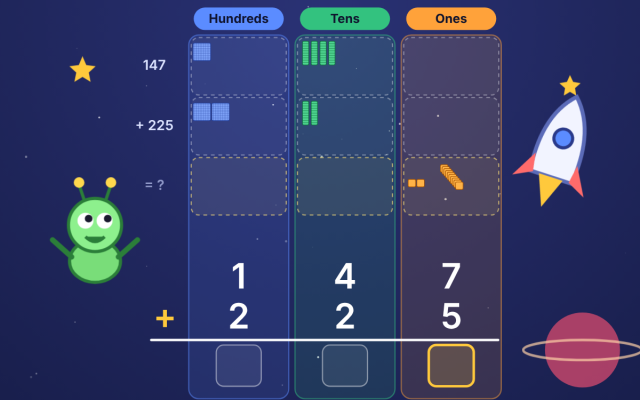
Line up digits by place value for numbers with more than four digits
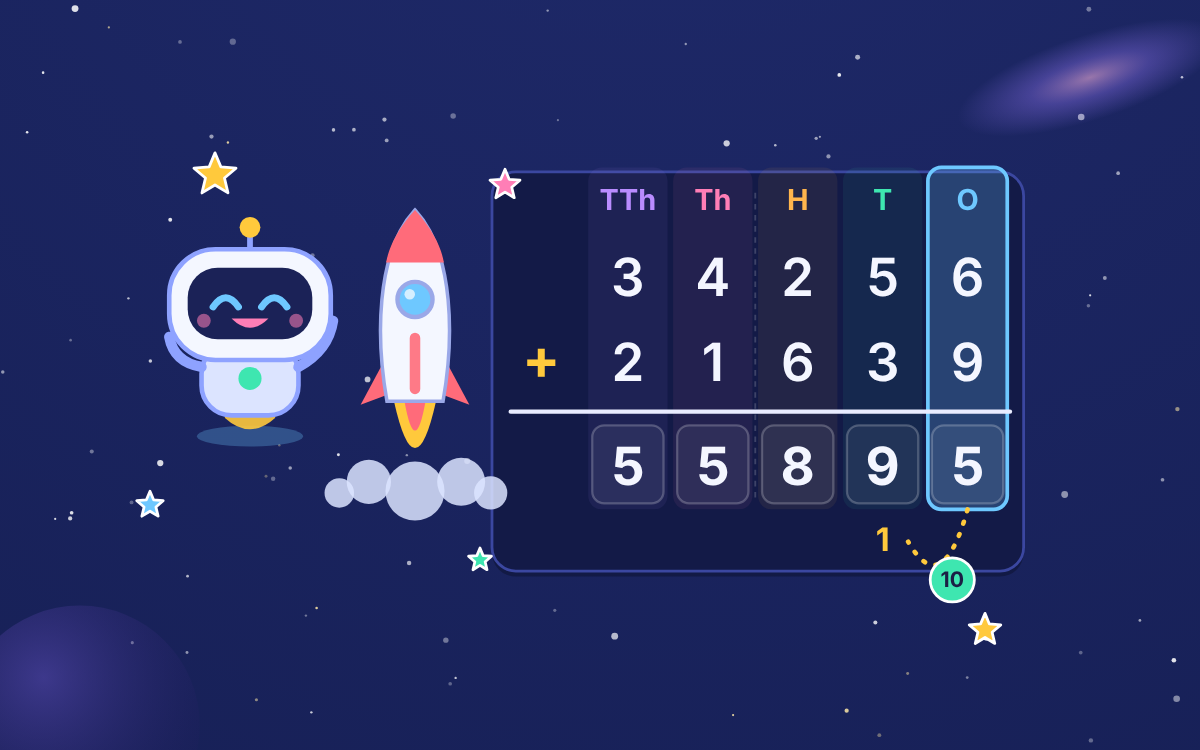
Add in columns, exchanging ten for one into the next column
Subtract in columns, exchanging when the top digit is too small
Exchange across zeros, knowing each zero becomes 9
Check a subtraction using the inverse operation, addition
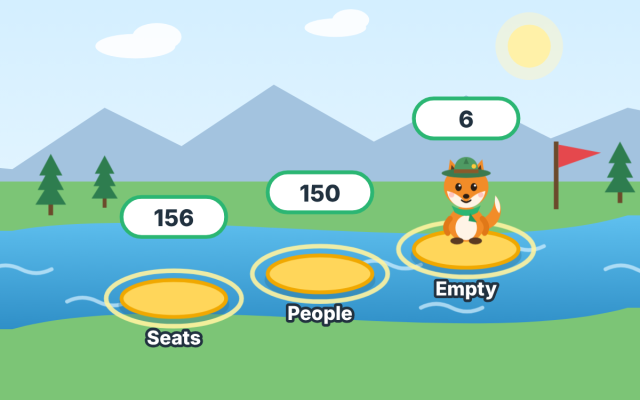
Use bar models to choose addition or subtraction in multi-step problems
Chapter by chapter
Column addition with 5- and 6-digit numbers, exchanging ten for oneStart playing for free
What the chapters cover in the national curriculum in England:
Year 5 maths: Add and subtract whole numbers with more than 4 digits, including using formal written methods (columnar addition and subtraction)
Year 5 maths: Solve addition and subtraction multi-step problems in contexts, deciding which operations and methods to use and why
About this adventure
Starship Sums is an interactive game that teaches children aged 8–11 column addition and subtraction with numbers of more than four digits, following the Year 5 national curriculum.
Orbit, a robot co-pilot, guides players as they line up digits by place value, start with the ones and exchange ten for one when a column makes 10 or more. In subtraction they exchange from the next column when the top digit is too small. This includes exchanging across zeros, where each zero becomes 9. Players check answers with the inverse operation and spot the mistake a muddled robot made.
Later chapters use bar models to decide whether to add or subtract, sort sums into mental or written methods, and plan two-step problems with big numbers. Animated place value counters, spoken narration and hints for common mistakes support every step.
Questions and answers
How do you do column addition with big numbers?
Write the numbers so ones sit under ones and tens under tens, then add each column starting with the ones. If a column makes 10 or more, write the ones digit and exchange the ten into the next column on the left.
How do you subtract across zeros in column subtraction?
When a zero has nothing to give, move left to the first digit that isn't zero and exchange from there. That digit goes down by one, each zero in between becomes 9, and your column gets an extra ten. So 60,000 − 23,475 = 36,525.
How do you know whether to add or subtract in a word problem?
Think about what is missing, not just the key words. Draw a bar model: if the whole is missing, add the parts; if a part or the difference between two amounts is missing, subtract. Words like 'more' can appear in either kind of problem.
What age is this column addition and subtraction game for?
It is aimed at Year 5 (ages 9–10) and suits children aged 8–11 who already know column methods for numbers up to four digits. An optional warm-up recaps place value and exchanging before the bigger numbers begin.
What does the game include and how long does it take?
There are six chapters, an optional place value warm-up and a 10-question final challenge, which take about 50 minutes altogether. Children can play the chapters in any order, and each one has a spoken introduction, guided examples and practice where they type their own answers.
We count visits to make TapLearn better.We use one cookie, only on this site, to see how families find and use it. No adverts, and nothing is shared.One cookie, only on this site. No adverts.How we measure


 TapLearn