Learn to solve money word problems: add prices, find how much more and work out change while helping Pip the puffin run the stalls on a seaside pier.
Online game, chapter 1 free · Year 2 (KS1) · ages 6–8 · national curriculum in England · no adverts · plays on a phone, tablet or computer · no sign-up to start.
An online maths game for Year 2 (KS1). It covers the national curriculum in England, Year 2 maths: “Solve simple problems in a practical context involving addition and subtraction of money of the same unit, including giving change”.
5 short chapters, about 40 minutes in all. Children can stop after any chapter.
Start playing for free. Plays in the browser on phones, tablets and computers: no app, no adverts.
Free for teachers: every chapter on the whiteboard with a free teacher account.
Last updated · Checked against the national curriculum in England by the TapLearn team
What you'll learn
Add two prices in pence or in pounds to find the total
Write money correctly with £ in front or p after, never both
Find how much more or less one price is by counting on
Work out change by counting on from the price to the money paid
Solve two-step problems: find the total first, then the change
Spot clue words that say whether to add or find the difference
Chapter by chapter
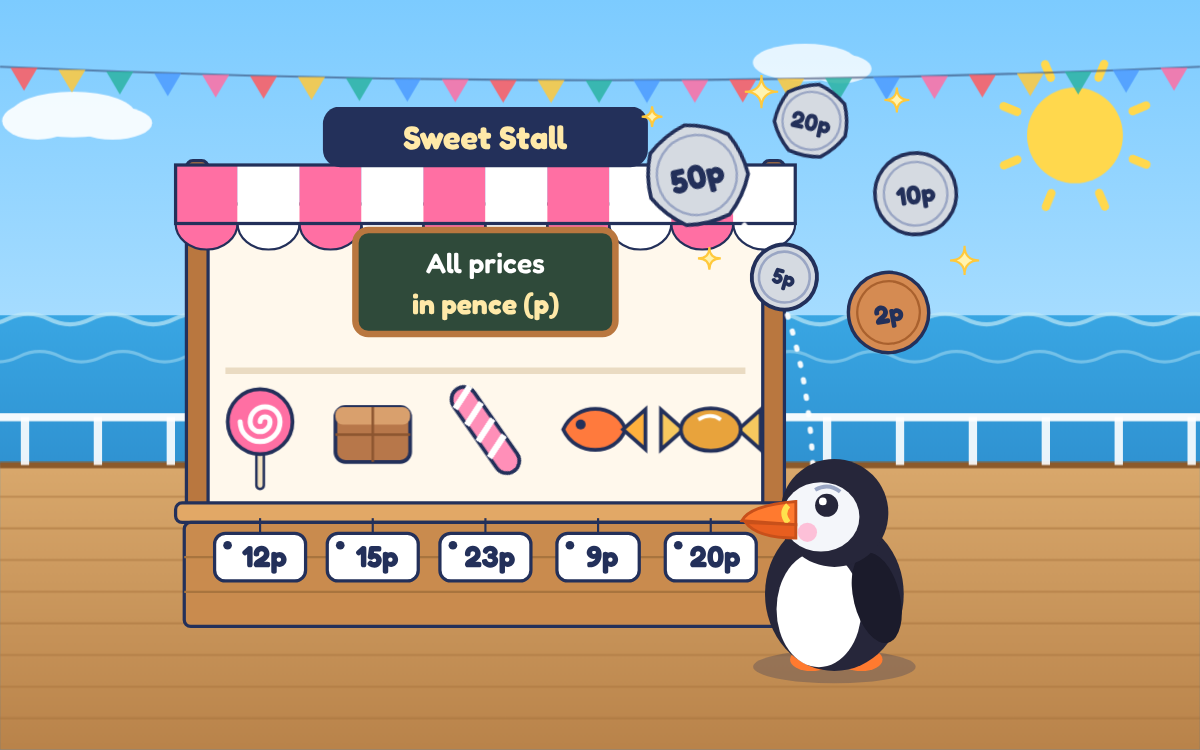
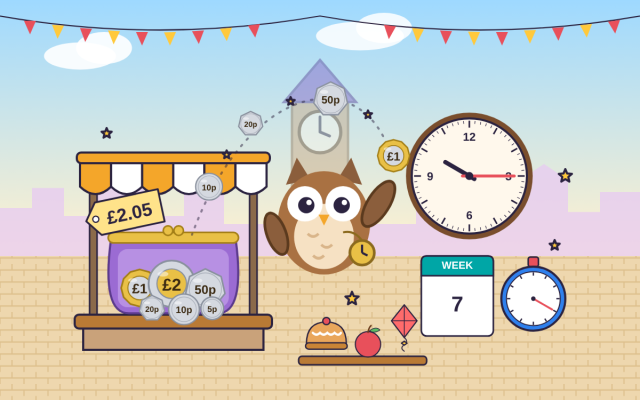
Add prices in pence to find the totalStart playing for free
Year 2 maths · 1
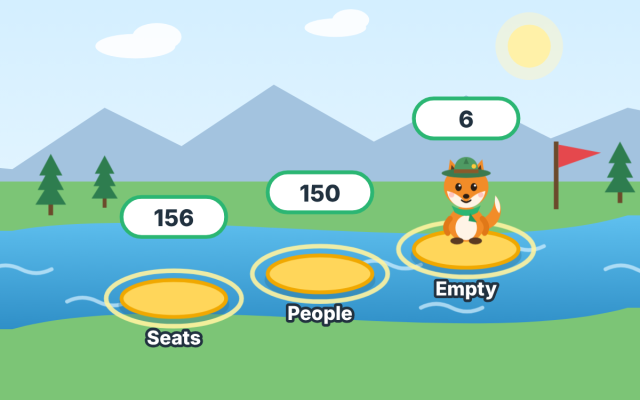
Add prices in pounds and write £ correctly
Year 2 maths · 1
Find how much more or less: the difference between prices
Year 2 maths · 1
Work out change by counting on from the price
Year 2 maths · 1
Solve two-step money problems: total, then change
Year 2 maths · 1
Pier Challenge: money word problems quiz (10 questions)
What the chapters cover in the national curriculum in England:
Year 2 maths: Solve simple problems in a practical context involving addition and subtraction of money of the same unit, including giving change
About this adventure
Money Word Problems is an interactive maths game that teaches children aged 6–8 (Year 2) to solve simple money problems by adding and subtracting amounts in pence or in pounds, including working out change.
Children help Pip the puffin at five seaside stalls. They tap items into a bag, count coins, pay with notes, and hop along a number line to find a total, a difference or the change. Each idea is shown step by step before they type their own answers on a keypad.
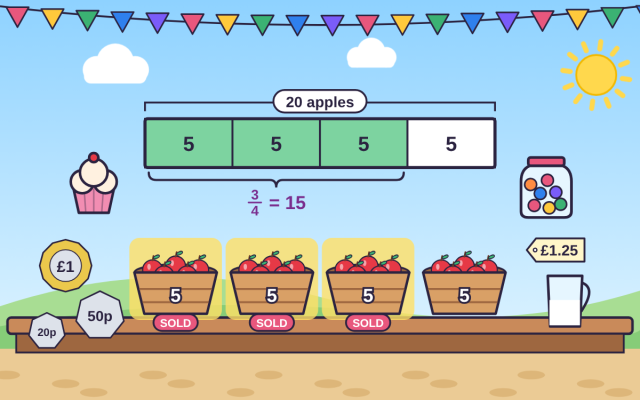
The game uses the methods taught in school: counting on from the price to find change, jumping to the next ten, and bar models that show the whole and its parts. Wrong answers get a hint matched to the mistake, such as giving the price instead of the change, and a helper board that shows the working.
Questions and answers
How do you work out change, in simple words?
Start at the price and count on to the money you paid; the jumps added together are the change. For a 26p badge paid with 50p, 26p to 30p is 4p and 30p to 50p is 20p, so the change is 24p.
What money problems do children solve in Year 2?
In Year 2, children solve simple money problems by adding and subtracting amounts of the same unit, so all pence or all pounds, including giving change. Problems that mix pounds and pence, like £2 and 40p, come later in Year 3.
How can my child tell whether to add or subtract in a money word problem?
Look at what the question asks. Words like altogether and total mean add the prices, while how much more, how much less, difference and change mean find the gap between two amounts by counting on or taking away. Picturing the story helps more than spotting a single word.
What age is this money word problems game for?
It is made for children aged 6 to 8, matching Year 2 (Key Stage 1) maths in England. It also works as a quick refresher for children starting Year 3 who need more practice with change.
What does the game include and how long does it take?
The game has five stall chapters with guided steps and typed problems, an optional coin check, and a 10-question Pier Challenge at the end. Playing everything takes about 40 minutes, and each chapter can be played on its own.
We count visits to make TapLearn better.We use one cookie, only on this site, to see how families find and use it. No adverts, and nothing is shared.One cookie, only on this site. No adverts.How we measure
 TapLearn