Multi-Step Problems for Year 6: Plan the Camp Trip
Learn to solve multi-step problems with all four operations by planning a camp trip: find the hidden step, pick a method and decide what remainders mean.
Free online game · Year 6 (KS2) · ages 10–11 · national curriculum in England · no adverts · plays on a phone, tablet or computer · no sign-up to start.
An online maths game for Year 6 (KS2). It covers the national curriculum in England, Year 6 maths: “Solve addition and subtraction multi-step problems in contexts, deciding which operations and methods to use and why”, and 1 more statement listed under the chapters.
6 short chapters, about 50 minutes in all. Children can stop after any chapter.
Free to play in full, with no sign-up. Plays in the browser on phones, tablets and computers: no app, no adverts.
Last updated · Checked against the national curriculum in England by the TapLearn team
What you'll learn
How to find the hidden middle answer in a multi-step problem
Why words like 'more' or 'fewer' can point to the wrong operation
When to work mentally, use jottings or use a written method
How to round and adjust to multiply amounts like £2.99
Whether a remainder should be rounded up, rounded down or used
How to work backwards with inverse operations, undoing the last step first
Chapter by chapter
Find the hidden step in a word problem
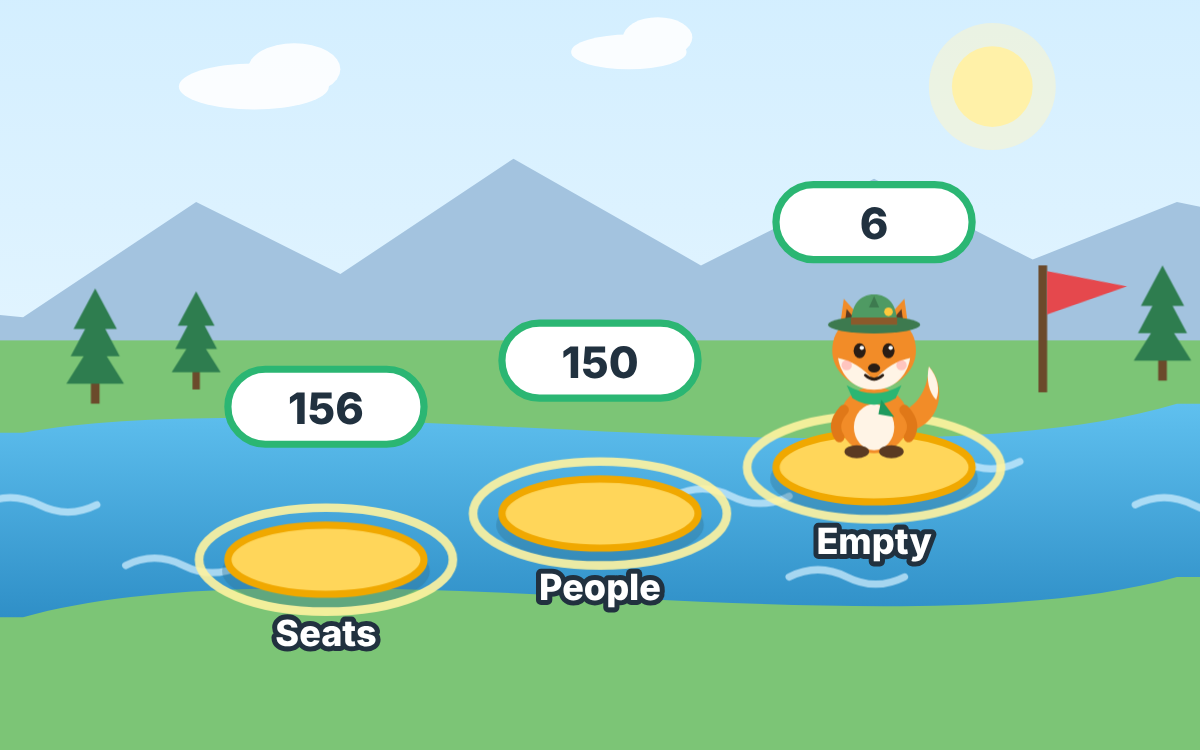
Learn to find the question in an addition and subtraction multi-step problem, work out the hidden middle answer first and leave out facts that aren't needed, by tapping sentences and ordering plan cards.
Year 6 maths · 1
Choose the operation from the story, not keywords
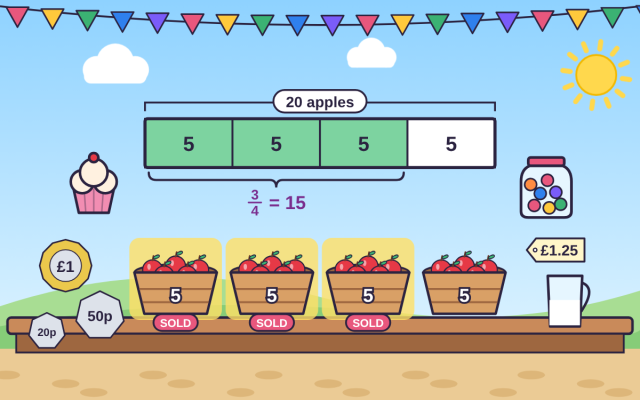
Decide whether a problem needs addition, subtraction, multiplication or division by picturing the story as bars, including tricky comparisons where 'more' means subtract and 'fewer' means add (the bar model).
Year 6 maths · 2Year 6 maths · 1
Choose a sensible method and estimate first
Sort calculations into mental or written methods, round and adjust to work out costs like 4 × £2.99, and estimate by rounding to spot a slip before trusting an answer (the compensation method).
Year 6 maths · 1
Decide what a remainder means in the story
Solve division problems in context and decide whether to round the remainder up, round it down or give the remainder as the answer, using minibuses, egg boxes, canoe tickets and rafts.
Year 6 maths · 2
Work backwards with inverse operations
Find the starting number of a two-step story by undoing each step with its inverse operation, last step first, then check forwards and use the inverse to check a division.
Year 6 maths · 1Year 6 maths · 2
Solve three-step problems with all four operations
Plan, estimate, calculate and check three-step problems with all four operations and money, from packed-lunch change and fuel costs to team sizes and a trip fund worked out backwards.
What the chapters cover in the national curriculum in England:
Year 6 maths: Solve addition and subtraction multi-step problems in contexts, deciding which operations and methods to use and why
Year 6 maths: Solve problems involving addition, subtraction, multiplication and division
About this adventure
Multi-Step Problems is an interactive maths game that teaches children aged 10–11 how to solve word problems needing two or three calculations with addition, subtraction, multiplication and division, choosing which operations and methods to use and why. It follows the Year 6 national curriculum in England.
Guided by Ranger Juno the fox, players plan a Year 6 trip to Camp Summit. They tap the question in each problem, spot the hidden middle step, put plan cards in order and type answers on a number pad. Bar models show whether a story needs adding, subtracting, multiplying or dividing, even when a word like 'more' tries to trick them.
Players also choose between mental methods, jottings and written methods, round and adjust to work out 4 × £2.99, decide whether a remainder should be rounded up or down, and work backwards using inverse operations (the calculation that undoes another).
Questions and answers
What is a multi-step problem in maths?
A multi-step problem is a word problem that needs two or more calculations, where the answer to one step feeds into the next. For example, to find the change from £20 after buying 3 torches at £4, you multiply first and then subtract.
How do you know whether to add, subtract, multiply or divide in a word problem?
Picture what is happening in the story instead of hunting for single words. Join parts to find a whole by adding, find a missing part or difference by subtracting, multiply equal groups, and divide to share or to find how many groups fit.
When do you round a remainder up and when do you round it down?
Round up when everyone or everything needs a place, such as needing a fifth minibus for 3 children left over. Round down when only complete groups count, such as full egg boxes or tickets you can afford. Sometimes the remainder itself is the answer.
What age is this multi-step problems game for?
The game is designed for children aged 10 to 11 in Year 6 of the national curriculum in England (Key Stage 2). Confident Year 5 pupils can also play it, starting with the optional warm-up on what each operation does.
What does the game include and how long does it take?
The game has an optional warm-up, six chapters that each open with an animated introduction, and a 10-question Summit Challenge at the end. Playing everything takes about 50 minutes, and children can start any chapter from the camp map.
We count visits to make TapLearn better.We use one cookie, only on this site, to see how families find and use it. No adverts, and nothing is shared.One cookie, only on this site. No adverts.How we measure




 TapLearn