Working Scientifically: Garden Lab Adventures with Dr Hoot
Learn working scientifically skills: ask questions, observe with a hand lens, do a fair test, sort minibeasts and record results in Dr Hoot's Garden Lab.
Online game, chapter 1 free · Years 1 and 2 (KS1) · ages 5–7 · national curriculum in England · no adverts · plays on a phone, tablet or computer · no sign-up to start.
An online science game for Years 1 and 2 (KS1). It covers the national curriculum in England, Years 1–2 science: “Asking simple questions and recognising that they can be answered in different ways”, and 5 more statements listed under the chapters.
6 short chapters, about 40 minutes in all. Children can stop after any chapter.
Start playing for free. Plays in the browser on phones, tablets and computers: no app, no adverts.
Free for teachers: every chapter on the whiteboard with a free teacher account.
Last updated · Checked against the national curriculum in England by the TapLearn team
What you'll learn
Science questions can be answered in different ways
How a hand lens, ruler, timer and measuring jug help us observe
A fair test changes only one thing
Identify minibeasts by features such as legs, shells and spots
Record results with tally marks and a block chart
Use evidence to say "I found out that..."
Chapter by chapter
Asking science questions and ways to answer themStart playing for free
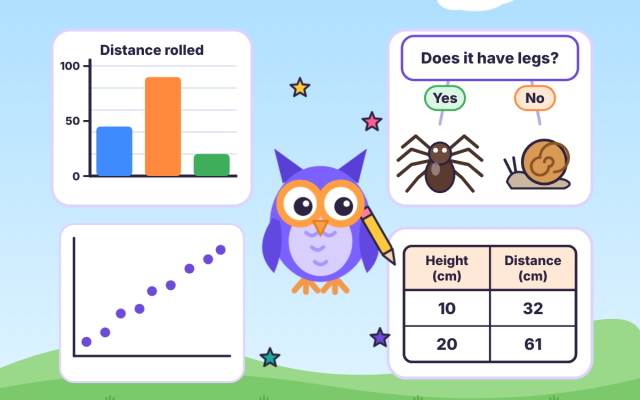
Learn to ask simple science questions and see that they can be answered in different ways, by matching questions to looking closely, testing, sorting, watching over time or looking it up.
Years 1–2 science · 1
Observing closely with a hand lens and simple equipment
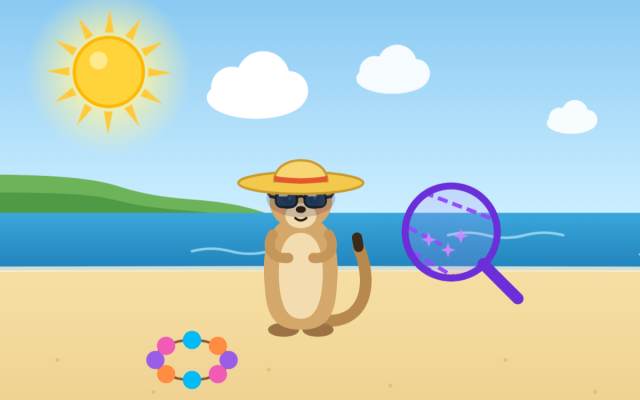
Practise observing closely with the senses and simple equipment, using a hand lens to find leaf veins and count a ladybird's spots, then choosing a ruler, timer or measuring jug for each job.
Years 1–2 science · 2
Doing a simple fair test: which material keeps Teddy dry?
Perform a simple test: predict, keep it fair with the same amount of water, test four materials for waterproofing, record dry or wet results and repeat the test to check.
Years 1–2 science · 3
Identifying minibeasts and sorting into groups
Identify a spider, snail and ladybird with a simple yes/no key, then classify animals into sorting hoops in two different ways and place them in a Venn diagram.
Years 1–2 science · 4
Recording results in tally charts and block charts
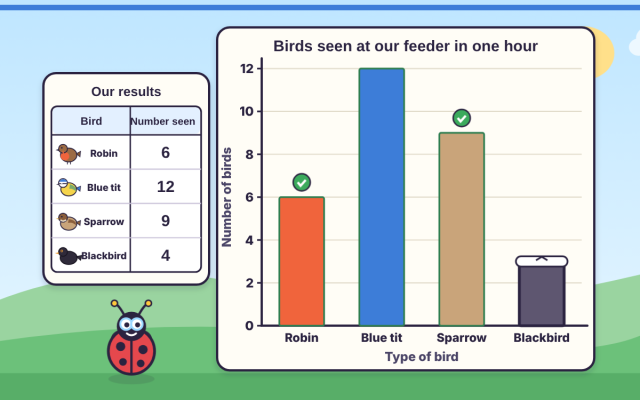
Gather and record data on a minibeast hunt using tally marks, turn the tally chart into a block chart, and read which minibeast was found the most and the fewest.
Years 1–2 science · 5
Using results to suggest answers to questions
Use observations and recorded data to suggest answers: count woodlice under a damp log and on a sunny path, watch ice melt over time, and explain using evidence.
What the chapters cover in the national curriculum in England:
Years 1–2 science: Asking simple questions and recognising that they can be answered in different ways
Years 1–2 science: Observing closely, using simple equipment
Years 1–2 science: Performing simple tests
Years 1–2 science: Identifying and classifying
Years 1–2 science: Gathering and recording data to help in answering questions
Years 1–2 science: Using their observations and ideas to suggest answers to questions
About this adventure
Working Scientifically: Garden Lab Adventures with Dr Hoot is an interactive science game that teaches children aged 5–7 the six KS1 working scientifically skills: asking questions, observing closely, doing simple tests, identifying and classifying, recording data and using results to answer questions.
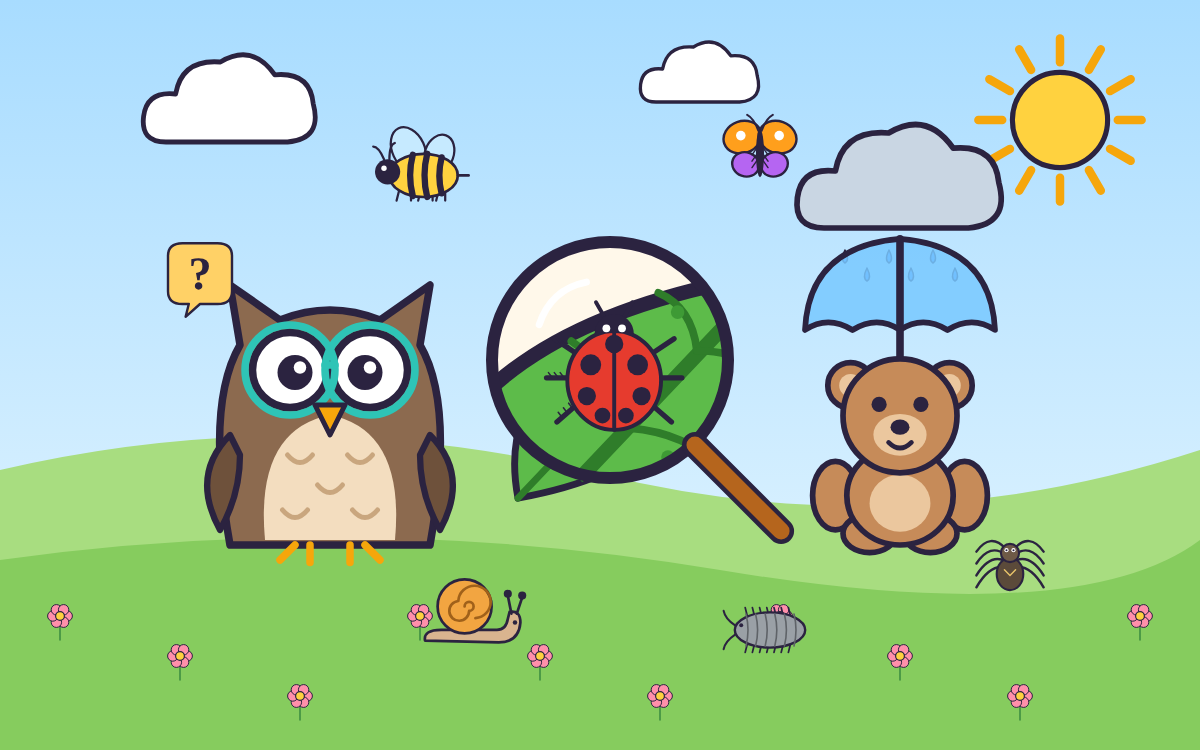
Children help Dr Hoot the owl at six garden stations. They match questions to the best way of finding out, slide a hand lens over a leaf and a ladybird to reveal hidden details, and pour water over paper, foil, plastic and cotton to keep Teddy dry, keeping the test fair by using the same cupful each time.
Later they name minibeasts by counting legs, sort animals into hoops and a Venn diagram, count bugs with tally marks, build a block chart, and watch ice melt over time before saying "I found out that..." using their evidence.
Questions and answers
What does working scientifically mean in KS1?
Working scientifically means using the skills scientists use: asking questions, observing closely, doing simple tests, sorting things into groups, recording what you find and using it to answer questions. In England, children practise these skills throughout Years 1 and 2.
What is a fair test, in simple words?
A fair test is an experiment where you change only one thing and keep everything else the same. If you test which material keeps a teddy dry, you use the same teddy and the same amount of water for every material.
Why do children use a hand lens in science?
A hand lens makes small things look bigger so children can spot details like leaf veins or a ladybird's spots. It does not make the object really grow; the real thing stays the same size.
What age is this working scientifically game for?
The game is designed for children aged 5 to 7, in Year 1 and Year 2. Instructions are spoken aloud, so children who are still learning to read can play along.
What is in the Garden Lab game and how long does it take?
There are six chapters, one for each KS1 working scientifically skill, plus an eight-question Junior Scientist Challenge. Each chapter has a short quick check, and playing everything takes about 40 minutes.
We count visits to make TapLearn better.We use one cookie, only on this site, to see how families find and use it. No adverts, and nothing is shared.One cookie, only on this site. No adverts.How we measure
 TapLearn