Classifying Living Things for Year 6: Linny's Museum Sort
Learn how scientists classify living things by their features, then sort animals, plants and fungi and use branching keys in a museum adventure.
Online game, chapter 1 free · Year 6 (KS2) · ages 9–11 · national curriculum in England · no adverts · plays on a phone, tablet or computer · no sign-up to start.
An online science game for Year 6 (KS2). It covers the national curriculum in England, Year 6 science: “Describe how living things are classified into broad groups according to common observable characteristics and based on similarities and differences, including micro-organisms, plants and animals”, and 1 more statement listed under the chapters.
6 short chapters, about 35 minutes in all. Children can stop after any chapter.
Start playing for free. Plays in the browser on phones, tablets and computers: no app, no adverts.
Free for teachers: every chapter on the whiteboard with a free teacher account.
Last updated · Checked against the national curriculum in England by the TapLearn team
What you'll learn
Why scientists group living things by observable characteristics
How Carl Linnaeus named species with two-part Latin names
Why fungi such as mushrooms are not plants
The features of fish, amphibians, reptiles, birds and mammals
How to tell insects, arachnids, crustaceans, molluscs and worms apart
How to use and build a branching classification key
Chapter by chapter
How scientists classify living things by their featuresStart playing for free
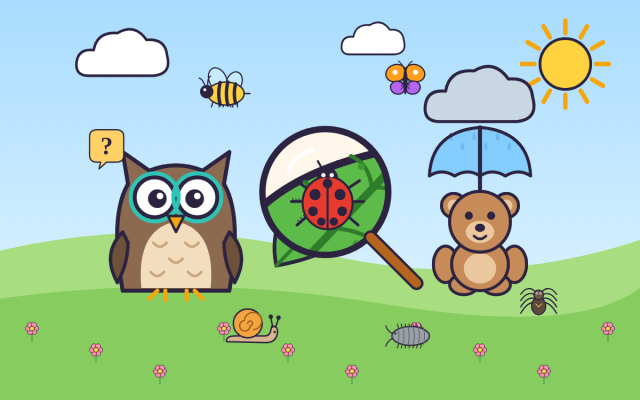
Learn that scientists group living things by observable characteristics, not by where they live, and meet Carl Linnaeus, two-part Latin names and groups inside groups from kingdom to species.
Year 6 science · 1Year 6 science · 2
Sorting living things into animals, plants, fungi and micro-organisms
Sort living things into animals, plants, fungi and micro-organisms by how they get their food and how big they are, and find out why a mushroom is not a plant.
Year 6 science · 1
Vertebrates: sorting fish, amphibians, reptiles, birds and mammals
X-ray animals to sort vertebrates from invertebrates, then group fish, amphibians, reptiles, birds and mammals using their features, explaining tricky cases like whales, bats, penguins and the platypus.
Year 6 science · 1Year 6 science · 2
Invertebrates: sorting insects, arachnids, crustaceans, molluscs and worms
Count legs and body parts under a magnifying glass, then sort insects, arachnids, crustaceans, molluscs and worms, learning why a spider is not an insect and a woodlouse is a crustacean.
Year 6 science · 1Year 6 science · 2
Plants: sorting flowering plants, conifers, ferns and mosses
Discover how flowering plants make seeds in flowers, conifers grow seeds in cones, and ferns and mosses make spores, then sort plants into these groups, including grasses and oak trees.
Year 6 science · 1Year 6 science · 2
Using and making classification keys
Follow a key with yes-or-no questions to identify a pangolin, a cassowary and a caecilian, then build a key of your own using questions about observable features (branching keys).
Year 6 science · 2
Taxonomist Challenge: classify and explain (10 questions)
What the chapters cover in the national curriculum in England:
Year 6 science: Describe how living things are classified into broad groups according to common observable characteristics and based on similarities and differences, including micro-organisms, plants and animals
Year 6 science: Give reasons for classifying plants and animals based on specific characteristics
About this adventure
Classifying Living Things is an interactive science game that teaches children aged 9–11 how living things are grouped by their observable characteristics, and how to give reasons for each grouping. It follows the Year 6 curriculum for living things and their habitats.
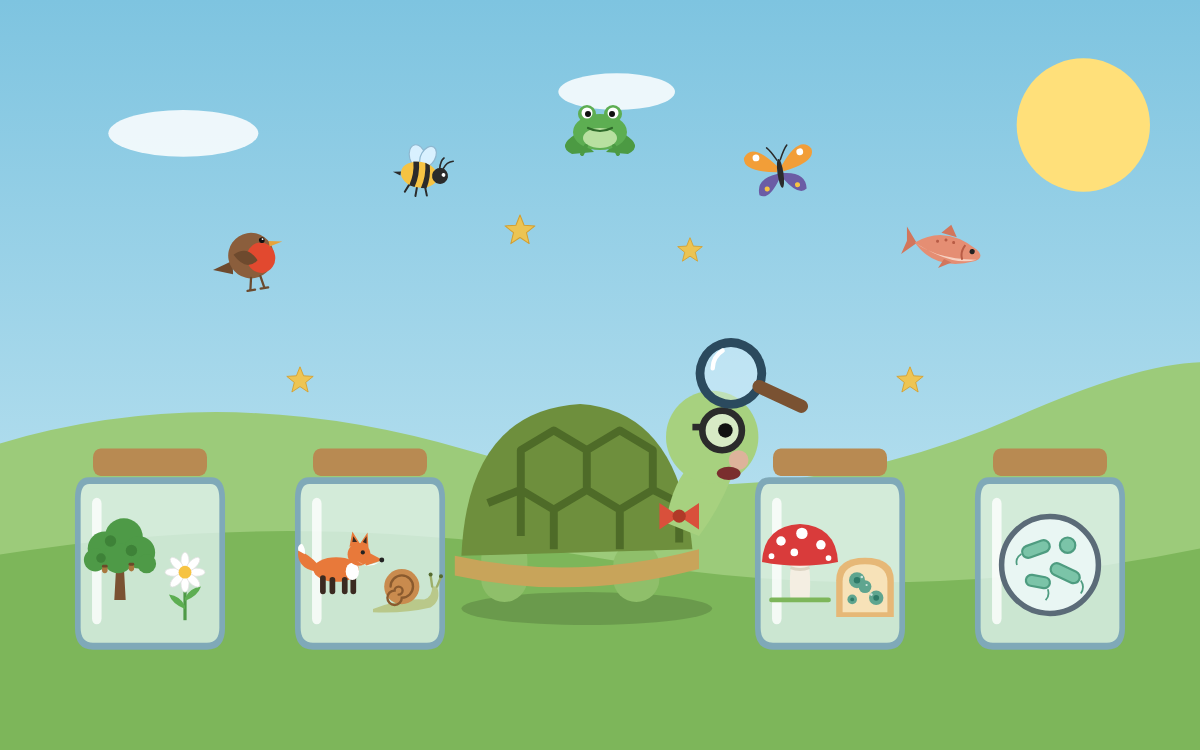
Players help Professor Linny, a tortoise taxonomist, put a jumbled museum collection back in order. They meet Carl Linnaeus and his two-part Latin names, zoom from kingdom down to species, and sort animals, plants, fungi and micro-organisms into their big groups.
Along the way they X-ray animals to find vertebrates, count legs and body parts under a magnifying glass, open pine cones and turn over fern fronds to find spores. Tricky cases such as whales, bats, penguins and woodlice show why scientists classify by body features rather than by where an animal lives or how it moves.
Questions and answers
How are living things classified, in simple words?
Living things are sorted into groups by features you can observe, such as fur, feathers, leaves or the number of legs. Big groups like animals and plants split into smaller and smaller groups, down to a single species.
What are the five groups of vertebrates?
The five vertebrate groups are fish, amphibians, reptiles, birds and mammals. Fish breathe with gills, amphibians have smooth damp skin, reptiles have dry scaly skin, birds have feathers, and mammals have hair or fur and feed their babies milk.
Is a mushroom a plant?
No, a mushroom is a fungus, not a plant. Plants make their own food using sunlight, but fungi cannot, so they feed on dead and rotting things instead and grow from tiny spores.
What age is this classification game for?
The game is written for children aged 9 to 11, and it matches the Year 6 science curriculum in England. Younger children who already know some animal groups can enjoy it with a little help.
What does the game include and how long does it take?
It has six chapters and a final ten-question challenge, and playing everything takes about 35 minutes. Each chapter can be played on its own, with sorting, scanning, counting and key-building activities and a short check at the end.
We count visits to make TapLearn better.We use one cookie, only on this site, to see how families find and use it. No adverts, and nothing is shared.One cookie, only on this site. No adverts.How we measure
 TapLearn