The Four Seasons: A Year in Ruby the Robin's Garden
Learn the four seasons in order, the weather each one brings and how day length changes, by dressing Sam, forecasting and measuring daylight.
Online game, chapter 1 free · Year 1 (KS1) · ages 5–7 · national curriculum in England · no adverts · plays on a phone, tablet or computer · no sign-up to start.
An online science game for Year 1 (KS1). It covers the national curriculum in England, Year 1 science: “Observe changes across the 4 seasons”, and 1 more statement listed under the chapters.
4 short chapters, about 25 minutes in all. Children can stop after any chapter.
Start playing for free. Plays in the browser on phones, tablets and computers: no app, no adverts.
Free for teachers: every chapter on the whiteboard with a free teacher account.
Last updated · Checked against the national curriculum in England by the TapLearn team
What you'll learn
The four seasons in order and the three months in each
Weather words: sunny, cloudy, rainy, windy, snowy and frosty
Summer is usually warmest and winter usually coldest
How clothes, animals and flowers change through the year
Day length means the light time from sunrise to sunset
Summer days are longest and winter days are shortest
Chapter by chapter
The four seasons in order and their monthsStart playing for free
Learn the names of the four seasons and their order by building a season wheel, then match March to May, June to August, September to November and December to February to the right season.
Year 1 science · 1
Weather in each season
Describe the weather often seen in each season: make sunny, rainy, windy, snowy and frosty weather, read a thermometer to find the warmest and coldest seasons, and check sayings about summer sun and winter snow.
Year 1 science · 2
Seasonal changes: clothes, animals and flowers
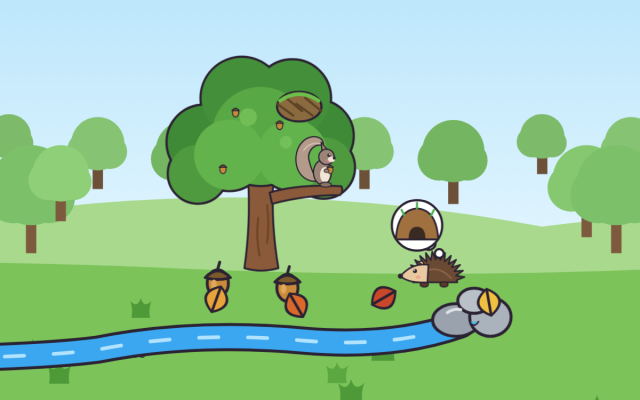
Observe changes across the four seasons by dressing Sam for snow, sun and rain, meeting lambs, bees, swallows, squirrels and hibernating hedgehogs, and sorting season clues into the right basket.
Year 1 science · 1
Day length: long summer days, short winter days
Find out how day length varies through the year: move the sun from sunrise to sunset, predict light or dark at teatime and bedtime, and fill daylight jars to compare winter and summer days.
What the chapters cover in the national curriculum in England:
Year 1 science: Observe changes across the 4 seasons
Year 1 science: Observe and describe weather associated with the seasons and how day length varies
About this adventure
The Four Seasons is an interactive science game that teaches children aged 5–7 the order of spring, summer, autumn and winter, the weather each season brings, and how day length changes through the year.
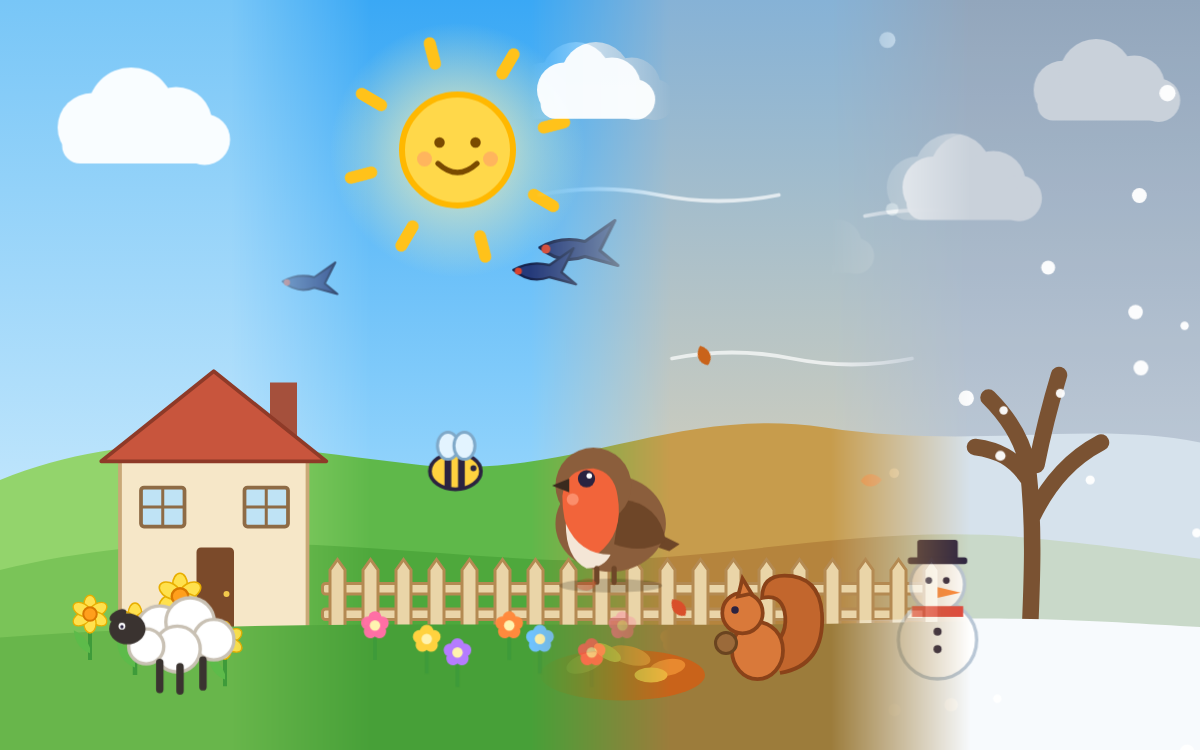
Ruby the robin lives in the same garden all year, and the whole scene changes as players explore. They build a season wheel and match the months to each season, make weather with a weather machine, read a thermometer, and decide whether sayings like "it always snows in winter" are true.
Players also dress Sam for snow, sunshine and rain, spot lambs, hibernating hedgehogs and swallows flying away, and sort season clues. Finally they drag the sun from sunrise to sunset, peek through the curtains at teatime and bedtime, and fill daylight jars to compare about 8 hours in December with about 16 hours in June.
Questions and answers
What are the four seasons in order?
The four seasons in order are spring, summer, autumn and winter, and then spring comes round again. In the UK, spring is March to May, summer is June to August, autumn is September to November and winter is December to February.
Why are days longer in summer than in winter?
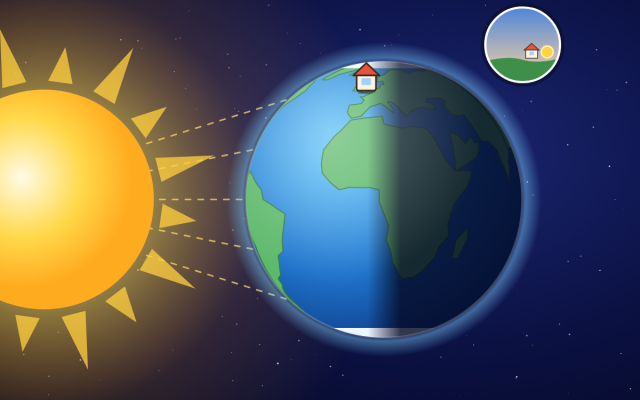
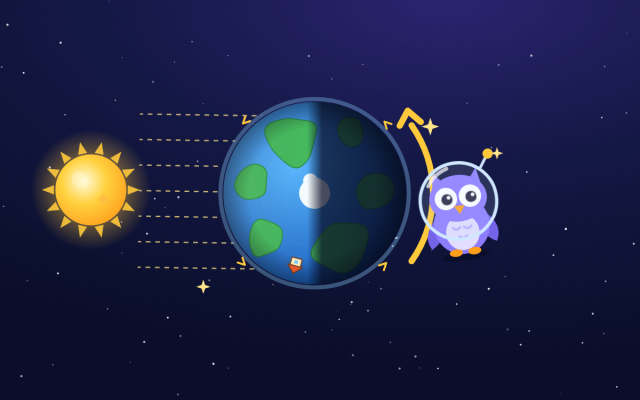
Days are longer in summer because the sun rises earlier and sets later, so there are more hours of daylight. In London the longest day, around 21 June, has about 16 hours of daylight, while the shortest day, around 21 December, has about 8.
Is it always sunny in summer and snowy in winter?
No. Summer is usually the warmest season, but it can still have rainy, cloudy and windy days. Winter is usually the coldest season, yet snow only falls sometimes; many winter days are cold, frosty or rainy instead.
What age is this seasons game for?
This seasons game is made for children aged 5 to 7 and follows the Year 1 science topic Seasonal changes in the national curriculum for England. Every line is read aloud, so children who are still learning to read can play on their own.
What does the game include and how long does it take?
The game has four chapters, each with a short quick check, plus an eight-question Seasons Challenge at the end. Playing everything takes about 25 minutes, and children can start with any chapter and come back to the garden map at any time.
We count visits to make TapLearn better.We use one cookie, only on this site, to see how families find and use it. No adverts, and nothing is shared.One cookie, only on this site. No adverts.How we measure



 TapLearn