TapLearn
Learning gameYear 2 · Start for free
Letter Sizes and Spacing: Help Penn on Letter Lane
Learning gameYear 2 · Start for free

Letter Sizes and Spacing: Help Penn on Letter Lane

Learn how tall, small and tail letters fit together, where capitals belong and how big a space to leave, then try first joins with Penn the pencil.

Online game, chapter 1 free · Year 2 (KS1) · ages 6–8 · national curriculum in England · no adverts · plays on a phone, tablet or computer · no sign-up to start.

Play the game

300+ learning games · Reception to Year 6
At a glance

An online English game for Year 2 (KS1). It covers the national curriculum in England, Year 2 english: “Form lower-case letters of the correct size relative to one another”, and 3 more statements listed under the chapters.

4 short chapters, about 25 minutes in all. Children can stop after any chapter.

Start playing for free. Plays in the browser on phones, tablets and computers: no app, no adverts.

Free for teachers: every chapter on the whiteboard with a free teacher account.

Last updated · Checked against the national curriculum in England by the TapLearn team

What you'll learn

  • Which letters are tall, small, or have a tail that dips below
  • Why capital letters and numbers reach the top line
  • How to spot and fix back-to-front letters and numbers
  • That capitals start names and sentences, not the middle of words
  • Why a space between words is about one letter o wide
  • Diagonal and horizontal joins, and why capitals stay unjoined

Chapter by chapter

  1. Tall, small and tail letters: sizing lower-case letters Start playing for free

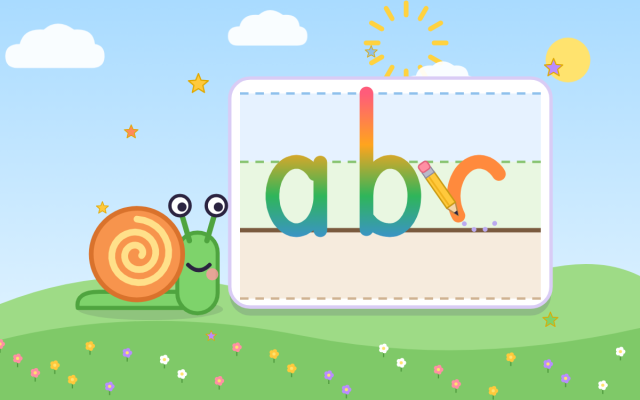
    Learn to form lower-case letters of the correct size relative to one another by finding the writing line and middle line, sorting tall, small and tail letters, and fixing letters that are the wrong size.

    Year 2 english · 1

  2. Capital letters and numbers: right size, right way round

    Learn that capital letters and digits are as tall as tall letters and sit on the line, by choosing correct capitals, flipping back-to-front letters, using the bed trick for b and d, and removing stray capitals.

    Year 2 english · 2

  3. Spaces between words that match the writing size

    Learn to use spacing between words that reflects the size of the letters, by adding spaces to squashed sentences, fitting a letter o into each gap and matching bigger spaces to bigger writing.

    Year 2 english · 3

  4. First joins: diagonal, horizontal and letters left unjoined

    Start using diagonal and horizontal joining strokes by tracing joins like in and on, sorting joined pairs, and learning which letters are best left unjoined, such as capitals and, in many schools, tail letters.

    Year 2 english · 4

  5. Letter Lane Challenge (8 questions)

See every English chapter in the chapter library

What the chapters cover in the national curriculum in England:

  1. Year 2 english: Form lower-case letters of the correct size relative to one another
  2. Year 2 english: Write capital letters and digits of the correct size, orientation and relationship to one another and to lower-case letters
  3. Year 2 english: Use spacing between words that reflects the size of the letters
  4. Year 2 english: Start using some of the diagonal and horizontal strokes needed to join letters and understand which letters, when adjacent to one another, are best left unjoined

About this adventure

Letter Sizes and Spacing is an interactive handwriting game that teaches children aged 6 to 7 (Year 2) how big each letter should be, how to space words and how to start joining letters.

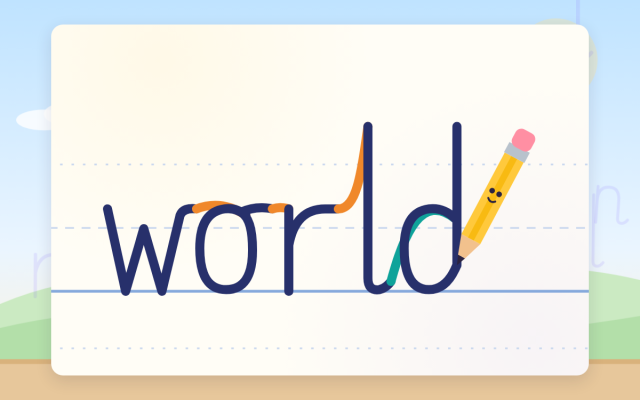
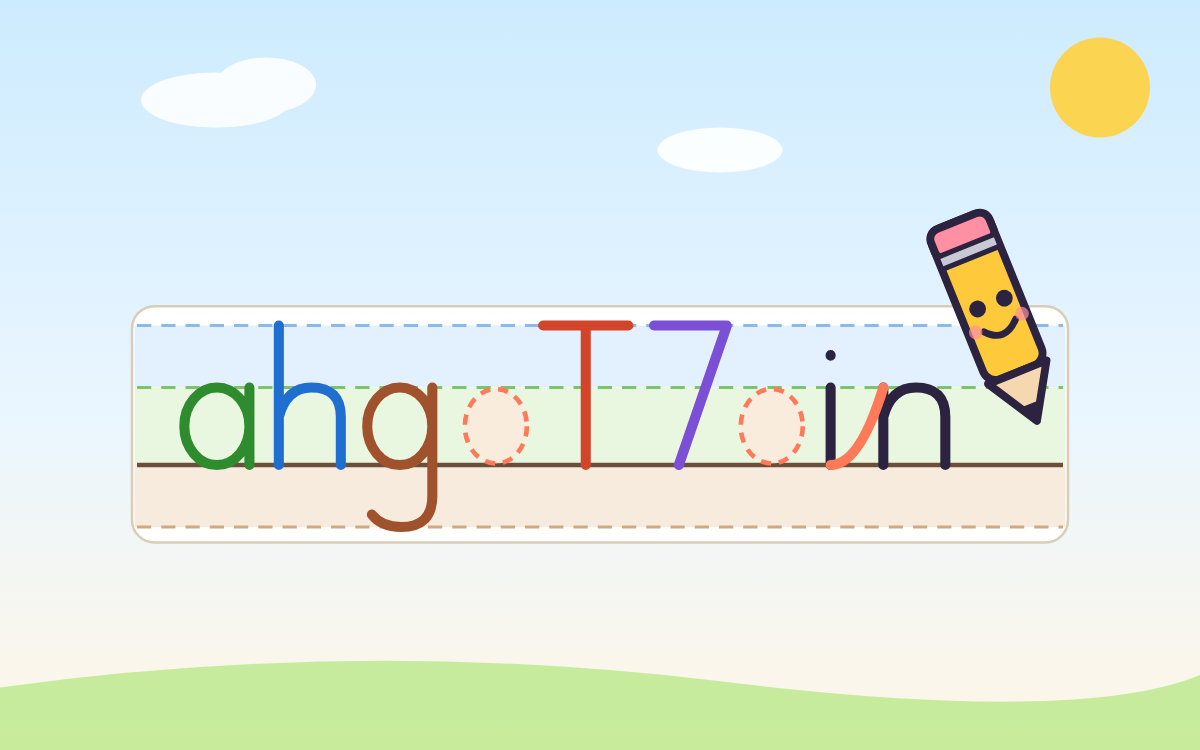
On lined paper with sky, grass and ground zones, players sort tall letters (with ascenders), small letters and tail letters (with descenders), then fix words where one letter is the wrong size. They check that capital letters and numbers reach the top line and sit on the writing line, flip back-to-front letters, and learn the bed trick for b and d.

Next they add spaces to squashed sentences and see why a gap about one letter o wide is just right. Finally they trace diagonal and horizontal joins and find out why capitals stay unjoined.

Questions and answers

What are tall, small and tail letters in handwriting?

Tall letters such as b, d, h, k, l and t have a part that reaches up above the middle line, called an ascender. Small letters such as a, c, e and o fit between the writing line and the middle line. Tail letters such as g, j, p, q and y dip below the line with a descender.

How big should the space between words be?

A space between words should be about as wide as one small letter o in the same writing. That means bigger writing needs bigger spaces and smaller writing needs smaller spaces, so a finger space is only a rough guide.

What is the difference between a diagonal join and a horizontal join?

A diagonal join slides up from a letter that finishes on the writing line, such as a, i or n. A horizontal join goes straight across from a letter that finishes at the top, such as o, r, v or w.

How tall should capital letters and numbers be in Year 2?

Capital letters and numbers should be the same height as tall letters like h, reaching the top line and sitting on the writing line. Capitals should only start names, places and sentences, and they are not joined to the next letter.

What age is this handwriting game for, and how long does it take?

The game is designed for children aged 6 to 7 in Year 2, and is useful for older children who need a refresher. Its four chapters and final challenge take about 25 minutes, and each chapter can be played on its own.

More to explore

See all