What you'll learn
- Why saying a sentence aloud first helps you write it correctly
- That a sentence needs a subject and a verb to make sense
- Where capital letters go, including names, days of the week and I
- When to use a full stop, question mark or exclamation mark
- How to fix a run-on sentence with a full stop
- How conjunctions like because, when, if and although join ideas
What's inside
- Say it first
- Words in the right order
- Start and end it
- Choose great words
- Join it up
- Grand Station Challenge (10 questions)
About this adventure
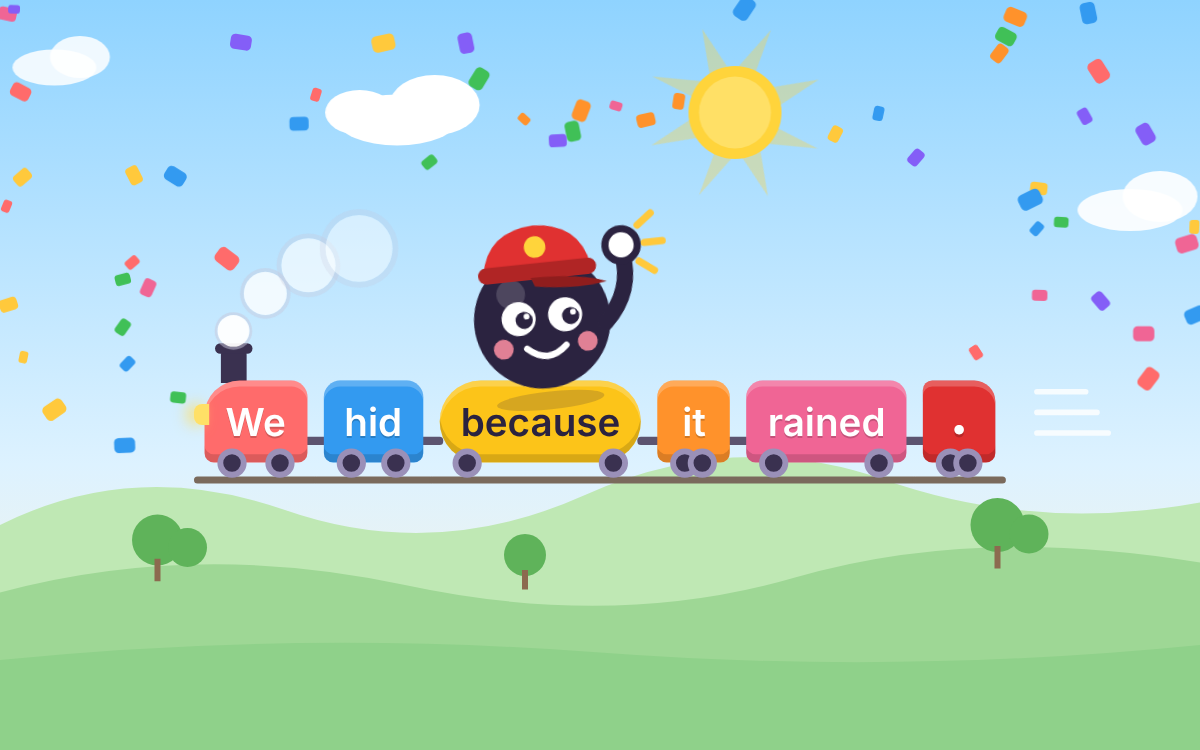
Writing Sentences: All Aboard the Sentence Express is an interactive game that teaches children aged 6–9, pitched at Year 3, the skills of writing sentences that are clear, correct and interesting. Each sentence is a train: the capital letter is the engine, words are carriages and the end mark is the buffer.
Guided by Dot, a talking full stop, children say a sentence aloud before writing it and spot what is missing when it has no verb (doing word) or subject (who it is about). They rebuild jumbled sentences, split run-on sentences with a full stop, choose between a and an, and swap dull words for precise adjectives and powerful verbs.
Each chapter opens with a short animated introduction, and some offer optional refreshers on sentence types and joining words. Every instruction is read aloud, and a 10-question final challenge checks what has been learned.
Questions and answers
What makes a good sentence in Year 3?
A good Year 3 sentence makes sense on its own, starts with a capital letter and ends with a full stop, question mark or exclamation mark. It says who the sentence is about and what they do, and uses well-chosen words so the reader can picture it.
What is a run-on sentence and how do you fix it?
A run-on sentence is two sentences squashed together with no full stop between them, such as 'we went to the park we played on the swings'. Fix it by adding a full stop and a capital letter, or by joining the two ideas with a conjunction such as and or so.
Which conjunctions should Year 3 children use?
Year 3 children learn a wider range of conjunctions, including when, if, because and although, alongside and, but, or and so from earlier years. A conjunction joins two ideas into one longer sentence and shows how they link, for example by giving a reason, a time or a condition.
What age is this sentence writing game for?
The game suits children aged 6–9 and is pitched at Year 3 English, when most children are 7–8. Every instruction is read aloud, so confident Year 2 readers can follow it, and Year 4 children can use it to revise sentence basics.
What does the sentence writing game include and how long does it take?
The game has five chapters and a 10-question final challenge, and takes about 40 minutes to play from start to finish. Children can choose any chapter from the station map, so it also works well in shorter sessions of one chapter at a time.
More to explore
See all
Writing Paragraphs: Ride the Paragraph Express with Cleo
Learn how writing paragraphs works: group sentences by idea, spot when to start a new one, order them and lin…
Improve Your Writing: A Story Workshop with Scribble
Learn how to improve your writing with wow words, varied sentence starts, vivid detail and careful checking,…
The Writing Process: Think Like a Writer with Quill
Learn the writing process step by step: gather ideas, think about your reader, plan the order, write correctl…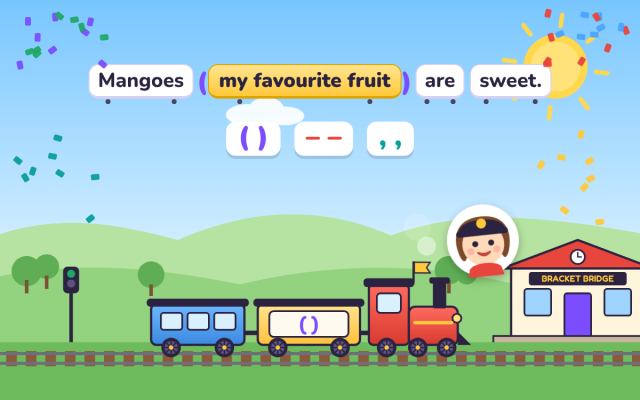
Parenthesis: Brackets, Dashes and Commas on a Word Train
Learn how to use parenthesis with brackets, dashes and commas, then add extra information to sentences by cou…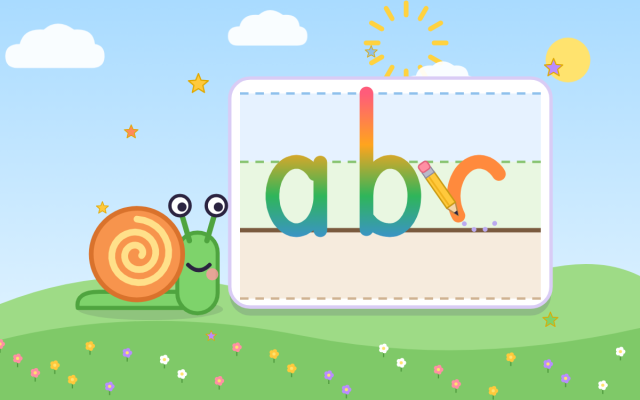
Letter Formation: Trace and Write with Squiggle the Snail
Learn letter formation: where each letter starts and which way to go. Trace, then write lower-case and capita…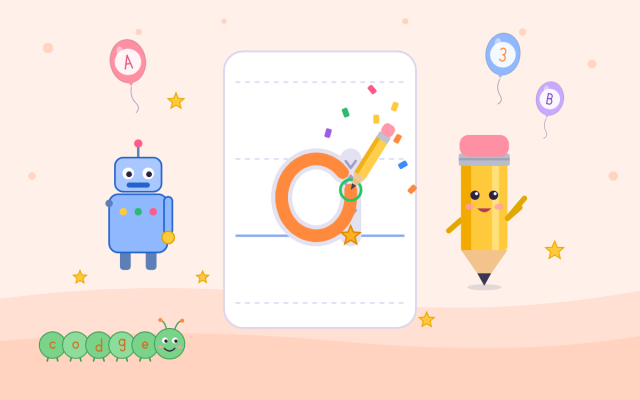
Year 1 Handwriting: Trace Letters and Digits with Poppy
Learn Year 1 handwriting: hold a pencil well, start each letter in the right place and form capitals and digi…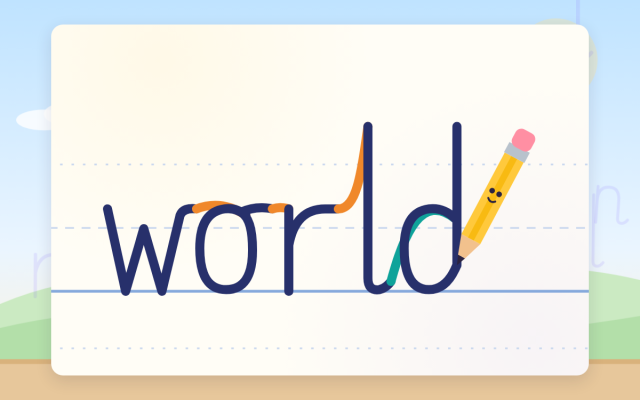
Joined Handwriting: Learn the Joins with Loopy the Pencil
Learn joined handwriting with diagonal and horizontal joins, which letters stay unjoined and how to write nea…
 TapLearn