Learn spelling by sounds: say a word slowly, hear each sound and pick a letter for it, building words like sun, map and shop on the Sound Train.
Online game, chapter 1 free · Reception (EYFS) · ages 4–5 · Early Years (EYFS) framework · no adverts · plays on a phone, tablet or computer · no sign-up to start.
An online English game for Reception (EYFS). It covers the national curriculum in England, Reception english: “Spell words by identifying sounds in them and representing the sounds with a letter or letters”, and 1 more statement listed under the chapters.
5 short chapters, about 20 minutes in all. Children can stop after any chapter.
Start playing for free. Plays in the browser on phones, tablets and computers: no app, no adverts.
Free for teachers: every chapter on the whiteboard with a free teacher account.
Last updated · Checked against the national curriculum in England by the TapLearn team
What you'll learn
Say a word slowly and count its sounds (phonemes)
Find the first, middle and last sound in a three-sound word
Spell CVC words like sun, map and dog one sound at a time
Use a digraph such as sh, ch, ng or ck for one sound
Check a spelling has a letter for every sound and fix gaps
Know that c and k can make the same sound
Chapter by chapter
Say a word slowly and count its soundsStart playing for free
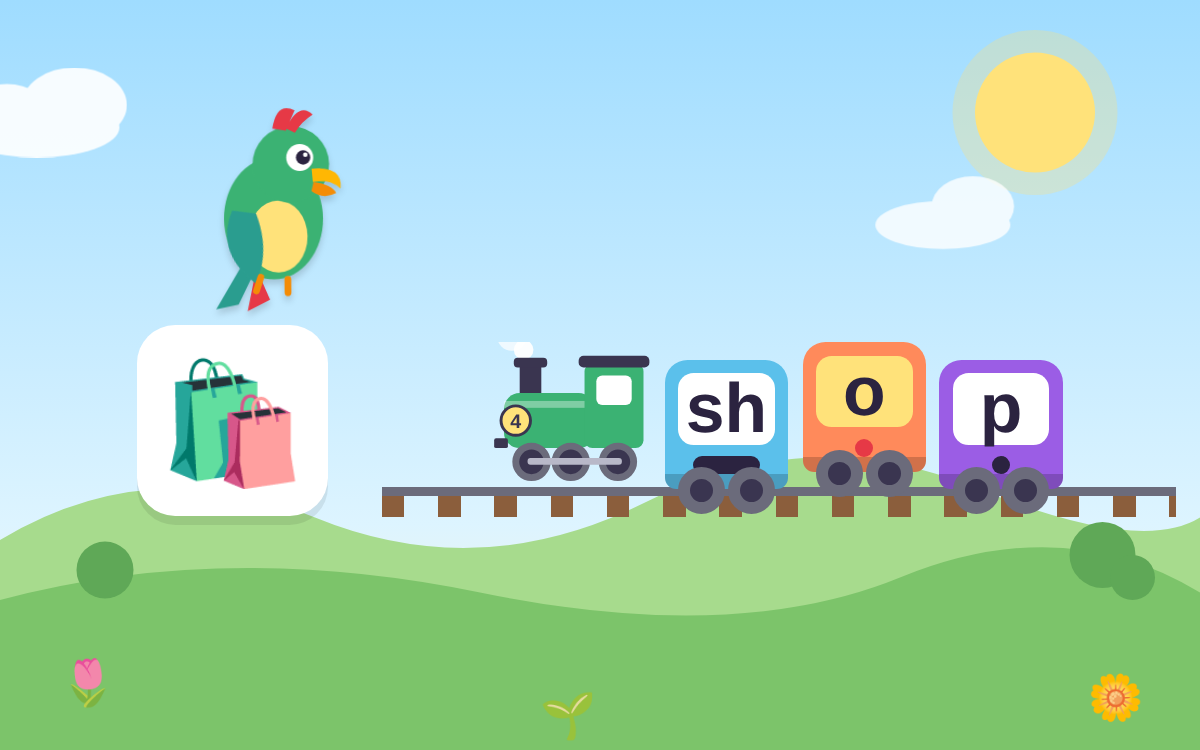
Children say words slowly and count each sound, or phoneme, by counting the Sound Train's puffs, learning that ship has four letters but only three sounds (Fred fingers).
Reception english · 1Reception english · 2
Find the first, middle and last sounds
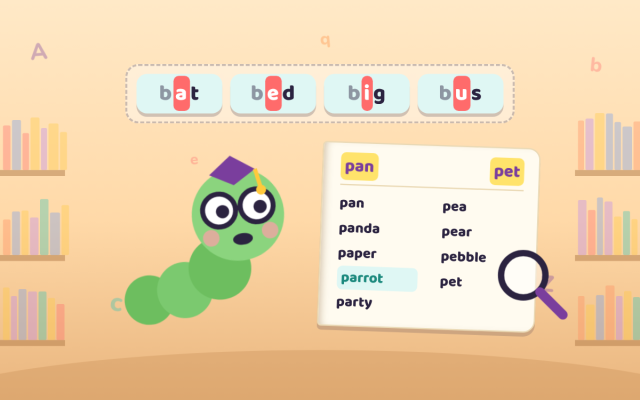
Children listen for the first, last and then the trickier middle sound in words like dog, bed and pig, and pick the letter that matches that sound.
Reception english · 1Reception english · 2
Spell three-sound words, one sound at a time
Children spell CVC words such as sun, map and hen by placing a letter tile in each carriage for each sound in order (a phoneme frame with sound buttons).
Reception english · 1Reception english · 2
Spell words with two letters for one sound
Children spell words like shop, fish, ring and duck, learning that a digraph such as sh, ch, ng or ck is two letters making one sound in one box.
Reception english · 1Reception english · 2
Check a spelling has a letter for every sound
Children say a word slowly to check a written spelling, spot a missing or wrong sound and fix it, and learn that sensible tries like kat are good attempts.
What the chapters cover in the national curriculum in England:
Reception english: Spell words by identifying sounds in them and representing the sounds with a letter or letters
Reception english: Spell words by identifying the sounds and then writing the sound with letters
About this adventure
Spelling by Sounds is an interactive phonics game that teaches Reception children aged 4–5 to spell simple words by saying them slowly, hearing each sound and choosing a letter or letters for every sound.
With Pip the parrot as their guide, children tap a snail to stretch a word out, count the puffs from the Sound Train's chimney and load letter tiles into carriages, one carriage for each sound. This is segmenting: breaking a spoken word into its phonemes, the reverse of blending for reading. Sound buttons appear under each letter, with a dash where two letters make one sound, such as sh, ch, ng and ck.
Later, children become spelling detectives, checking Pip's labels for missing or wrong sounds and fixing them. Sensible sound-by-sound attempts such as kat are praised, then shown the book spelling.
Questions and answers
How do children learn to spell by sounds?
Children learn to spell by sounds by saying a word slowly, splitting it into its separate sounds, and writing a letter or letters for each sound in order. This is called segmenting, and it is the reverse of blending, which children use for reading.
What is segmenting in phonics?
Segmenting is breaking a spoken word into its individual sounds, or phonemes, so it can be spelled. For example, sun is segmented into s-u-n and shop into sh-o-p, where the two letters sh make one sound.
Why does my child write sn instead of sun?
Leaving out the middle sound is one of the most common early spelling mistakes, because first and last sounds are easier to hear than the vowel in the middle. Saying the word slowly and counting the sounds on fingers helps children notice it.
What age is this spelling game for?
This game is made for children aged 4 to 5 in Reception, matching the EYFS early learning goal to spell words by identifying sounds and representing them with a letter or letters. Older children who need extra practice can enjoy it too.
What does the Sound Train spelling game include?
It has five short chapters, from counting sounds to spelling words with two-letter sounds and checking spellings, plus an eight-question challenge and an optional sound warm-up. Playing everything takes about 20 minutes, with spoken guidance throughout.
We count visits to make TapLearn better.We use one cookie, only on this site, to see how families find and use it. No adverts, and nothing is shared.One cookie, only on this site. No adverts.How we measure
 TapLearn