What you'll learn
- How to form the present perfect with has or have
- Why we write ‘has gone’ and never ‘has went’
- How the past perfect shows which of two past events came first
- How to choose has or had to show time and cause
- Linking paragraphs with adverbials of time, place and number
- How ‘he had seen her before’ links back to an earlier paragraph
Chapter by chapter
- Present perfect: has or have + past participle Free to try
Years 5–6 english · 1
- Past perfect: had + past participle for the earlier event
Years 5–6 english · 1
- Perfect verbs to show time and cause
Years 5–6 english · 1
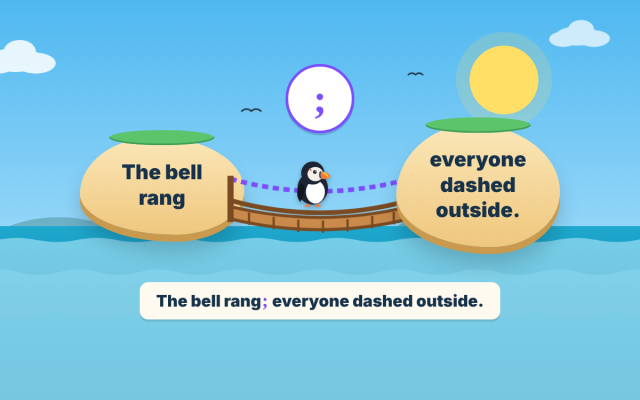
- Linking paragraphs with adverbials of time, place and number
Year 5 english · 2
- Linking paragraphs with tense choices: he had seen her before
Year 5 english · 2 Years 5–6 english · 1
- Time Detective challenge (10 questions)
What the chapters cover in the national curriculum in England:
- Years 5–6 english: Develop their understanding of the concepts set out in English appendix 2 by: using the perfect form of verbs to mark relationships of time and cause
- Year 5 english: Text: linking ideas across paragraphs using adverbials of time, place and number or tense choices
About this adventure
Perfect Tense is an interactive grammar game that teaches children aged 9–11 how to use the present perfect and past perfect to show time and cause, and how to link paragraphs in their writing, matching the KS2 English curriculum for Years 5 and 6.
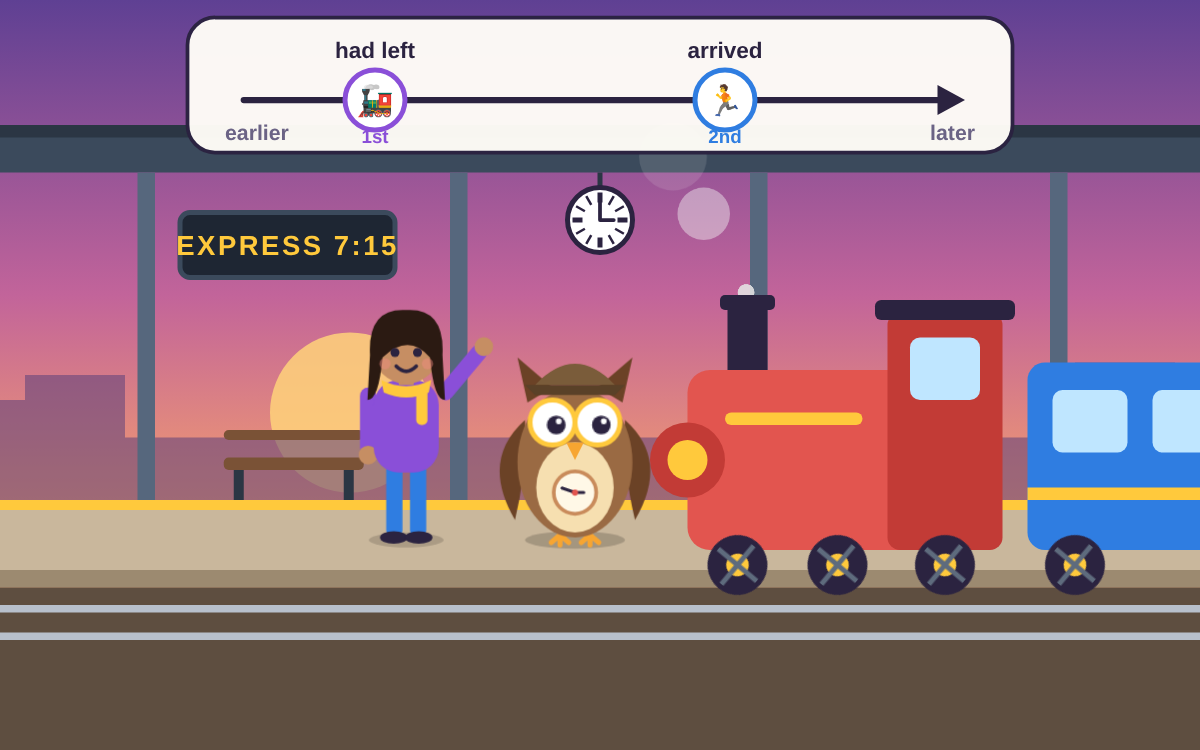
Players join Tock, a clockwork owl detective, to bake cakes, watch trains leave and build bridges between story islands. They build verbs from word tiles, place events on a timeline and type their own answers. Along the way they meet the past participle (the verb form after has, have or had, such as gone or eaten) and learn why ‘has went’ and ‘had ate’ are mistakes.
They also discover adverbials of time, place and number, such as later, nearby and secondly. Every line is read aloud with captions, and a ten-clue final challenge checks everything.
Questions and answers
What is the perfect tense in simple words?
The perfect tense uses has, have or had with a past participle, such as ‘has finished’ or ‘had seen’. It shows that something happened before a certain time and often still matters, like ‘I have lost my key, so I can’t get in.’
What is the difference between the present perfect and the past perfect?
The present perfect (has or have plus a past participle) links a past action to now. The past perfect (had plus a past participle) points back to an earlier event in the past, as in ‘When Mia arrived, the train had left.’
Why is ‘has went’ wrong?
‘Has went’ is wrong because has and have need the past participle, not the simple past. Go, went, gone: the third form is the past participle, so the correct phrase is ‘has gone’. The same goes for ‘had ate’, which should be ‘had eaten’.
What age is the perfect tense game for?
The game is made for children aged 9 to 11, in Years 5 and 6. It follows the KS2 English grammar objectives on the perfect form of verbs and on linking ideas across paragraphs.
What does the game include and how long does it take?
It has five chapters and a ten-question final challenge, and takes about 45 minutes to play through. Each chapter opens with a short animated introduction, uses tiles, timelines and typed answers, and ends with an animated recap.



 TapLearn