What you'll learn
- How one comma can change what a sentence means
- What ambiguity means and how a comma clears it up
- Use a comma before the name of the person being spoken to
- Use commas so each item in a list stays clear
- Put a comma after an opener, such as a fronted adverbial
- Check their own writing and add commas only where needed
Chapter by chapter
- Commas clarify meaning: one comma, two meanings Free to try
Years 5–6 english · 1 Year 5 english · 2
- Commas in lists: keeping each item clear
Years 5–6 english · 1 Year 5 english · 2
- Commas after openers: avoiding ambiguity
Years 5–6 english · 1 Year 5 english · 2
- Using commas to clarify meaning in your own writing
Years 5–6 english · 1 Year 5 english · 2
- Final Show: Comma Clarity Challenge (10 questions)
What the chapters cover in the national curriculum in England:
- Years 5–6 english: Indicate grammatical and other features by: using commas to clarify meaning or avoid ambiguity in writing
- Year 5 english: Punctuation: use of commas to clarify meaning or avoid ambiguity
About this adventure
Commas for Clarity is an interactive game that teaches children aged 9–11 how to use commas to make meaning clear and avoid ambiguity in their writing, matching the Year 5 English curriculum in England. Coco, a friendly comma, guides each show on a theatre stage.
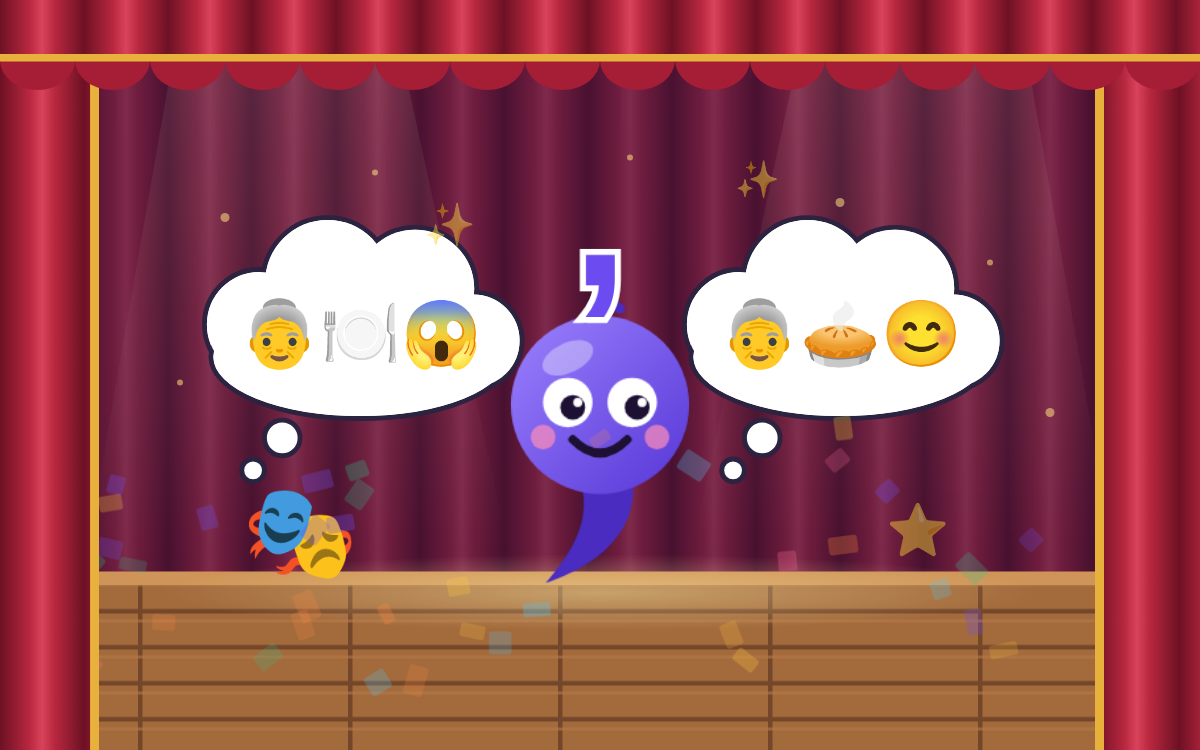
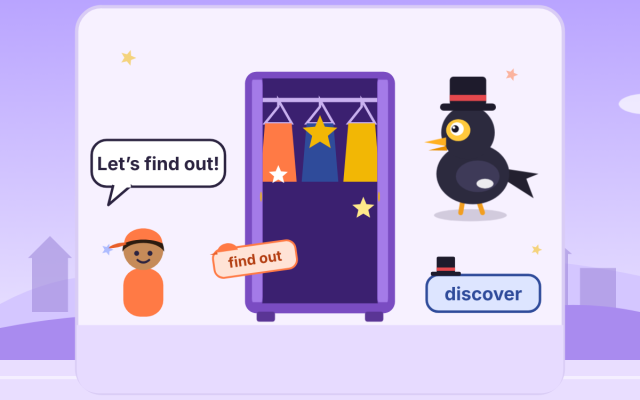
Players drag or tap a comma into a sentence and the stage acts out exactly what it now says. Without a comma, "Let's eat Grandma!" puts Grandma on the menu; with one, we are simply talking to her. Children see how a comma before a name shows who is being spoken to, keeps list items separate and marks where an opener such as a fronted adverbial ends.
Along the way they meet the word ambiguity, meaning a sentence that could be read two ways. They finish by editing their own sentences, deciding when a comma is not needed and typing commas in themselves.
Questions and answers
How can a comma change the meaning of a sentence?
A comma tells the reader which words belong together, so moving or adding one can change the meaning completely. "Let's eat Grandma!" sounds as if Grandma is dinner, while "Let's eat, Grandma!" shows we are speaking to her.
What does ambiguity mean in English grammar?
Ambiguity means a sentence could be read in more than one way. For example, "While Gran was washing the dog ran off" could make a reader think Gran was washing the dog. Adding a comma after washing removes the ambiguity.
Where does the comma go after a fronted adverbial?
The comma goes straight after the whole opener, before the main clause begins. In "When the class was painting, the teacher walked in", the comma after painting stops the reader thinking the class was painting the teacher.
What age is this commas for clarity game for?
The game is made for children aged 9 to 11 and matches the Year 5 English curriculum in England, where pupils learn to use commas to clarify meaning or avoid ambiguity. Year 6 pupils can also use it to revise before their tests.
What does the game include and how long does it take?
It includes an optional warm-up, four chapters with animated introductions and quick checks, and a ten-question Final Show. Playing everything takes about 45 minutes, and children can start any chapter from the theatre menu.
 TapLearn