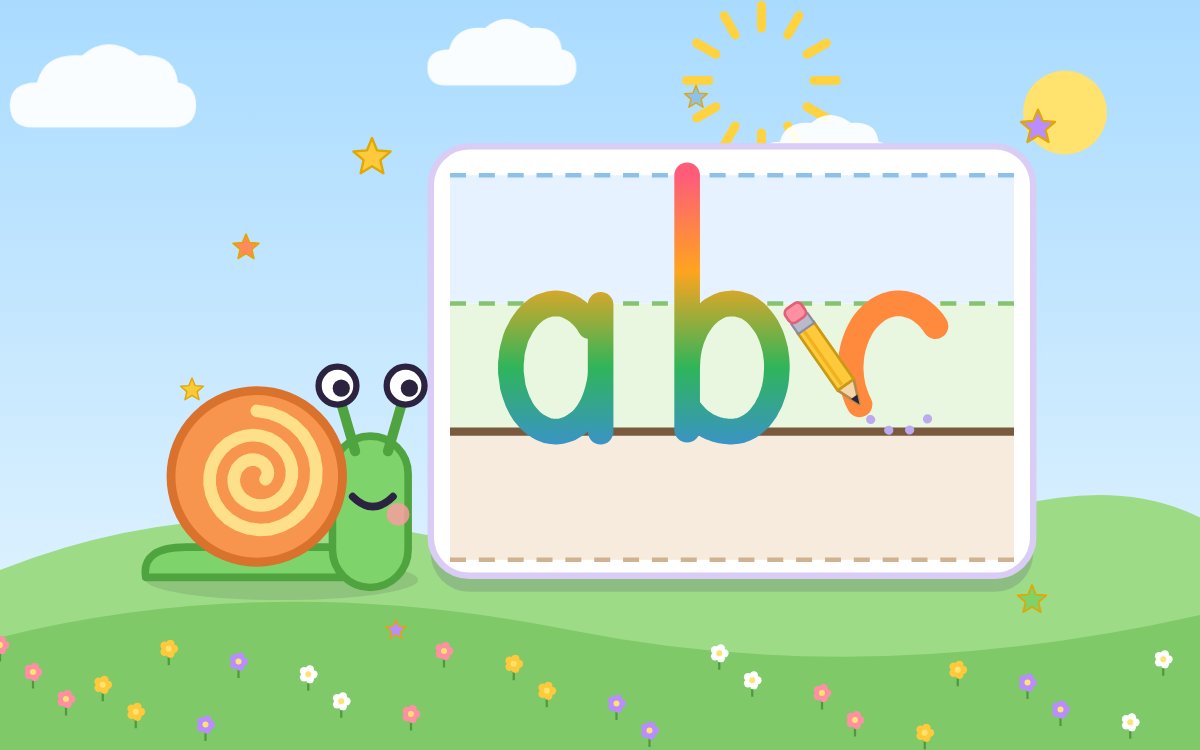
Letter Formation: Trace and Write with Squiggle the Snail
Learn letter formation: where each letter starts and which way to go. Trace, then write lower-case and capital letters with a friendly snail.
- Ages 4–5
- About 50 min
- Easy start
- Handwriting
Learn letter formation: where each letter starts and which way to go. Trace, then write lower-case and capital letters with a friendly snail.
Reception english · 1
Reception english · 2 Reception english · 3
Reception english · 2 Reception english · 3
Reception english · 2 Reception english · 3
Reception english · 2 Reception english · 3
Reception english · 2 Reception english · 3
Reception english · 3 Reception english · 1
What the chapters cover in the national curriculum in England:
Letter Formation with Squiggle the Snail is an interactive handwriting game that teaches children aged 4–5 to form lower-case and capital letters correctly, starting in the right place and moving in the right direction. It follows the Reception year of the EYFS.
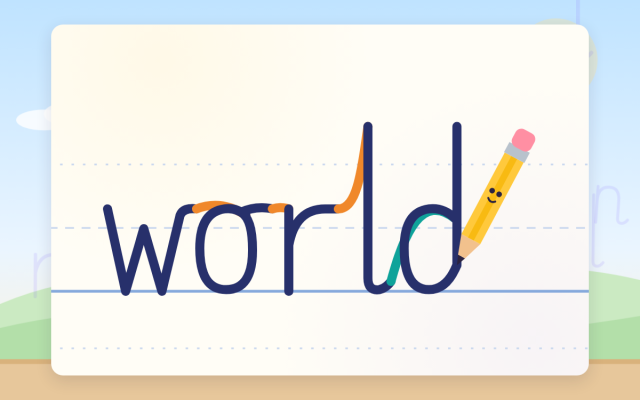
Children watch a pencil demonstrate each letter, then trace it with a finger or mouse on writing lines, first with arrows and a green start dot, then with fewer dots, then on their own. The game notices common slips, such as starting at the bottom, curling the wrong way or drawing the stick of d first, and gently shows the start again.
Letters are taught in letter formation families, which group letters made with the same first movement. Children also practise saying a sentence out loud before writing it, and check their letters face the right way, are the right size and sit on the line.
Most letters start at the top and move down, and every capital letter starts at the top. Curly letters such as c, a and d start near the top and curl back round to the left. The exception is e, which starts in the middle and goes across first.
Letter formation families are groups of letters made with the same first movement. Long ladder letters (l, i, t, u, j, y) go straight down, curly caterpillar letters start like c, one-armed robot letters go down, back up and over, and zigzag letters (v, w, x, z) use slanting lines.
Teach b and d as two letters formed in different ways, not as mirror images. The letter b starts with a tall stick, like a bat, and then adds the ball. The letter d starts with a c-shaped curl, then goes up tall and back down.
This game is for children aged 4 to 5, matching the Reception year of the EYFS in England. By the end of Reception, children are expected to write recognisable letters, most of which are correctly formed. The game also suits older children who need a refresher.
The game has seven chapters, a ten-question challenge, a finger warm-up and a letter workshop for practising any of the 52 lower-case and capital letters. Playing everything takes about 50 minutes, and children can stop and come back to any chapter from the garden map.


 TapLearn
Getting it ready…
Great work on chapter 1! To open the next chapters, ask a grown-up to take a look.
To play this game, ask a grown-up to take a look. There are lots of free games you can play right now too!
Create a free family account and your child can play every chapter of every game for 7 days, with no card needed. Their progress is kept. After that, the free plan is free for ever, and membership is £6.99 a month if you'd like to keep every chapter.
That's all the learning time for today. Great work! Flip will be ready to play again tomorrow.