Fair Tests and Variables: Ziggy's Investigation Lab
Learn how to plan a fair test, control variables, measure accurately and judge evidence by running parachute, ramp and Moon experiments with Ziggy.
Online game, chapter 1 free · Years 5 and 6 (KS2) · ages 9–11 · national curriculum in England · no adverts · plays on a phone, tablet or computer · no sign-up to start.
An online science game for Years 5 and 6 (KS2). It covers the national curriculum in England, Years 5–6 science: “Planning different types of scientific enquiries to answer questions, including recognising and controlling variables where necessary”, and 3 more statements listed under the chapters.
6 short chapters, about 50 minutes in all. Children can stop after any chapter.
Start playing for free. Plays in the browser on phones, tablets and computers: no app, no adverts.
Free for teachers: every chapter on the whiteboard with a free teacher account.
Last updated · Checked against the national curriculum in England by the TapLearn team
What you'll learn
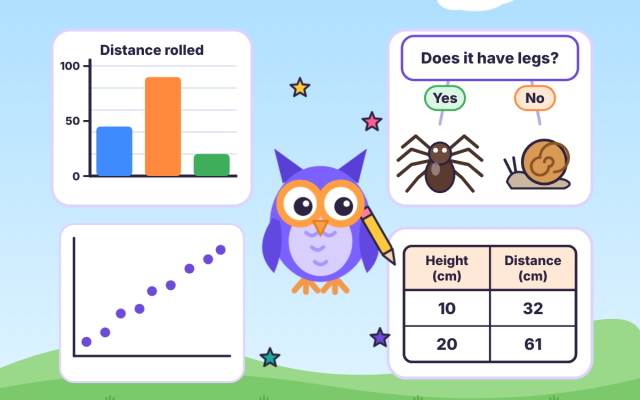
The five types of enquiry and which questions each one answers
Independent, dependent and control variables, and what makes a test fair
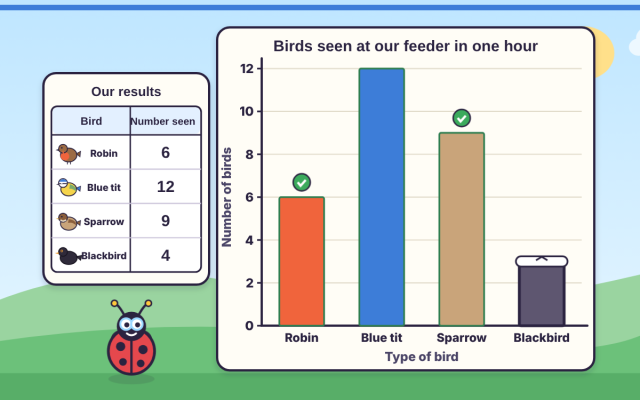
How to read a scale by working out what each mark is worth
Why scientists take repeat readings and how to spot anomalous results
How to calculate the mean of three readings
How evidence supports or refutes an idea, and how it differs from opinion
Chapter by chapter
Choosing the right type of enquiryStart playing for free
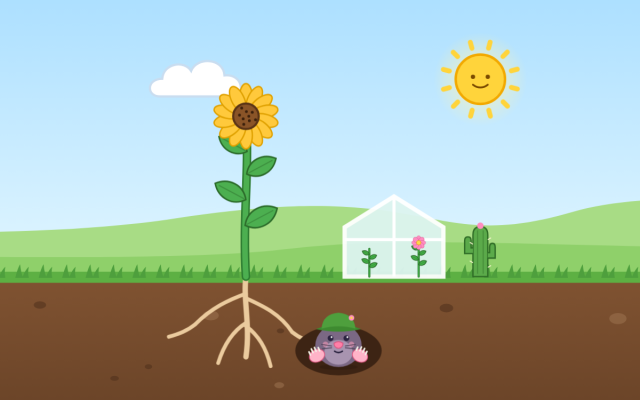
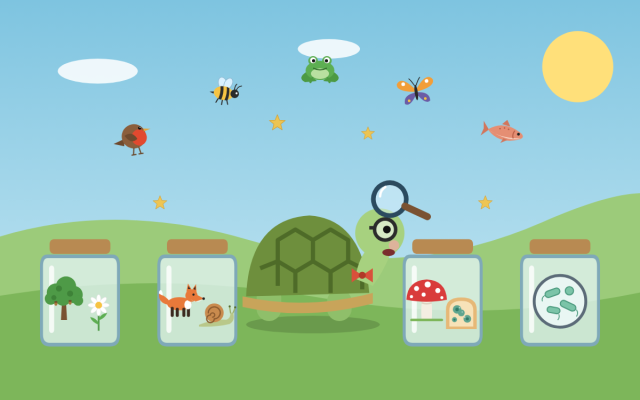
Learn the five types of enquiry (fair or comparative test, observing over time, pattern seeking, grouping and classifying, research) by feeding questions into the right enquiry machine, including ones a fair test can't answer.
Years 5–6 science · 1
Variables: what to change, measure and keep the same
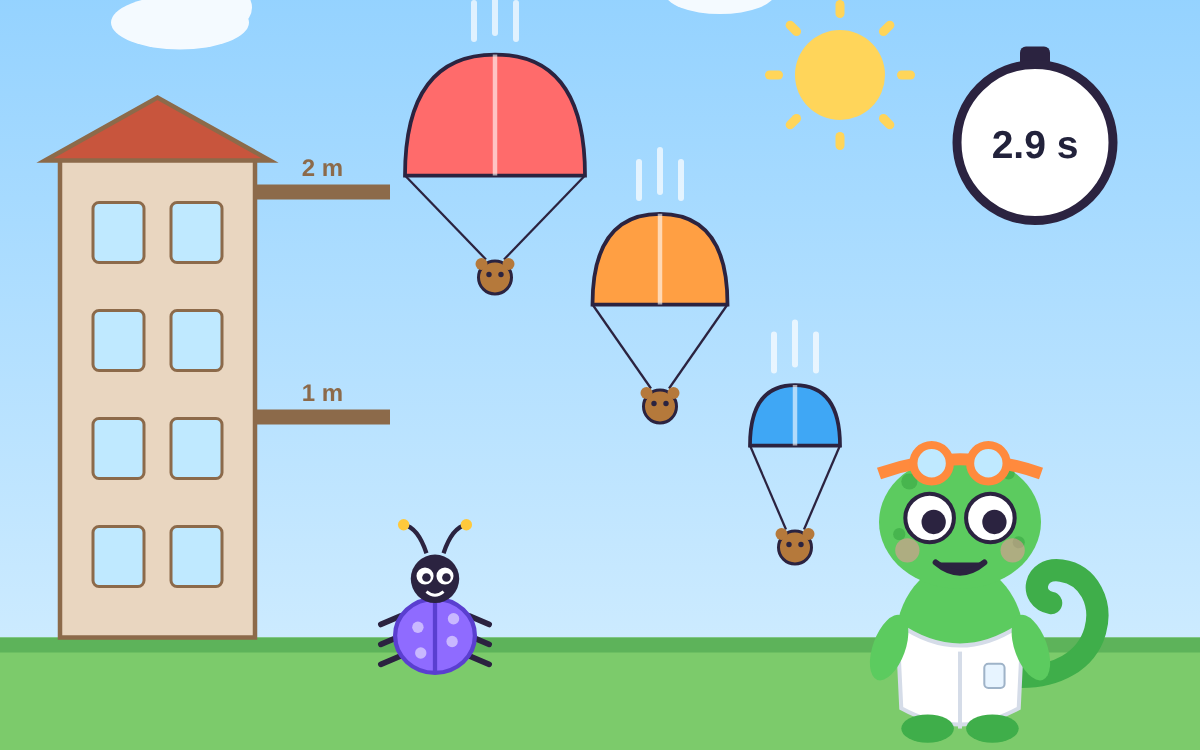
Sort independent, dependent and control variables, spot what makes a parachute test unfair, then lock the controls and run a fair test, comparing it with a comparative test that ranks materials.
Years 5–6 science · 1
Measuring accurately: equipment and reading scales
Choose the right equipment and unit for each job, then read a measuring cylinder, thermometer and force meter accurately by working out each mark's value, reading at eye level and checking for zero.
Years 5–6 science · 2
Repeat readings, odd results and the mean
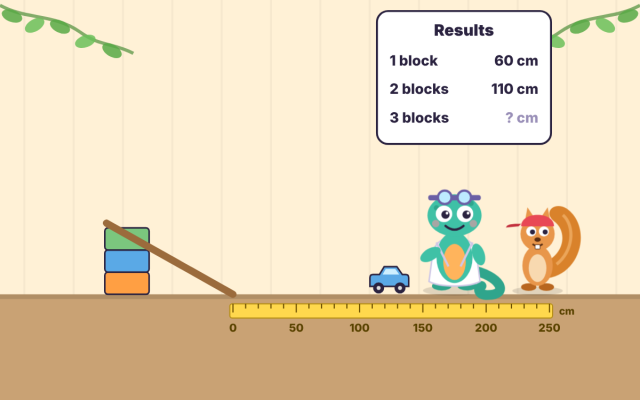
Roll a car down a ramp three times to see why readings vary, spot an anomalous result in a table, and calculate the mean by adding the readings and dividing by three (the average).
Years 5–6 science · 2
Using results to predict and plan the next test
Find the pattern in ramp results, use it to predict a new value and test the prediction, then plan a further comparative test of floor surfaces where the old variable becomes a control.
Years 5–6 science · 3
Evidence that supports or refutes an idea
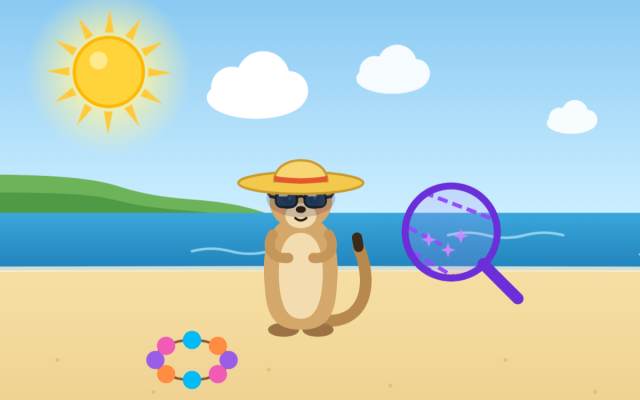
Sort evidence from opinion, test Aristotle's idea that heavier things fall faster with balls, a feather and a hammer on the Moon, and judge whether evidence supports or refutes scientific ideas.
What the chapters cover in the national curriculum in England:
Years 5–6 science: Planning different types of scientific enquiries to answer questions, including recognising and controlling variables where necessary
Years 5–6 science: Taking measurements, using a range of scientific equipment, with increasing accuracy and precision, taking repeat readings when appropriate
Years 5–6 science: Using test results to make predictions to set up further comparative and fair tests
Years 5–6 science: Identifying scientific evidence that has been used to support or refute ideas or arguments
About this adventure
Fair Tests and Variables is an interactive science game that teaches children aged 9–11 how to plan an enquiry, control variables, measure accurately, use repeat readings and judge evidence. It follows the Year 5 and 6 working scientifically curriculum in England, and Ziggy the gecko reads every step aloud.
Players match questions to the five types of enquiry, then drop parachutes from a tower to learn the difference between the independent variable (what you change), the dependent variable (what you measure) and control variables (what stays the same). They read a measuring cylinder, thermometer and force meter by working out what each mark is worth, roll cars down ramps to spot anomalous results and calculate a mean, and use a pattern to predict a result before testing it.
Finally they test Aristotle's idea that heavier things fall faster, and decide whether evidence supports or refutes an idea.
Questions and answers
What is a fair test in science, in simple words?
A fair test changes just one thing, measures one thing and keeps everything else the same. Because only one thing changed, you know that thing caused any difference in the results.
What are the five types of scientific enquiry?
Primary schools in England teach five types: fair or comparative testing, observing over time, pattern seeking, identifying, grouping and classifying, and research. Each suits a different kind of question, so not every question needs a fair test.
Why do scientists take repeat readings?
Repeat readings let scientists check their results and spot anomalous results that don't fit the pattern. A mean of the repeats gives a more trustworthy value. Repeating a test doesn't make it fair; controlling variables does that.
What age is this fair test game for?
It is made for children aged 9 to 11 in Years 5 and 6, following the working scientifically part of the KS2 science national curriculum in England. It suits anyone who already knows what a simple fair test is.
What does the game include and how long does it take?
It has six chapters, each with an animated intro, hands-on experiments, a quick check and a badge, plus a ten-question Lab Challenge. Playing everything takes about 50 minutes, and each chapter can be played on its own.
We count visits to make TapLearn better.We use one cookie, only on this site, to see how families find and use it. No adverts, and nothing is shared.One cookie, only on this site. No adverts.How we measure

 TapLearn