Trees Through the Seasons: A Year with Hazel the Squirrel
Learn how trees change through the seasons and how deciduous and evergreen trees differ by helping an apple tree through a whole year.
Online game, chapter 1 free · Year 1 (KS1) · ages 5–6 · national curriculum in England · no adverts · plays on a phone, tablet or computer · no sign-up to start.
An online science game for Year 1 (KS1). It covers the national curriculum in England, Year 1 science: “Observe changes across the 4 seasons”, and 1 more statement listed under the chapters.
4 short chapters, about 35 minutes in all. Children can stop after any chapter.
Start playing for free. Plays in the browser on phones, tablets and computers: no app, no adverts.
Free for teachers: every chapter on the whiteboard with a free teacher account.
Last updated · Checked against the national curriculum in England by the TapLearn team
What you'll learn
How a deciduous tree changes in spring, summer, autumn and winter
Deciduous trees lose their leaves in autumn; evergreen trees stay green
A bare tree in winter is resting, with buds ready for spring
Name oak, horse chestnut, sycamore, silver birch, holly and pine trees
Match acorns, conkers and helicopter seeds to the trees they grow on
Sort common trees into deciduous and evergreen groups
Chapter by chapter
How a tree changes in spring, summer, autumn and winterStart playing for free
Observe how a deciduous tree changes across the four seasons by bursting spring buds into leaves and blossom, growing summer apples, calling an autumn wind to make leaves fall and finding buds on bare winter twigs.
Year 1 science · 1
Deciduous and evergreen: trees that lose their leaves and trees that stay green
Learn the words deciduous and evergreen by whizzing an oak and a pine tree through the year, then spot the deciduous trees in a snowy winter park by looking for bare branches.
Year 1 science · 2Year 1 science · 1
Naming common trees by their leaves, seeds and bark
Identify and name six common trees, oak, horse chestnut, sycamore, silver birch, holly and pine, by collecting clues from their leaves, acorns, conkers, winged seeds, bark, berries and cones, then play Who Am I?
Year 1 science · 2
Sorting common trees into deciduous and evergreen
Sort named trees into deciduous and evergreen gardens by dragging them into place, check the answers by jumping to winter, and discover that holly is evergreen even though it has flat leaves.
Year 1 science · 2
Trees Through the Seasons Challenge (10 questions) (10 questions)
What the chapters cover in the national curriculum in England:
Year 1 science: Observe changes across the 4 seasons
Year 1 science: Identify and name a variety of common wild and garden plants, including deciduous and evergreen trees
About this adventure
Trees Through the Seasons is an interactive game that teaches children aged 5–6 how trees change across spring, summer, autumn and winter, and how to tell deciduous trees from evergreen trees. It follows the Year 1 science curriculum in England.
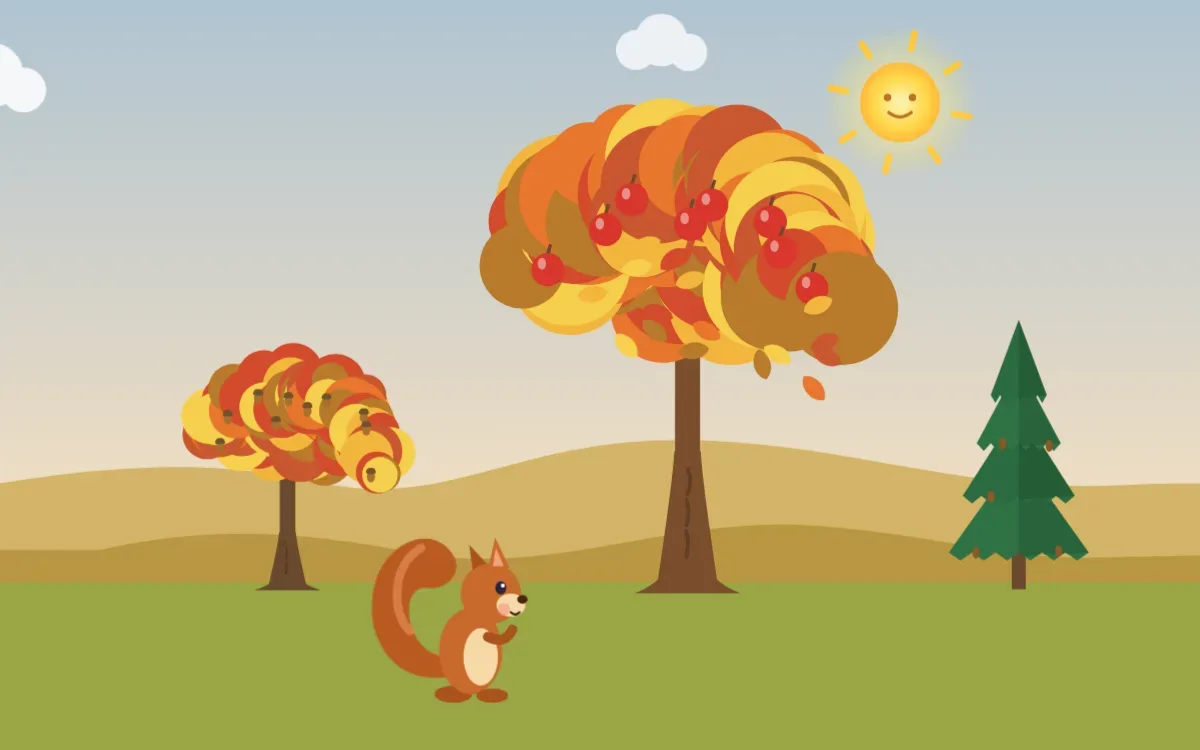
With Hazel the squirrel, children tap buds to make them burst into leaves and blossom, grow apples in summer, call up an autumn wind to make coloured leaves fall, and look closely at a bare winter twig to find the buds waiting inside. They whizz an oak and a pine through the year, learn the words deciduous and evergreen, and name six common British trees from their leaves, seeds and bark.
The game also tackles common mix-ups, such as thinking every tree loses its leaves, that a bare tree in winter is dead, or that only trees with needles can be evergreen.
Questions and answers
What is the difference between deciduous and evergreen trees?
Deciduous trees lose all their leaves in autumn and grow new ones in spring, like oak and horse chestnut trees. Evergreen trees, such as holly and pine, keep green leaves all year, dropping only a few old leaves at a time.
How do trees change through the seasons?
A deciduous tree's buds burst into new leaves and blossom in spring, and in summer it is covered in green leaves while its fruit grows. In autumn its leaves change colour and fall, and in winter its branches are bare.
Is a tree with no leaves in winter dead?
No, a deciduous tree with bare branches in winter is resting, not dead. If you look closely at its twigs you can see buds, which hold the new leaves that will open in spring.
What age is Trees Through the Seasons for?
The game is for children aged 5 to 6 and matches the Year 1 science curriculum in England on deciduous and evergreen trees and changes across the four seasons. Every instruction is read aloud with captions, so early readers can play on their own.
What does the Trees Through the Seasons game include and how long does it take?
The game has four chapters, each with an animated introduction, hands-on activities and quick questions, followed by a 10-question Tree Challenge. Playing everything takes about 35 minutes, and children can start any chapter from Hazel's trail map.
We count visits to make TapLearn better.We use one cookie, only on this site, to see how families find and use it. No adverts, and nothing is shared.One cookie, only on this site. No adverts.How we measure
 TapLearn