Food Chains: A Wildlife Trail with Fern the Frog
Learn how food chains work and spot producers, predators and prey, by building chains in woods, ponds and seashores with Fern the frog.
- Ages 7–10
- About 45 min
- Some thinking
- Animals & Nature
Learn how food chains work and spot producers, predators and prey, by building chains in woods, ponds and seashores with Fern the frog.
Year 4 science · 1
Year 4 science · 1
Year 4 science · 1
Year 4 science · 1
Year 4 science · 1
What the chapters cover in the national curriculum in England:
Food Chain Trail is an interactive science game that teaches children aged 7–10 how food chains work and how to identify producers, predators and prey, matching Year 4 science in England. Fern the frog, a friendly wildlife ranger, narrates every step.
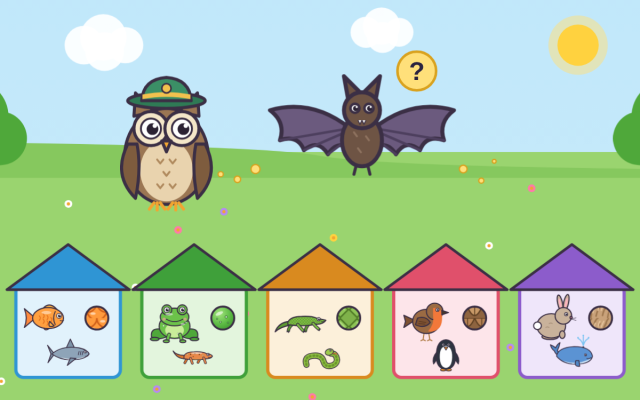
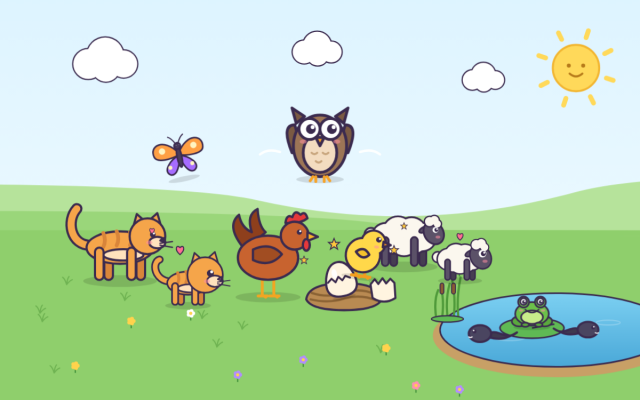
Children travel along a trail map through a meadow, a wood, a pond and a seashore. They grow a seedling with sunlight, flip arrows that point the wrong way, tap or drag living things into order, sort animals into baskets and answer 'what if' questions about changing numbers of animals.
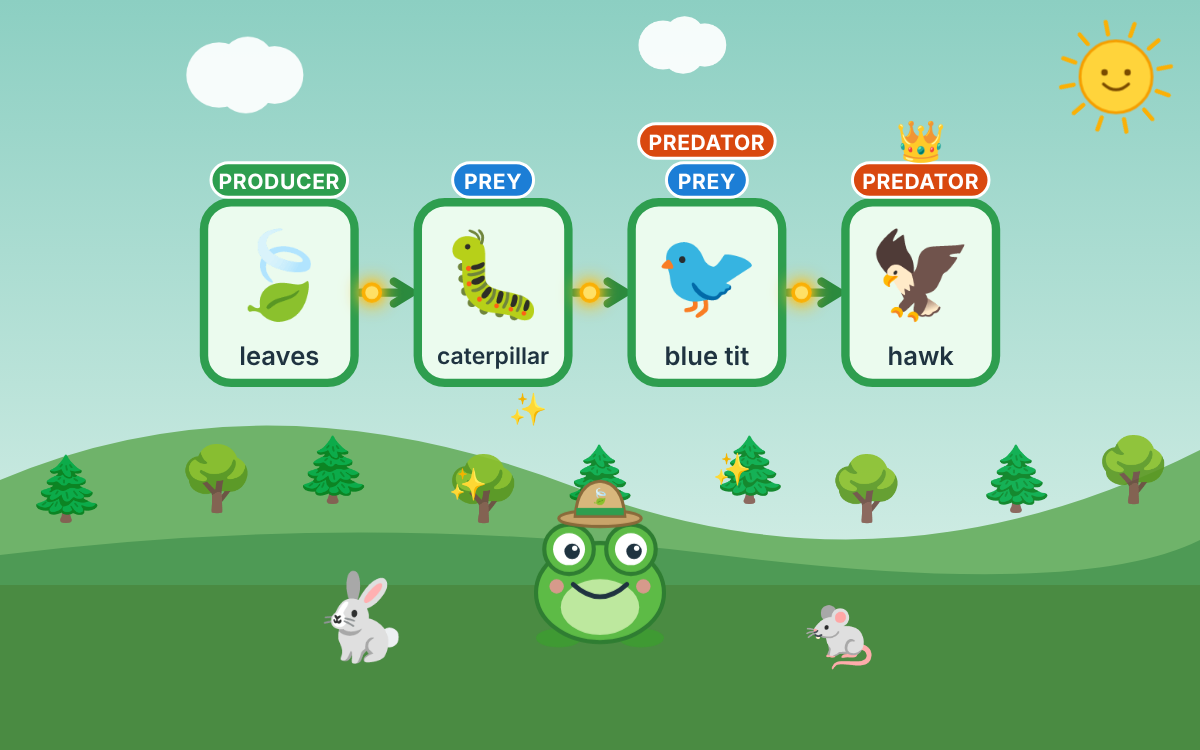
Along the way they meet the key ideas: a producer is a green plant that makes its own food; each arrow means 'is food for'; a predator hunts and eats other animals; prey are the animals that get eaten; and the top predator sits at the end of the chain.
A food chain shows which living thing is food for which, starting with a green plant. Arrows point from the food to the animal that eats it, so grass → rabbit → fox means grass is food for the rabbit and the rabbit is food for the fox.
A producer is a green plant that makes its own food using sunlight, water and air. Every food chain starts with a producer, such as grass, leaves, pondweed or seaweed, because that is where the food in the chain begins.
A predator is an animal that hunts and eats other animals, and prey is an animal that gets hunted and eaten. Many animals are both: a blue tit eats caterpillars, but it is also hunted by hawks.
It is made for children aged 7 to 10. It matches the Year 4 science statement in England's national curriculum: construct and interpret a variety of food chains, identifying producers, predators and prey.
It has five chapters on a trail map, an optional warm-up and a 10-question final challenge, with narration and sound effects throughout. Playing everything takes about 45 minutes, and children can start from any chapter.
 TapLearn
Getting it ready…
Great work on chapter 1! To open the next chapters, ask a grown-up to take a look.
To play this game, ask a grown-up to take a look. There are lots of free games you can play right now too!
Create a free family account and your child can play every chapter of every game for 7 days, with no card needed. Their progress is kept. After that, the free plan is free for ever, and membership is £6.99 a month if you'd like to keep every chapter.
That's all the learning time for today. Great work! Flip will be ready to play again tomorrow.