Learn how to spot scams, from fake prizes and free coin sites to fake accounts and AI voice calls, by solving five cases as a Scam Buster.
Online game, chapter 1 free · Years 5 to 9 (KS2 and KS3) · ages 9–11 · national curriculum in England · no adverts · plays on a phone, tablet or computer · no sign-up to start.
An online money and life skills game for Years 5 to 9 (KS2 and KS3). It covers the national curriculum in England, Years 1–6 relationships and health education: “The risks relating to online gaming, video game monetisation, scams, fraud and other financial harms, and that gaming can become addictive”.
5 short chapters, about 35 minutes in all. Children can stop after any chapter.
Start playing for free. Plays in the browser on phones, tablets and computers: no app, no adverts.
Free for teachers: every chapter on the whiteboard with a free teacher account.
Last updated · Checked against the national curriculum in England by the TapLearn team
What you'll learn
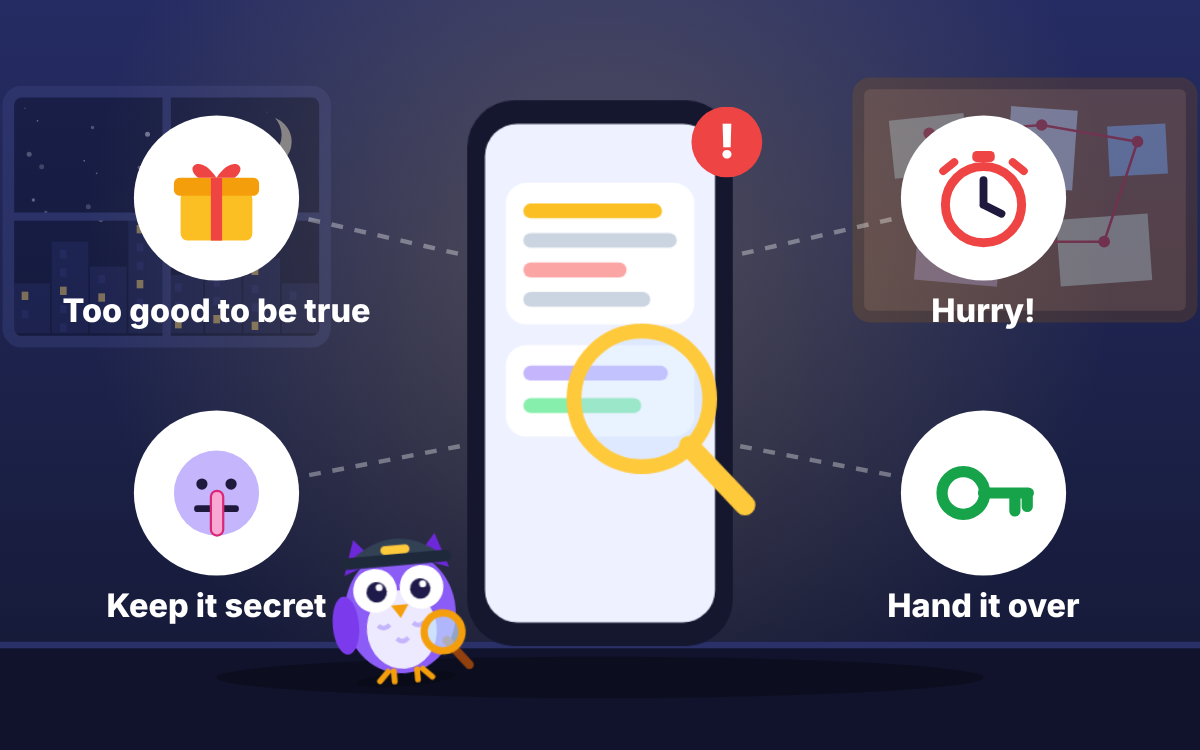
The four warning signs of a scam, including hurry and secrecy
Why free coin generators and pay-to-claim prizes are bait
How to spot copycat web addresses and fake or hacked accounts
How AI voice cloning works and why a family safe word helps
Why passwords, PINs and one-time codes must never be shared
What to do after a scam: stop, check, tell a trusted adult
Chapter by chapter
What a scam is and its four warning signsStart playing for free
Learn what a scam is and the four warning signs most scams share (too good to be true, hurry, keep it secret, hand it over) by tapping clues in a scam message and sorting real messages from scams.
Years 1–6 relationships and health education · 1
Too-good-to-be-true offers and fake websites
Learn why free coin generators and prizes you pay to claim are bait, that in-game spending uses real money, and how to spot copycat web addresses and risky links in surprise messages.
Years 1–6 relationships and health education · 1
Fake accounts and hacked friends' accounts
Learn to spot fake accounts by checking the name, how new the account is and what it asks for, and to check another way when a friend's hacked account asks for money or passwords.
Years 1–6 relationships and health education · 1
AI voice scams and the family safe word
Learn how AI voice cloning copies a voice from a short clip, then handle a pretend call from 'Mum' by asking for the family safe word, hanging up and calling back on a known number.
Years 1–6 relationships and health education · 1
Keeping money safe and what to do if scammed
Learn to keep passwords, PINs, one-time codes and card numbers secret, how strong passwords and two-step login protect accounts, and what to do if scammed: stop, check and tell a trusted adult.
What the chapters cover in the national curriculum in England:
Years 1–6 relationships and health education: The risks relating to online gaming, video game monetisation, scams, fraud and other financial harms, and that gaming can become addictive
About this adventure
Spotting Scams is an interactive game that teaches children aged 9–11 how to recognise scams and keep their money and personal information safe online. Players join Inspector Ivy at Scam Busters HQ and solve five cases, each opening with a short animated introduction.
Children learn the four warning signs most scams share: too good to be true, hurry, keep it secret and hand it over. They tap the clues in a scam message, sort real deals from bait, inspect a copycat profile, answer a pretend phone call from a cloned voice and lock secrets in a vault.
Along the way they meet phishing links, copycat web addresses, hacked accounts, AI voice cloning, family safe words and one-time codes. A ten-question Scam Buster challenge checks what they know, and they leave with a simple plan: stop, check, tell.
Questions and answers
What is a scam, in simple words?
A scam is a trick where someone pretends to be someone they are not so that you hand over money, personal details, passwords or your account. Scammers can reach people by text, email, games, social media or phone calls.
How can children tell if a message is a scam?
Children can look for four warning signs: an offer that is too good to be true, pressure to hurry, a request to keep it secret, and a request to hand over money, passwords, codes or personal details. If they spot one, they should stop and show a trusted adult.
What is an AI voice scam and how does a family safe word help?
An AI voice scam uses a computer program to copy someone's voice from a short clip, then calls pretending to be them and asking for money. A family safe word, agreed face to face and never posted online, lets you check whether the caller is really who they say.
What age is the Spotting Scams game for?
The game is designed for children aged 9 to 11, in Years 5 and 6, and links to the online scams and fraud content in the RSHE guidance for England. Older children in Years 7 to 9 can also use it as a quick refresher.
What does the Spotting Scams game include and how long does it take?
The game has five chapters, each with an animated introduction, hands-on activities and a recap, followed by a ten-question Scam Buster challenge. Playing everything takes about 35 minutes, and children can start from any chapter.
We count visits to make TapLearn better.We use one cookie, only on this site, to see how families find and use it. No adverts, and nothing is shared.One cookie, only on this site. No adverts.How we measure

 TapLearn