What you'll learn
- Convert between kilometres, metres, centimetres and millimetres
- Change kilograms to grams and litres to millilitres using 1000
- Write money with a decimal point, like £3.05 = 305p
- Convert hours to minutes, knowing an hour is 60 minutes
- Estimate measures using benchmarks like a 1 kg bag of sugar
- Work out change from a £5 note by counting up
Chapter by chapter
- Length: converting km, m, cm and mm Free to try
Year 4 maths · 1
- Converting kg and g, litres and ml, pounds and pence
Year 4 maths · 1 Year 4 maths · 2
- Time: converting hours and minutes
Year 4 maths · 1
- Estimating and comparing measures
Year 4 maths · 2
- Calculating measures and money in pounds and pence
Year 4 maths · 2
- Measuring master challenge (10 questions)
What the chapters cover in the national curriculum in England:
- Year 4 maths: Convert between different units of measure
- Year 4 maths: Estimate, compare and calculate different measures, including money in pounds and pence
About this adventure
Converting Units of Measure is an interactive maths game that teaches children aged 8–10 how to change between units such as kilometres and metres, kilograms and grams, hours and minutes, and pounds and pence. It follows the Year 4 measurement objectives of the national curriculum in England.
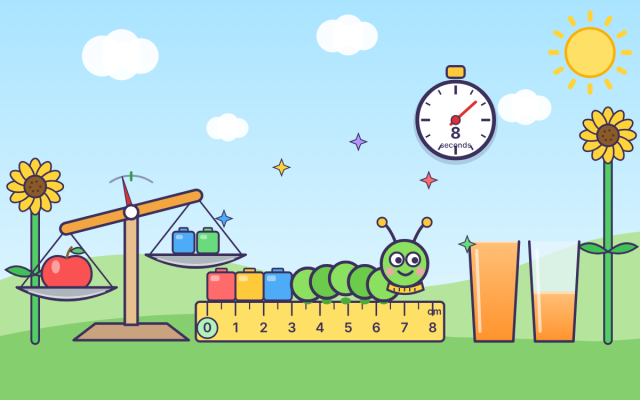
Guided by Milli the mouse, players tap a zoomed-in ruler to count millimetres, stack weights on kitchen scales, pour water into a measuring jug and drag a clock hand round a full hour. They learn the key rule: moving to a smaller unit means multiplying, and moving to a bigger unit means dividing. They also discover that an hour has 60 minutes, not 100.
Children estimate using benchmarks such as a door being about 2 metres tall, compare measures by changing them into the same unit first, and count up to find change. Each chapter ends with typed practice questions and spoken hints.
Questions and answers
How do you convert between units of measure?
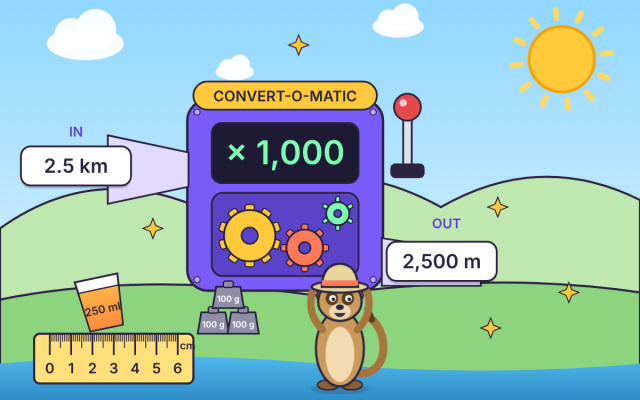
To convert to a smaller unit, multiply; to convert to a bigger unit, divide. For example, 3 km is 3 × 1000 = 3000 m, and 400 cm is 400 ÷ 100 = 4 m, because 100 centimetres make 1 metre.
How many grams are in a kilogram and millilitres in a litre?
There are 1000 grams in a kilogram and 1000 millilitres in a litre. The word kilo means a thousand, which is also why a kilometre is 1000 metres. A bag of sugar weighing 1 kilogram is a handy way to picture it.
Why are there 60 minutes in an hour and not 100?
Time does not use tens like metric units, so one hour is always 60 minutes. Many children assume 100 because other conversions use 10, 100 or 1000, so 2 hours is 120 minutes, not 200.
What age is this measuring game for?
The game is designed for children aged 8 to 10, matching Year 4 measurement in the national curriculum in England. An optional warm-up on multiplying by 10, 100 and 1000 helps younger or less confident players get started.
What does the Measure Town game include and how long does it take?
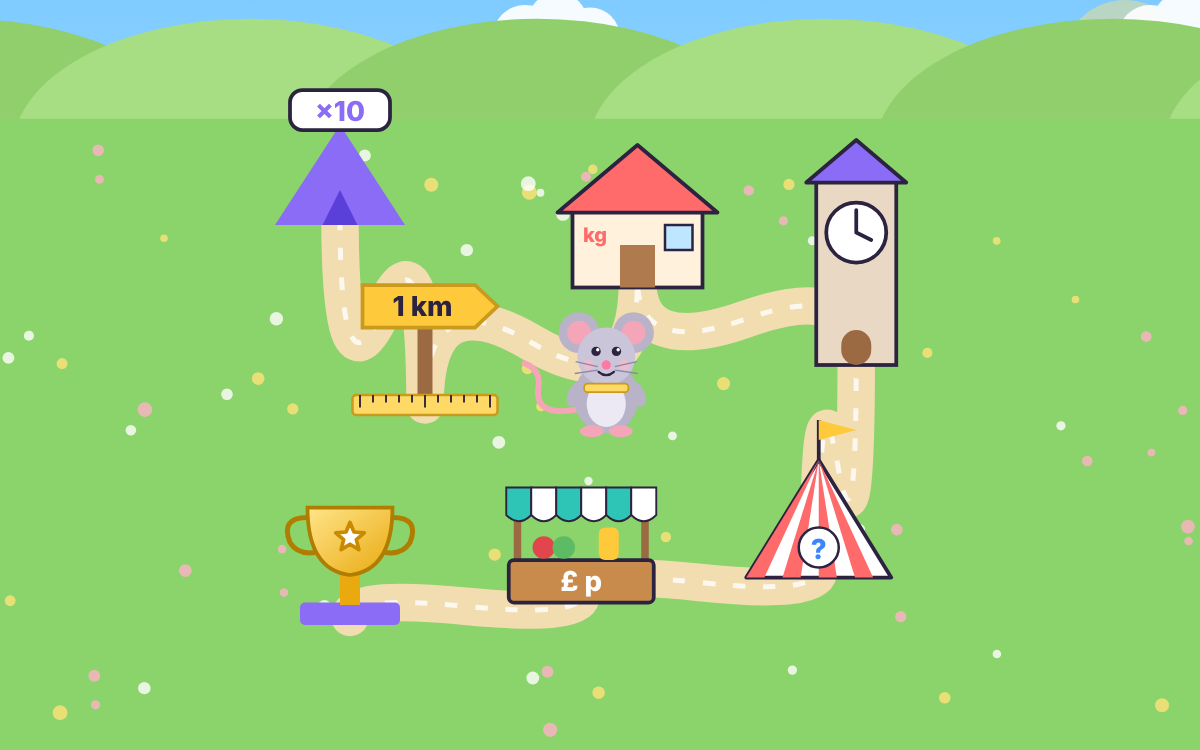
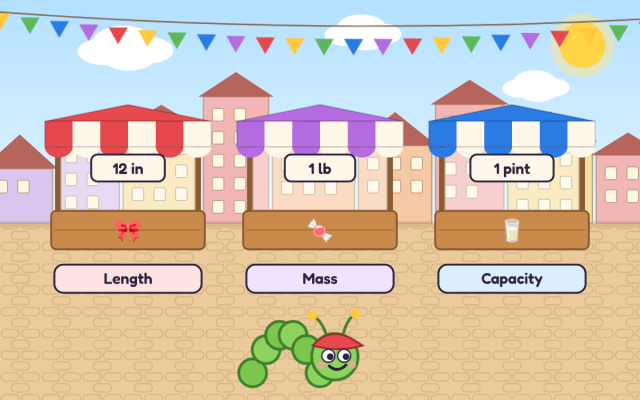
The game has five chapters on length, mass, capacity, money, time, estimating and calculating, plus a 10-question final challenge. Playing everything takes about 40 minutes, and children can choose any chapter from the town map.

 TapLearn