What you'll learn
- Recall the 2, 5 and 10 times tables up to 10 × 10
- Spot that 2 times table answers end in 0, 2, 4, 6 or 8
- Why 10 times table answers end in 0, and 4 tens make 40
- Tell odd and even numbers apart by checking the last digit
- Divide by sharing equally and by making equal groups
- Use a multiplication fact to find a division fact, like 30 ÷ 10 = 3
Chapter by chapter
- The 2 times table: counting in groups of 2 Free to try
Year 2 maths · 1
- Odd and even numbers: making pairs
Year 2 maths · 1
- The 10 times table: counting in groups of 10
Year 2 maths · 1
- The 5 times table: counting in groups of 5
Year 2 maths · 1
- Division facts for the 2, 5 and 10 times tables: sharing and grouping
Year 2 maths · 1
- Times tables challenge: 2, 5 and 10 facts, division, odd and even (10 questions)
See every Maths chapter in the chapter library
What the chapters cover in the national curriculum in England:
- Year 2 maths: Recall and use multiplication and division facts for the 2, 5 and 10 multiplication tables, including recognising odd and even numbers
About this adventure
2, 5 and 10 Times Tables is an interactive maths game that teaches children aged 6–8 the 2, 5 and 10 times tables, the division facts that go with them, and how to recognise odd and even numbers. It follows the Year 2 national curriculum in England.
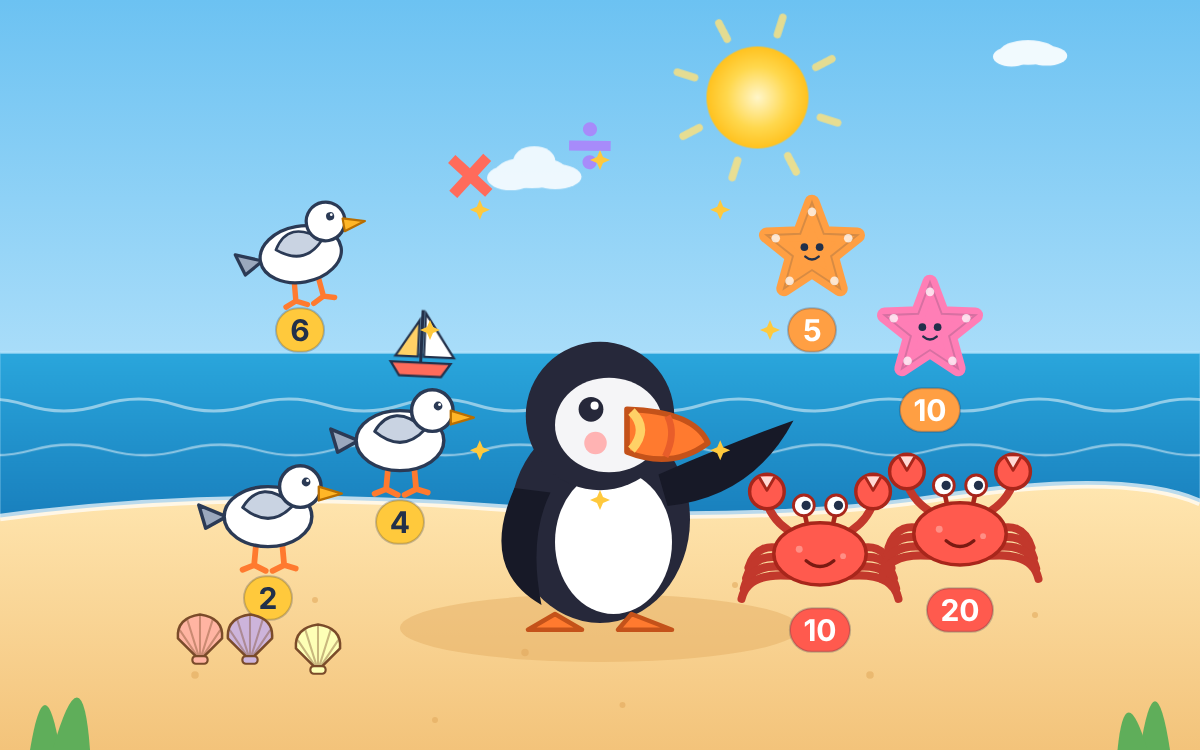
On a sunny beach with Pip the puffin, children build each table themselves: every seagull adds 2 feet, every starfish 5 arms and every crab 10 legs, while the facts fill a board. They spot patterns, such as 5 times table answers ending in 5 or 0, and pair up shells to see that even numbers make pairs and odd numbers leave one over.
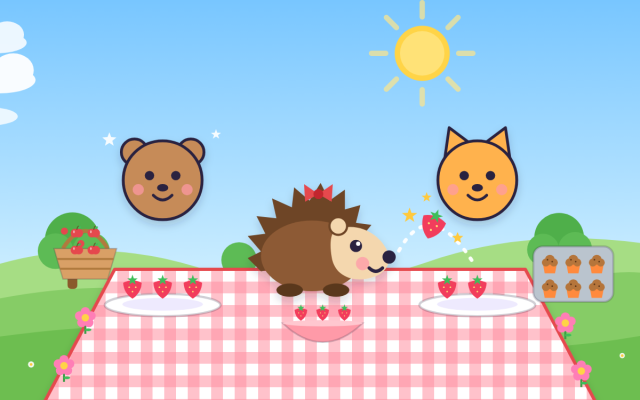
Division is shown as sharing equally and as grouping, then as a times table fact turned round. Practice mixes tap-to-choose and typed answers, with counting pictures as hints and a final 10-question challenge.
Questions and answers
What is the easiest way for a child to learn the 2, 5 and 10 times tables?
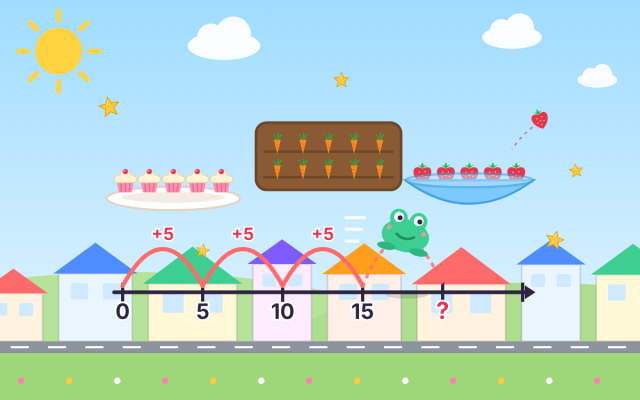
Start by counting in equal steps, then link each step to a fact, such as 3 groups of 2 make 6. Patterns help too: 2 times table answers end in 0, 2, 4, 6 or 8, the 5s end in 5 or 0, and the 10s always end in 0.
How do you tell if a number is odd or even?
Look at the last digit: a number ending in 0, 2, 4, 6 or 8 is even, and one ending in 1, 3, 5, 7 or 9 is odd. Even numbers can be split into pairs with nothing left over, while odd numbers always have one left.
How do times tables help with division?
Every division fact is a times table fact turned round. Because 4 × 5 = 20, you know that 20 put into groups of 5 makes 4 groups, so 20 ÷ 5 = 4. In Year 2, children learn division both as sharing equally and as grouping.
What age is this times tables game for?
It is designed for children aged 6 to 7 in Year 2, matching the national curriculum in England for multiplication and division. Children up to about 8 who are still unsure of the 2, 5 and 10 times tables can use it for extra practice.
What does the times tables game include and how long does it take?
The game has an optional counting warm-up, five chapters and a 10-question challenge, and takes about 40 minutes to play in full. Each chapter starts with a short animated intro, and every instruction is read aloud, with hints when an answer is wrong.

 TapLearn