The lists, year by year
- Years 1 and 2: common exception words. Everyday words that don't follow the usual sounds, such as the, said, was, they, because, people, could and would. Schools often call them tricky words.
- Years 3 and 4: the Year 3/4 list. About 100 words, including accident, answer, believe, build, business, calendar, centre, different, early, February, grammar, guard, heart, island, knowledge, library, minute, often, perhaps, possession, quarter, separate, strength and woman.
- Years 5 and 6: the Year 5/6 list. About 100 words, including accommodate, achieve, ancient, available, bargain, conscience, definite, embarrass, environment, familiar, government, immediate, language, marvellous, necessary, neighbour, parliament, queue, recommend, rhythm, sincere, temperature, twelfth and yacht.
Your child's school will usually send home a copy of the full list. It's in English Appendix 1 of the national curriculum.
Year 2 Common Exception Words: An Island Word Hunt
Learn to read and spell the Year 2 common exception words by spotting each tricky part, waking silent letters…
Year 3 and 4 Spelling Words: A Space Mission with Nova
Learn the Year 3 and 4 spelling words with a memory trick for each, then fly a rocket round nine planets of w…
Year 3 and 4 Spelling: Sail the Spell Isles with Pip
Learn the Year 3 and 4 spelling rules, from prefixes and suffixes to homophones, by building words, tapping d…
Year 5 and 6 Spelling Words: Sail the Spelling Isles
Learn the 100 Year 5 and 6 spelling words using word roots, word origins and memory tricks, then type them in…Why these words?
They're words children use often in their writing, but they can't be spelled by sounding out alone: think of "February", "separate" or "rhythm". In Year 6, spelling is tested in the grammar, punctuation and spelling SATs paper, and spelling these words correctly is part of how teachers assess writing.
How to practise without tears
- Five at a time. A whole list is overwhelming. Pick five words a week and come back to old ones.
- Look for the tricky part. In "separate", it's "a rat" in the middle. In "necessary", it's one collar (c) and two sleeves (ss).
- Say it as it's spelled. "Feb-ru-ary", "Wed-nes-day", "bus-i-ness".
- Look, say, cover, write, check. Look at the word, say it, cover it, write it, then check and fix it.
- Spot them. Find the words in books, on signs and in recipes.
- Use them. A word sticks when your child writes it in a sentence of their own.
Our guide on helping with spelling at home has more ideas, including weekly spelling tests.
Homophones: An Island Adventure with Echo the Parrot
Learn how to choose the right homophone, from heard or herd to practice or practise, by solving word puzzles…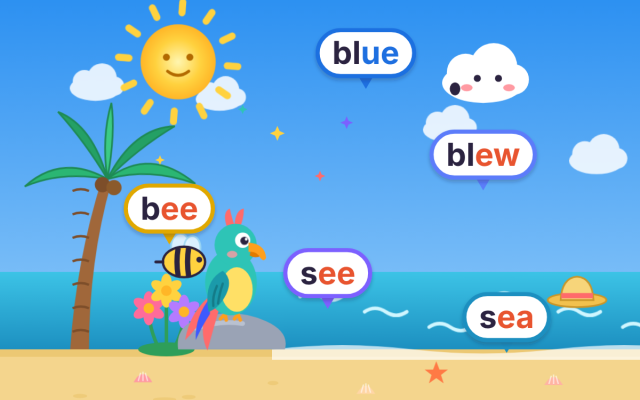
Year 2 Homophones: Sound-Alike Island with Echo
Learn the Year 2 homophones, from see and sea to there, their and they're, by tapping scenes and spelling wor…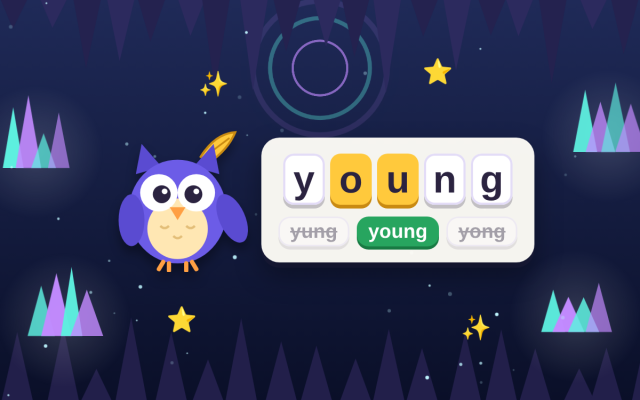
 TapLearn