What you'll learn
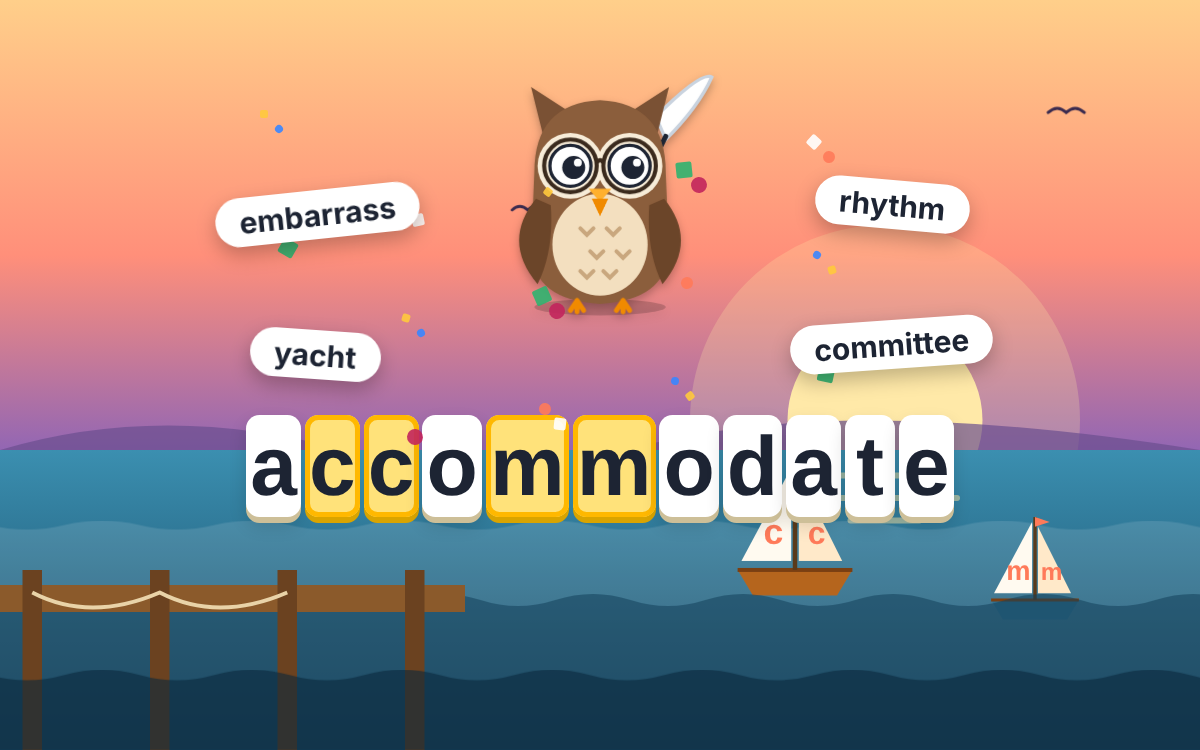
- Spot where double letters go in words like accommodate and embarrass
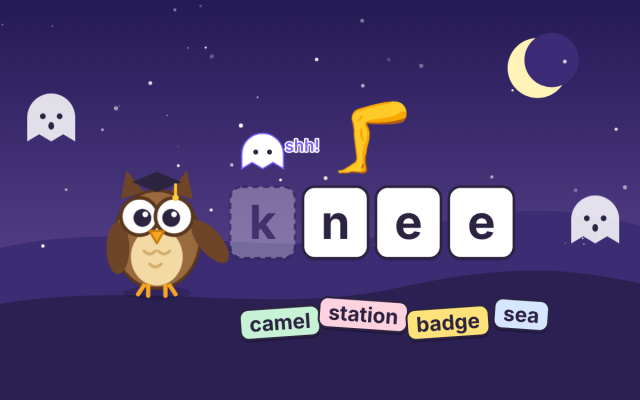
- Find silent letters and wake them with family words like muscular
- Use morphology: roots, prefixes, suffixes and letters that drop
- Use etymology: Greek ph and y, French eur and Latin roots
- Catch hidden vowels with a spelling voice, as in vegetable
- Learn tricky words by heart with look, say, cover, write, check
Chapter by chapter
- Double letters: accommodate, embarrass and committee Free to try
Years 5–6 english · 1
- Silent letters: muscle, rhythm, yacht and more
Years 5–6 english · 1
- Morphology: roots, prefixes and suffixes in word families
Years 5–6 english · 1
- Etymology: Greek, Latin and French word origins
Years 5–6 english · 1
- Words to learn specially: hidden vowels, ie or ei, and memory tricks
Years 5–6 english · 1
- Spelling bee: type words from the Year 5 and 6 list (10 questions)
What the chapters cover in the national curriculum in England:
- Years 5–6 english: Use knowledge of morphology and etymology in spelling and understand that the spelling of some words needs to be learnt specifically, as listed in English appendix 1
About this adventure
Spelling Isles is an interactive game that teaches children aged 9–11 the 100 Year 5 and 6 spelling words from English Appendix 1 of the national curriculum. Players sail between islands with Quill the owl, tapping letters, filling gaps, building words from parts and typing answers on an on-screen keyboard.
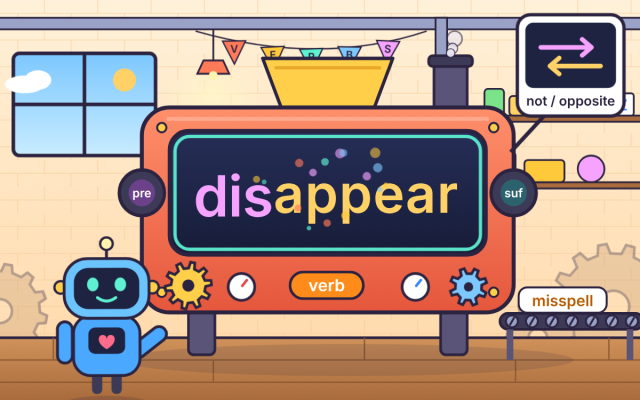
Along the way they meet the ideas the curriculum names. Morphology means the parts of a word, roots, prefixes and suffixes, and the letters that drop or stay when they join, as in explain and explanation. Etymology is a word's history, so Greek clues like ph and y help with physical and symbol.
Some words simply have to be learnt, so the game also teaches a spelling voice, ie or ei, memory tricks and look, say, cover, write, check. A Word Book holds a tip for every word, and a spelling bee mixes words from the whole list.
Questions and answers
What are the Year 5 and 6 statutory spelling words?
They are a list of 100 words in English Appendix 1 of the national curriculum in England that children are expected to spell by the end of Year 6. Examples include accommodate, necessary, rhythm and yacht.
What is morphology in spelling, in simple words?
Morphology is knowing the parts that build a word: the root, plus any prefix at the start and suffix at the end. Spotting the parts helps with long words, such as govern plus ment making government.
How does knowing a word's origin help with spelling?
A word's history, called its etymology, often explains odd letters. Words from Greek use ph for an f sound and y for an i sound, as in physical and symbol, while queue comes from the French word for tail.
What age is this spelling game for?
It is designed for children aged 9 to 11, in Years 5 and 6 of primary school. Younger confident spellers can also try it, and an optional warm-up recaps syllables, prefixes and suffixes before the harder chapters.
What does the game include and how long does it take?
It has five chapters, an optional warm-up, a Word Book with a tip for each of the 100 words, and a ten-word typed spelling bee. Playing everything takes about an hour, and children can start any chapter from the map.
 TapLearn