Why writing feels hard
When a child writes, they're doing several jobs at once: having an idea, putting it into a sentence, spelling each word, remembering punctuation and forming letters. If any one of those is hard, the others suffer. That's why a child who tells a brilliant story out loud may write only two lines.
In 2026, 73% of Year 6 children in England met the expected standard in writing, lower than in reading or maths, so if writing is a struggle, your child is far from alone.
What children learn
- Years 1 and 2: sentences with capital letters and full stops, joining ideas with "and", "because" and "when", question and exclamation marks, and describing words (expanded noun phrases such as "the big, hairy spider").
- Years 3 and 4: paragraphs, speech marks, fronted adverbials ("Later that day, …"), and planning before writing.
- Years 5 and 6: writing for different readers, from formal letters to stories, with relative clauses, brackets and dashes, and editing their own work.
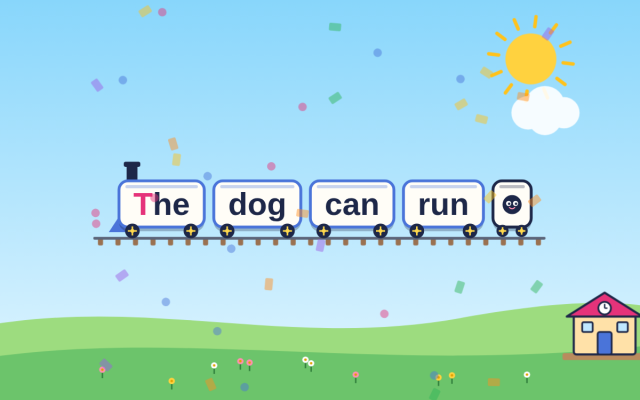
Capital Letters and Full Stops: A Sentence Train Adventure
Learn how capital letters and full stops make a sentence, then build sentence trains, fix capitals and join i…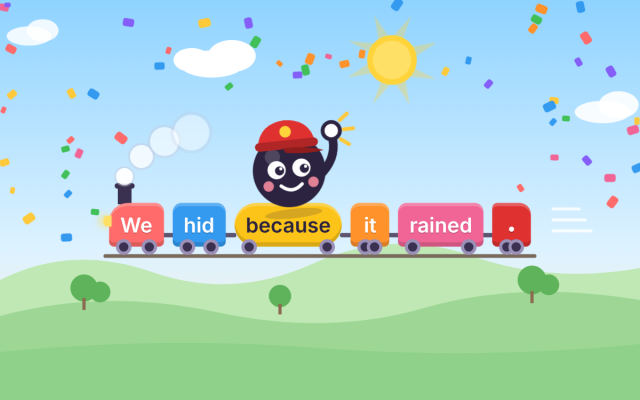
Writing Sentences: All Aboard the Sentence Express
Learn the skills of writing sentences that are clear and correct by building word trains, fixing capitals and…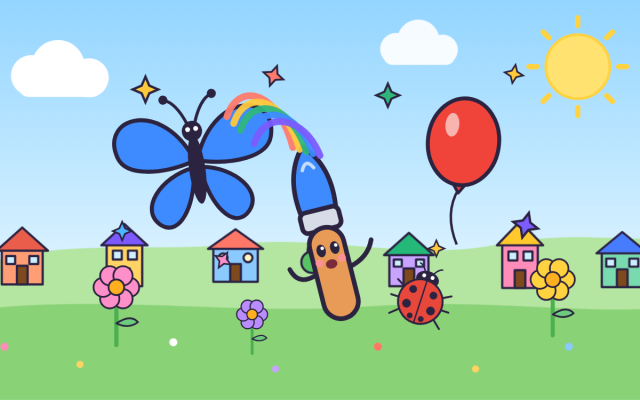
Expanded Noun Phrases: Paint Picture Town with Words
Learn how expanded noun phrases describe and specify, like the blue butterfly, by dragging describing words t…
Writing Paragraphs: Ride the Paragraph Express with Cleo
Learn how writing paragraphs works: group sentences by idea, spot when to start a new one, order them and lin…
How to Write a Story: A Story Workshop with Inky
Learn how to write a story: read like a writer, build a setting and a character, plan a plot, say sentences a…
Story Structure: Build Tales with Mo the Story Mouse
Learn story structure: beginning, middle and end, story order, linked events and story words, by sorting card…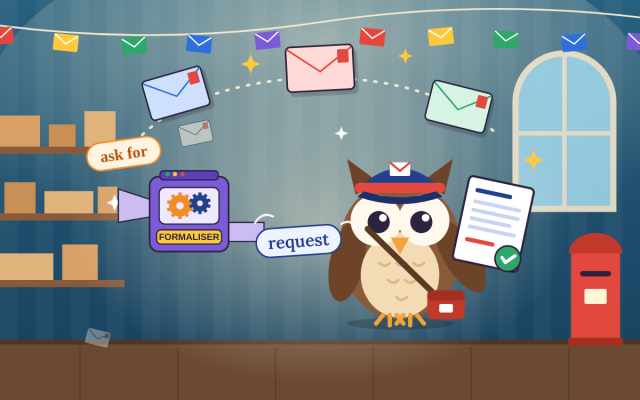
Formal Letter Writing: Quill's Post Office Adventure
Learn formal letter writing: pick a formal or informal tone, then help Quill the owl write letters of request…
Improve Your Writing: A Story Workshop with Scribble
Learn how to improve your writing with wow words, varied sentence starts, vivid detail and careful checking,…Ideas for home
- Talk first. "Tell me what happens" before "write it down". If they can say a sentence, they can usually write it.
- Write for real reasons. A note to a grandparent, a list for a party, instructions for a game, a review of a film.
- Share the pen. You write one sentence, they write the next. For younger children, you can scribe their ideas and they copy one line.
- Read a lot. Children who hear lots of stories have more words and sentence shapes to borrow.
- Praise one specific thing ("I love the word 'crept'") and fix one thing, not everything.
- Keep it short. Five good sentences beat a page of rushed ones.
If your child hates writing
Find out which part is hard: ideas, spelling, or the physical writing. A child who struggles to form letters may enjoy telling a story into a voice recorder and then writing just the first sentence. If handwriting is painful or very slow, see our handwriting guide and mention it to the teacher.
- Chapter 6 of How to Write a Story: A Story Workshop with InkyWrite your own story with a setting, a character and a plotCan describe a setting using the senses and carefully chosen describing wordsMembers
- Chapter 1 of How to Write a Story: A Story Workshop with InkyLearn from a story like yours: its parts, best words and sentencesCan spot the parts of a story, its best words and its sentence patterns, and borrow ideas without copyingFree taster
- Chapter 4 of Story Structure: Build Tales with Mo the Story MouseSpot story openings and endings like once upon a timeCan spot words that often start and end stories, like once upon a time and happily ever afterMembers
- Chapter 5 of Story Structure: Build Tales with Mo the Story MouseSpot repeated words and lines in stories and poemsCan spot words and lines that are repeated in stories and poems, and join in with themMembers
 TapLearn