Words from Greek, French and Latin: A Spelling Balloon Trip
Learn why words from Greek, French and Latin like chorus, chef, antique and science are spelt that way, on a balloon trip collecting spelling stamps.
Online game, chapter 1 free · Years 3 and 4 (KS2) · ages 7–9 · national curriculum in England · no adverts · plays on a phone, tablet or computer · no sign-up to start.
An online English game for Years 3 and 4 (KS2). It covers the national curriculum in England, Years 3–4 english: “Words with the /k/ sound spelt ch (Greek in origin)”, and 3 more statements listed under the chapters.
4 short chapters, about 25 minutes in all. Children can stop after any chapter.
Start playing for free. Plays in the browser on phones, tablets and computers: no app, no adverts.
Free for teachers: every chapter on the whiteboard with a free teacher account.
Last updated · Checked against the national curriculum in England by the TapLearn team
What you'll learn
In Greek words like chorus, school and echo, ch makes a k sound
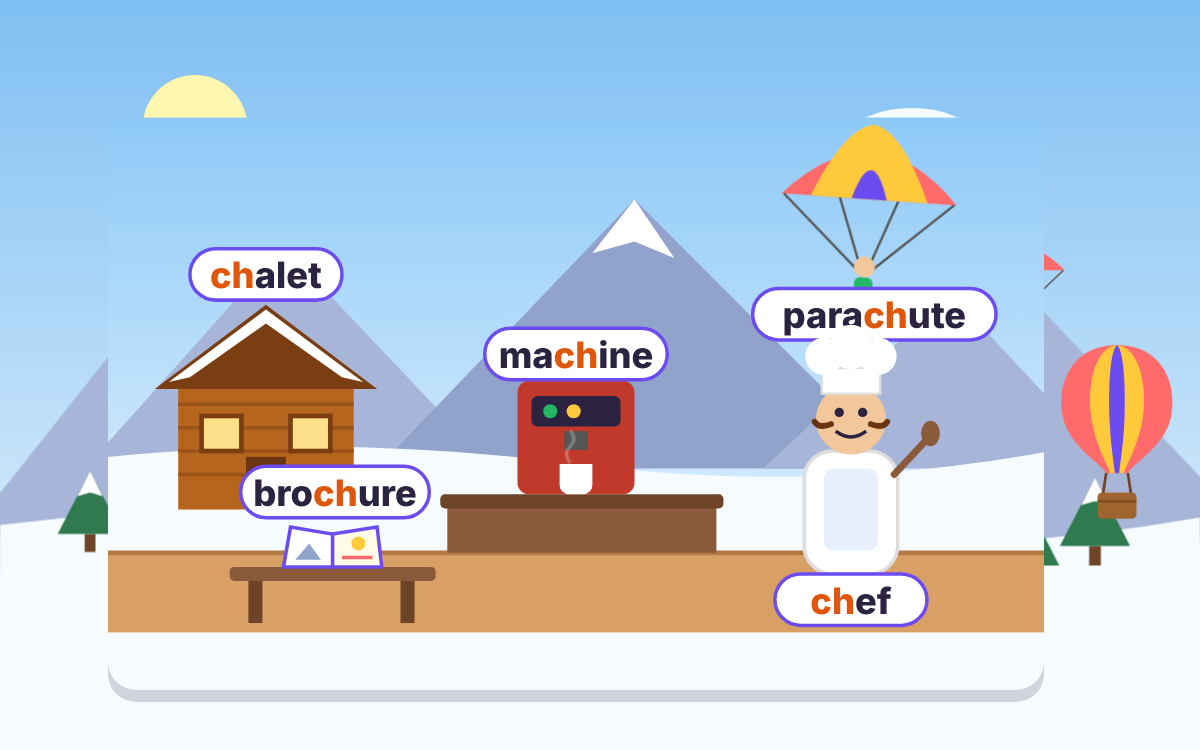
In French words like chef and machine, ch makes an sh sound
League and tongue end in gue, with a silent u and e
Words like antique and unique end in que, which makes a k sound
In Latin words like science and scene, sc makes an s sound
How a word's origin can help you choose the right spelling
Learn that ch makes a k sound in words from Greek, like chorus, school, echo and chemist, by waking an echo cave, fixing word signs and sorting ch words into jars.
Learn that ch makes an sh sound in words from French, like chef, chalet, machine and brochure, by finding them in a mountain cafe and sorting the three sounds ch can make.
Learn to spell words ending in gue for a g sound and que for a k sound, with a silent u and e, by finishing words like league, tongue, antique and unique.
What the chapters cover in the national curriculum in England:
Years 3–4 english: Words with the /k/ sound spelt ch (Greek in origin)
Years 3–4 english: Words with the /ʃ/ sound spelt ch (mostly French in origin)
Years 3–4 english: Words ending with the /g/ sound spelt –gue and the /k/ sound spelt –que (French in origin)
Years 3–4 english: Words with the /s/ sound spelt sc (Latin in origin)
About this adventure
Words from Greek, French and Latin is an interactive spelling game for children aged 7 to 9 that teaches the Year 3 and 4 spelling patterns ch, gue, que and sc, and where they came from.
Players fly a hot-air balloon to Ancient Greece, the French Alps, a French market and Ancient Rome. In each place they tap, listen, sort and fix words: they wake an echo cave to hear ch making a k sound, find French ch words hidden in a mountain cafe, spot the silent u and e at the end of league and unique, and play detective to work out when sc makes just an s sound.
Every place ends with a stamp for the explorer's passport, and a ten-question Explorer Challenge mixes all four patterns, including building spellings from letter tiles.
Questions and answers
Why does ch sound like k in words like school and chorus?
In school, chorus and echo, ch makes a k sound because these words came from Greek. The Greek letter chi was written as ch in Latin and then in English, so we kept that spelling but say it as k.
Why is chef spelt with ch but said with an sh sound?
Chef is a French word, and in French the letters ch make a soft sh sound. English borrowed words like chef, chalet, machine and brochure from French and kept the French spelling and sound.
What are some words ending in gue and que?
Common words ending in gue are league, tongue, vague and catalogue, where gue makes a g sound. Words ending in que include antique, unique, mosque and cheque, where que makes a k sound. In both endings the u and e are silent.
What age is this word origins spelling game for?
The game is designed for children aged 7 to 9, in Years 3 and 4 of primary school in England. It covers spelling patterns from the national curriculum's Year 3 and 4 spelling list, so it also suits older children who want a refresher.
What does the game include and how long does it take?
The game has four chapters, one for each spelling pattern, plus a ten-question Explorer Challenge that mixes them all. Each chapter takes about five minutes, so playing everything takes around 25 minutes, with narration read aloud throughout.
We count visits to make TapLearn better.We use one cookie, only on this site, to see how families find and use it. No adverts, and nothing is shared.One cookie, only on this site. No adverts.How we measure
 TapLearn