Word Meanings: Collect Shiny Words with Maggie the Magpie
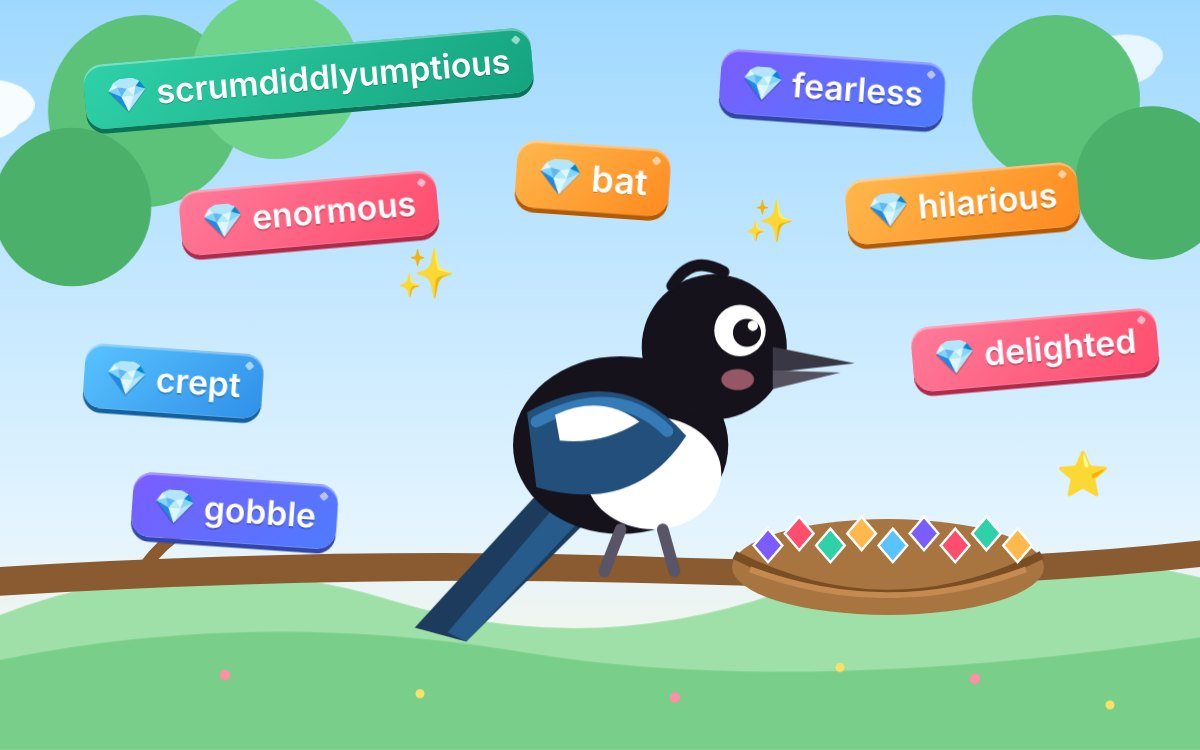
Learn how to work out word meanings from clues, link new words to ones you know and talk about favourites, while helping Maggie the magpie collect shiny words.
Online game, chapter 1 free · Years 1 and 2 (KS1) · ages 5–7 · national curriculum in England · no adverts · plays on a phone, tablet or computer · no sign-up to start.
An online English game for Years 1 and 2 (KS1). It covers the national curriculum in England, Years 1–6 english: “Use relevant strategies to build their vocabulary”, and 3 more statements listed under the chapters.
5 short chapters, about 40 minutes in all. Children can stop after any chapter.
Start playing for free. Plays in the browser on phones, tablets and computers: no app, no adverts.
Free for teachers: every chapter on the whiteboard with a free teacher account.
Last updated · Checked against the national curriculum in England by the TapLearn team
What you'll learn
Use clues in the sentence and picture to work out a new word
Stop, look, swap, check: a plan for tricky words
Link new words to known words that mean nearly the same
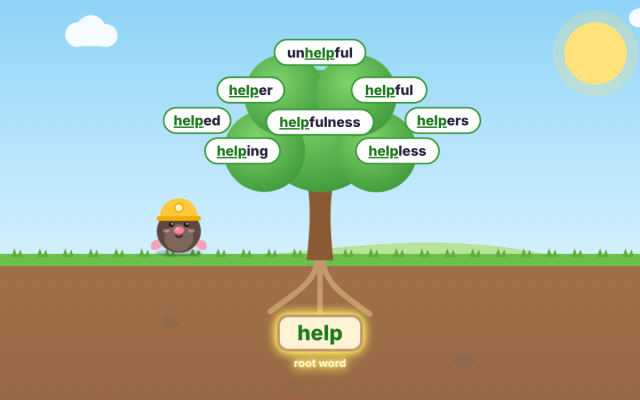
Find a root word inside a longer word, like help in helpful
Use the sentence to choose the right meaning of bat or bark
Say why a favourite word or phrase is a great choice
Chapter by chapter
Using clues to work out what a new word meansStart playing for free
Learn to stop at a new word, look for clues in the sentence and picture, swap in a known word and check it makes sense, by cracking words like exhausted and famished (context clues).
Years 1–6 english · 1Year 1 english · 2Year 2 english · 3
Linking new words to words you already know
Link new words such as tiny, chilly and scamper to familiar words that mean nearly the same, then order words like whisper, talk and shout from gentlest to strongest (synonyms and shades of meaning).
Year 1 english · 2Year 2 english · 3Years 1–6 english · 1
Finding a word you know inside a longer word
Snip long words like farmer and kindness to find the word inside, and learn that un means not, ful means full of and less means without (root words, prefixes and suffixes).
Years 1–6 english · 1Year 2 english · 3
Words with more than one meaning: using the sentence to choose
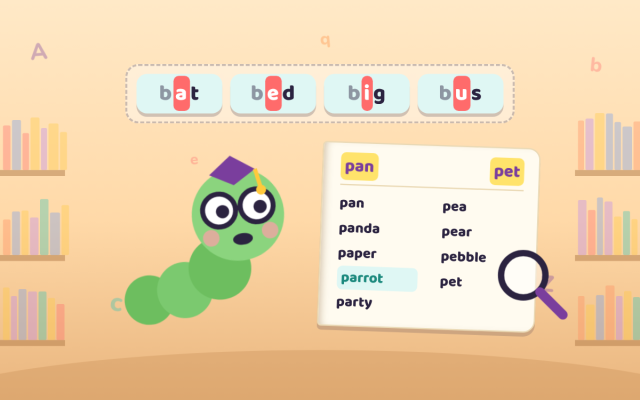
Discover that words like bat, bark, ring and wave have more than one meaning, then tap clue words in each sentence to decide which meaning fits (homonyms).
Year 2 english · 3Year 1 english · 2
Favourite words and phrases: saying what you like and why
Compare plain and powerful words like went and crept, pick favourite words from a short story and give a reason: it sounds fun, paints a picture or shows a feeling (magpie words).
What the chapters cover in the national curriculum in England:
Years 1–6 english: Use relevant strategies to build their vocabulary
Year 1 english: Develop pleasure in reading, motivation to read, vocabulary and understanding by: discussing word meanings, linking new meanings to those already known
Year 2 english: Develop pleasure in reading, motivation to read, vocabulary and understanding by: discussing and clarifying the meanings of words, linking new meanings to known vocabulary
Year 2 english: Develop pleasure in reading, motivation to read, vocabulary and understanding by: discussing their favourite words and phrases
About this adventure
Word Meanings is an interactive game that teaches children aged 5–7 how to work out, link and talk about what words mean, following the vocabulary goals of the KS1 English reading curriculum.
Players help Maggie the magpie fill her nest with shiny words. They learn a four-step detective plan for new words (stop, look for clues, swap in a word you know, check it makes sense), build word bridges between new words and familiar ones, and line up words like warm, hot and boiling from gentlest to strongest.
They also snip long words to find a root word inside, see how un, ful and less change a meaning, use the sentence to choose between two meanings of words like bat and bark, and pick favourite words from a short story and say why they like them. Every line is read aloud, and a ten-question challenge checks what they remember.
Questions and answers
How can children work out what a new word means?
Children can look for clues in the words around it and in the pictures, then try swapping in a word they already know. If the sentence still makes sense, their guess is probably right.
What does linking new words to known words mean in KS1?
It means connecting a new word to a familiar one with a similar meaning, such as enormous with big or chilly with cold. Making these links helps children understand and remember new vocabulary.
What are words with more than one meaning called?
Words that are spelt and said the same but mean different things are often called homonyms, like bat (a flying animal or a cricket bat). The rest of the sentence shows which meaning is meant.
What age is the Word Meanings game for?
Word Meanings is made for children aged 5 to 7 in Years 1 and 2. It matches the KS1 English reading goals for discussing word meanings and favourite words and phrases.
What is in the Word Meanings game and how long does it take?
The game has five chapters and a ten-question challenge, taking about 40 minutes in total. Each chapter has a short animated introduction, hands-on activities and a quick check, and can be played on its own.
We count visits to make TapLearn better.We use one cookie, only on this site, to see how families find and use it. No adverts, and nothing is shared.One cookie, only on this site. No adverts.How we measure
 TapLearn