How the suffixes –ate, –ise and –ify turn nouns and adjectives into verbs
When to just add, drop the e or drop the y
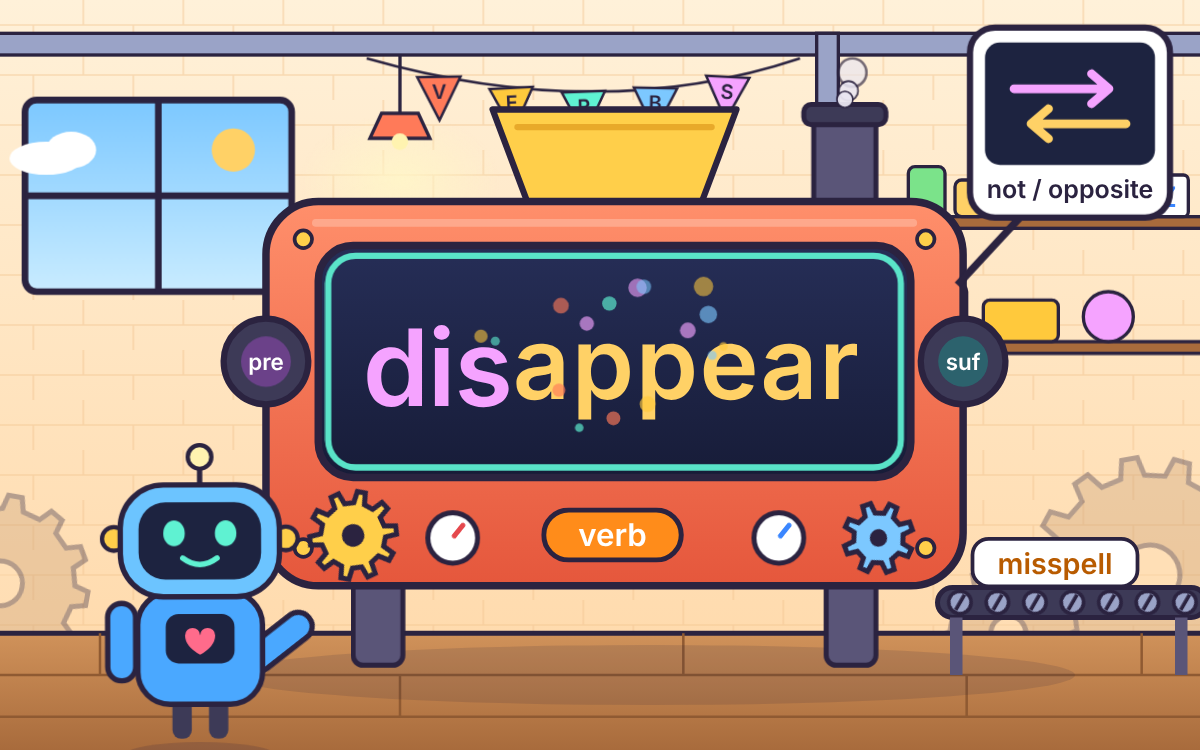
What dis–, de– and mis– mean: not, remove or undo, wrongly
What over– and re– mean: too much, again or back
Why a prefix keeps the root word whole, as in misspell
How to tell a real prefix from look-alike words like dish
Chapter by chapter
Making verbs with –ate, –ise and –ifyFree to try
Year 5 english · 1
Spelling –ate, –ise and –ify verbs: just add, drop the e, drop the y
Year 5 english · 1
Verb prefixes dis–, de– and mis–
Year 5 english · 2
Verb prefixes over– and re–
Year 5 english · 2
Using verb prefixes and suffixes together
Year 5 english · 1Year 5 english · 2
Verb Workshop challenge: prefixes and suffixes (12 questions)
What the chapters cover in the national curriculum in England:
Year 5 english: Word: converting nouns or adjectives into verbs using suffixes
Year 5 english: Word: verb prefixes
About this adventure
Verb Prefixes and Suffixes is an interactive game that teaches children aged 9–11 how to turn nouns and adjectives into verbs with the suffixes –ate, –ise and –ify, and how the prefixes dis–, de–, mis–, over– and re– change what a verb means.
Players drag word parts into Gizmo the robot's Verb Machine and watch each word rebuild as its word class label flips from noun or adjective to verb. They tap the letter to drop before a suffix, type spellings on a keyboard, pick the prefix that makes a sentence make sense, and use a cover trick to find hidden root words.
They meet the spelling rules just add, drop the e and drop the y, and learn that a prefix never changes the root word, so misspell has a double s. Every line is read aloud, and the content follows the Year 5 English curriculum in England.
Questions and answers
What is a verb prefix?
A verb prefix is a group of letters added to the front of a verb to change its meaning, such as dis– in disagree or re– in rewrite. The root word keeps its spelling, so mis plus spell makes misspell, with a double s.
How do you turn a noun or adjective into a verb?
You can often turn a noun or adjective into a verb by adding the suffix –ate, –ise or –ify, as in oxygenate, advertise and solidify. If the word ends in e or y, drop that letter first, so note becomes notify and memory becomes memorise.
Is it –ise or –ize in British English?
Children in UK primary schools are usually taught the –ise spelling, as in realise and memorise. The –ize spelling is standard in American English and is also correct in British English, so the game accepts it while reminding players that schools prefer –ise.
What age is this prefixes and suffixes game for?
The game is designed for children aged 9 to 11 and matches the Year 5 English grammar objectives on verb prefixes and suffixes in the national curriculum in England. Year 6 pupils can also use it to revise these word skills.
What does the game include and how long does it take?
The game includes an optional warm-up, five chapters and a 12-question final challenge, and takes about 45 minutes to play from start to finish. Players can choose any chapter from the workshop menu and continue a chapter later from where they stopped.
Can we count your visit? We'd like to use one cookie, only on this site, to see how families find and use TapLearn, so we can make it better. No adverts, and nothing is shared. How we measure
Create a free family account and your child can play every chapter of every game for 7 days, with no card needed. Their progress is kept. After that, the free plan is free for ever, and membership is £6.99 a month if you'd like to keep every chapter.


 TapLearn