What you'll learn
- Use the contents page, index and glossary for different jobs
- Skim a page for the gist and scan for one detail
- Spot key words and synonyms that lead to the exact answer
- Avoid red herrings that answer a different question
- Make short key-word notes and record the source page
- Present facts in a table, timeline or labelled diagram
Chapter by chapter
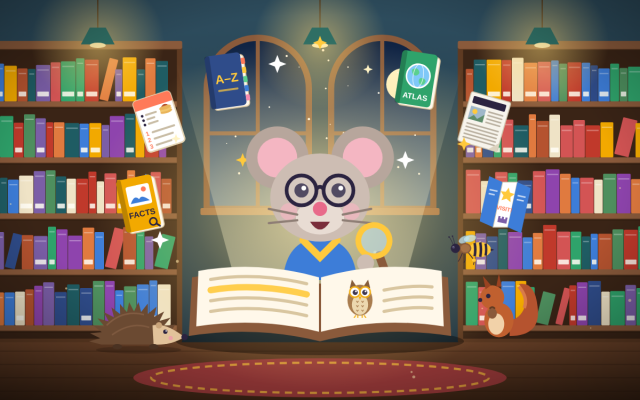
- Find your way with contents, index and glossary Free to try
Years 5–6 english · 1 Years 5–6 english · 2
- Skim for the gist, scan for the detail
Years 5–6 english · 1 Years 5–6 english · 2
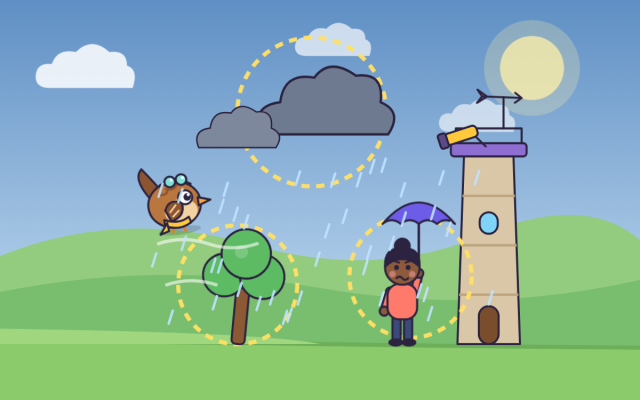
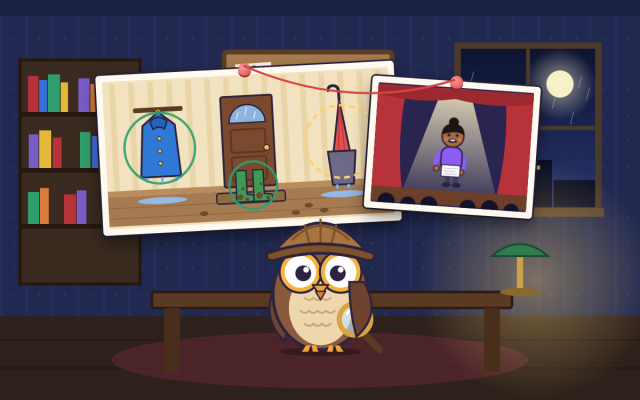
- Use key words, synonyms and dodge red herrings
Years 5–6 english · 2
- Record facts as notes with key words
Years 5–6 english · 2
- Present information in the best layout
Years 5–6 english · 2
- Expedition Challenge: find, record and present (10 questions)
See every English chapter in the chapter library
What the chapters cover in the national curriculum in England:
- Years 5–6 english: Maintain positive attitudes to reading and an understanding of what they read by: reading books that are structured in different ways and reading for a range of purposes
- Years 5–6 english: Retrieve, record and present information from non-fiction
About this adventure
Retrieval Reading Skills is an interactive game that teaches children aged 9–11 how to find, record and present information from non-fiction, as set out in the Year 5 and 6 English national curriculum.
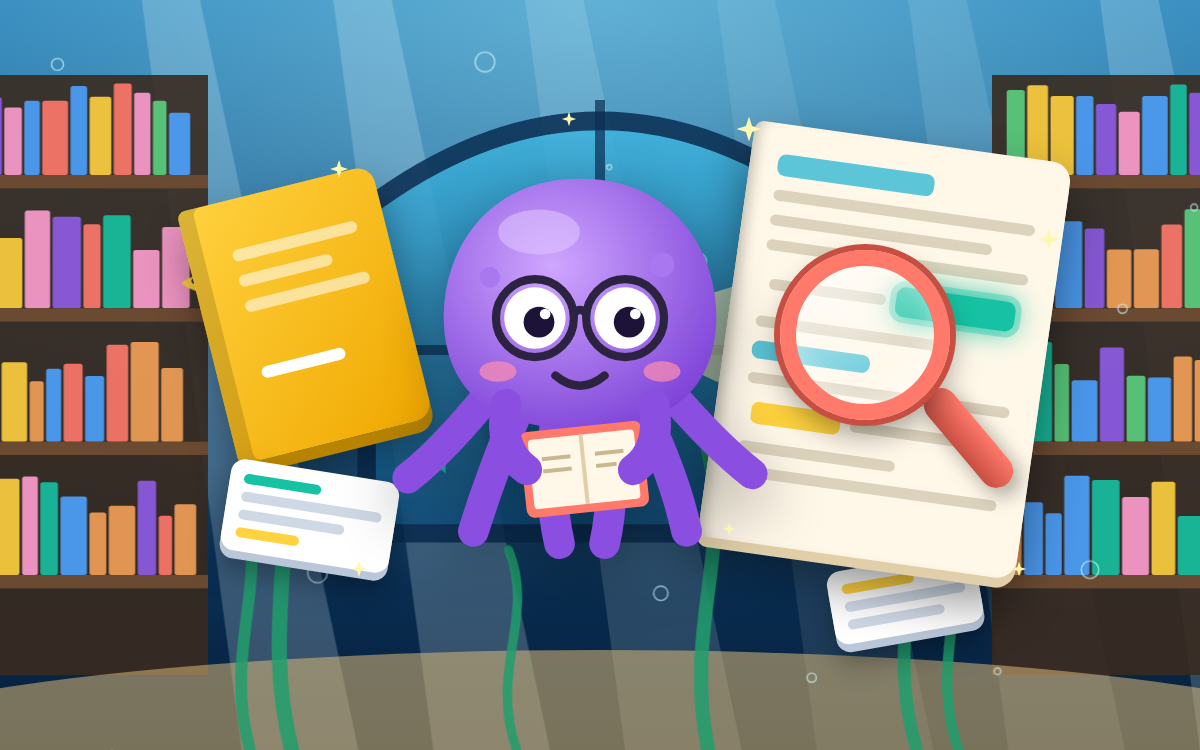
Guided by Inka, an octopus librarian, players open an ocean handbook and use its contents page, index and glossary to jump straight to what they need. They skim headings to get the gist of a page, sweep a searchlight to scan for one number or name, and spot red herrings: details that sit near the answer but answer a different question.
Players then turn sentences into short key-word notes, copy words exactly for find-and-copy questions, and record the page they used as their source. Finally, they choose whether a table, timeline, labelled diagram or flow chart shows their facts most clearly. A 10-question challenge checks every skill.
Questions and answers
What is retrieval in reading?
Retrieval means finding information that is written in a text and recording it accurately. In KS2 reading it covers locating key details, using the question's key words to find the exact answer, and copying words precisely when a question asks you to find and copy.
What is the difference between skimming and scanning?
Skimming is reading quickly to get the gist, using the title, headings, pictures and first sentences. Scanning is hunting for one specific detail, such as a date, number or name, by keeping that key word in mind and sweeping your eyes over the page.
What is the difference between a contents page and an index?
A contents page sits at the front of a book and lists the main chapters in page order. An index sits at the back, lists exact words and names in alphabetical order, and gives every page where each one appears.
What age is this retrieval reading game for?
The game is pitched at children aged 9 to 11, matching Years 5 and 6 of the English national curriculum. Younger confident readers can enjoy it too, especially with an adult nearby to talk through the trickier red-herring questions.
What does the game include and how long does it take?
It includes five guided rooms, a short optional refresher and a 10-question final challenge, taking about 35 minutes to play through. Narration reads every instruction aloud, and children can start any room from the library hall.

 TapLearn