What you'll learn
- What a prediction is and how it differs from a wild guess
- How to use stated details to predict what happens next
- How to read implied details from characters' actions, words and feelings
- How titles, covers and story patterns hint at what will happen
- How to explain a prediction using evidence from the text
- When to keep a prediction and when to change it
Chapter by chapter
- What a prediction is: a sensible idea based on clues Free to try
Years 3–4 english · 1
- Predicting from details the text states
Years 3–4 english · 1 Years 5–6 english · 2
- Predicting from details the text hints at (implied)
Years 3–4 english · 1 Years 5–6 english · 2
- Predicting from titles, covers and story patterns
Years 3–4 english · 1 Years 5–6 english · 2
- Explaining a prediction with a clue: I think… because…
Years 3–4 english · 1 Years 5–6 english · 2
- Checking and changing predictions as you read on
Years 3–4 english · 1 Years 5–6 english · 2
- Story Forecaster Challenge (10 questions) (10 questions)
See every English chapter in the chapter library
What the chapters cover in the national curriculum in England:
- Years 3–4 english: Understand what they read, in books they can read independently, by: predicting what might happen from details stated and implied
- Years 5–6 english: Understand what they read by: predicting what might happen from details stated and implied
About this adventure
Making Predictions in Reading is an interactive game that teaches children aged 7–9 how to predict what might happen next in a story, using details the text states and details it only implies. It follows the Key Stage 2 English curriculum and is pitched mainly at Year 3.
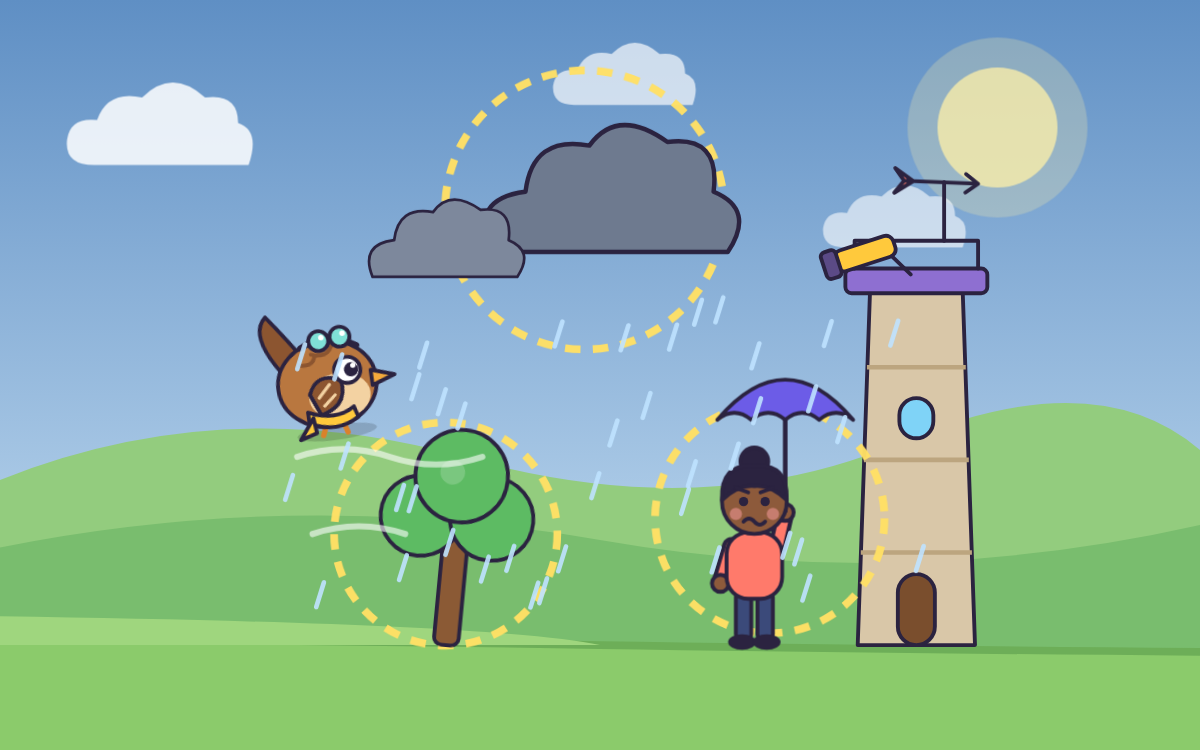
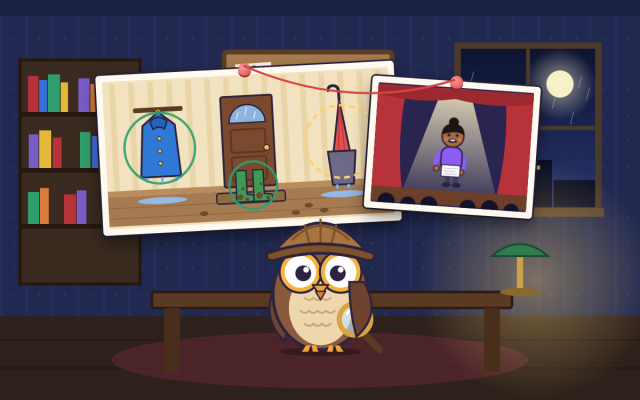
Guided by Wren, a story-forecaster bird, children read short passages and tap the clues. Stated clues are words that tell you something directly. Implied clues are hints you work out from what characters do, say and feel. Players sort sensible predictions from wild guesses, use titles, covers and story patterns, and build 'I think… because…' sentences backed by evidence from the text.
As new pages turn, they decide whether to keep or change a prediction. Every line is read aloud, and a wrong first try gets a hint linked to that particular mistake.
Questions and answers
What does making predictions mean in reading?
Making a prediction in reading means using clues in a story to suggest what might happen next. A good prediction is not a wild guess: it is based on details the text states or hints at, and readers check it as they read on.
What is the difference between stated and implied details?
Stated details are things the text tells you directly, such as 'The brake was broken'. Implied details are hints you work out yourself, such as a character's shaking hands showing they feel nervous. Both kinds of detail can support a prediction.
How can I help my child make predictions when reading?
Pause at an exciting moment and ask what your child thinks will happen next, then ask which words made them think that. Reading on together to check shows them that changing your mind when new clues appear is part of good reading.
What age is this predicting game for?
The game is designed for children aged 7 to 9, mainly Year 3. It follows the Key Stage 2 curriculum aim of predicting what might happen from details stated and implied, so older KS2 readers can also use it for practice.
What is included in the game and how long does it take?
The game has six short chapters, an optional warm-up on told and hinted clues, and a 10-question final challenge. Playing everything takes about 35 minutes, and children can start any chapter from the map.

 TapLearn