Mental Maths Strategies: A Year 5 Mountain Railway Ride
Learn Year 5 mental maths strategies for adding, subtracting, multiplying and dividing big numbers in your head, by hopping a train along a number line.
Online game, chapter 1 free · Year 5 (KS2) · ages 9–11 · national curriculum in England · no adverts · plays on a phone, tablet or computer · no sign-up to start.
An online maths game for Year 5 (KS2). It covers the national curriculum in England, Year 5 maths: “Add and subtract numbers mentally with increasingly large numbers”, and 1 more statement listed under the chapters.
5 short chapters, about 40 minutes in all. Children can stop after any chapter.
Start playing for free. Plays in the browser on phones, tablets and computers: no app, no adverts.
Methods taught, by the names schools use: number line method, round and adjust.
Free for teachers: every chapter on the whiteboard with a free teacher account.
Last updated · Checked against the national curriculum in England by the TapLearn team
What you'll learn
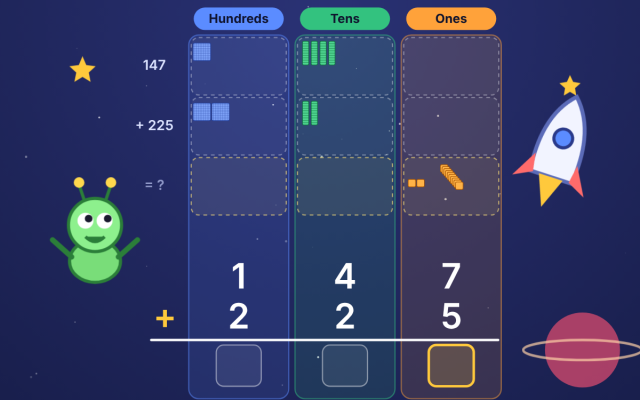
Add and subtract thousands, hundreds and tens using place value
Bridge through a round number on an empty number line
Count on to find the difference between close numbers
Round 999 or 1,998 to a whole thousand, then adjust
Scale times tables facts to work out 70 × 80 mentally
Multiply and divide by partitioning, doubling and halving
Chapter by chapter
Adding and subtracting thousands, hundreds and tens to big numbers in your headStart playing for free
Year 5 maths · 1
Jumping through round numbers and counting on to find a difference(number line method)
What the chapters cover in the national curriculum in England:
Year 5 maths: Add and subtract numbers mentally with increasingly large numbers
Year 5 maths: Multiply and divide numbers mentally, drawing upon known facts
About this adventure
Mental Maths Strategies is an interactive game that teaches children aged 9–11 the Year 5 methods for adding, subtracting, multiplying and dividing big numbers in their head. It follows the Year 5 national curriculum in England.
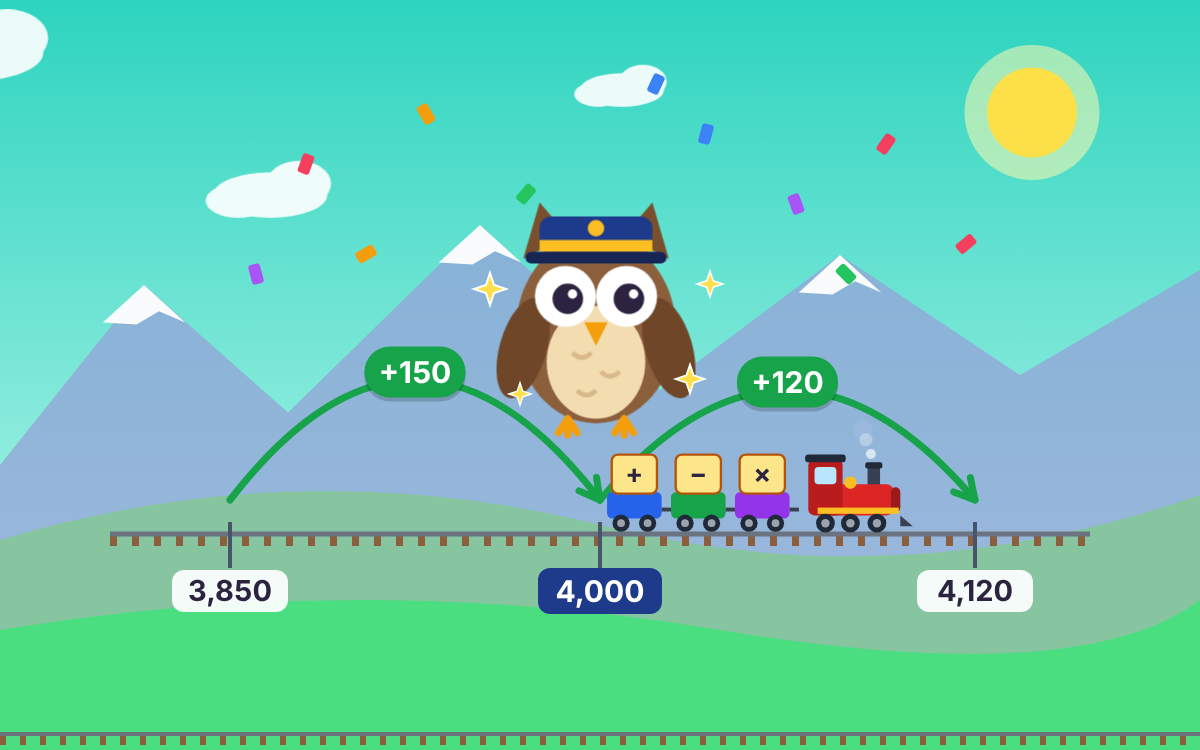
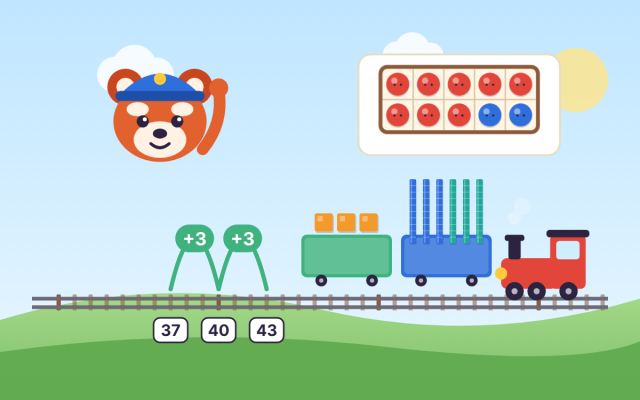
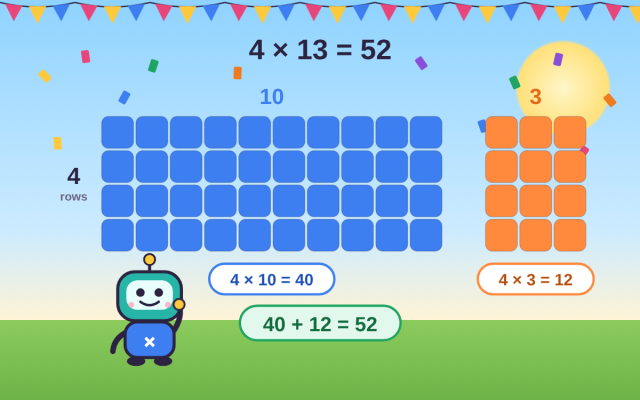
Olive the owl, the station master, guides players up a mountain railway. At each station they tap the place value column that changes, choose the hops that move a train along a number line to a round number, and fix answers after rounding 999 up to 1,000. They also scale times tables facts, so 7 × 8 = 56 becomes 70 × 80 = 5,600, and split numbers using the distributive law.
Each station opens with a short animated introduction and an optional warm-up. Answers are typed on a keypad, and a wrong answer gets a hint about the exact slip, such as adjusting the wrong way. A ten-question summit challenge mixes every strategy.
Questions and answers
What mental maths strategies do children learn in Year 5?
Year 5 children learn to add and subtract increasingly large numbers in their head and to multiply and divide using known facts. Common strategies include partitioning by place value, bridging through round numbers, counting on, rounding and adjusting, and doubling and halving.
How do you add 999 to a number in your head?
To add 999, add 1,000 and then take away 1, because 999 is one less than 1,000. For example, 4,368 + 1,000 = 5,368, so 4,368 + 999 = 5,367. To subtract 999, take away 1,000 and then add 1 back.
How can times tables help with bigger multiplications?
A times tables fact can be scaled by 10, 100 or 1,000 to solve bigger calculations. Because 7 × 8 = 56, 70 × 8 is ten times bigger at 560, and 70 × 80 is a hundred times bigger at 5,600. The same fact gives 5,600 ÷ 7 = 800.
What age is this mental maths game for?
The game is designed for children aged 9 to 11, matching Year 5 of the national curriculum in England. Confident Year 4 pupils can try it as a challenge, and Year 6 pupils can use it to revise mental methods before their tests.
What does the mental maths game include and how long does it take?
It has five chapters and a ten-question summit challenge, taking about 40 minutes to play in full. Each chapter has an animated introduction, an optional warm-up, guided activities and typed practice questions, and children can start at any chapter.
We count visits to make TapLearn better.We use one cookie, only on this site, to see how families find and use it. No adverts, and nothing is shared.One cookie, only on this site. No adverts.How we measure

 TapLearn