Greek Gods and Myths: Escape the Labyrinth with Glaux
Discover the Greek gods and myths of Mount Olympus, then control the seasons with Persephone, escape the Labyrinth and see what myths reveal about Greek life.
Online game, chapter 1 free · Years 3 to 6 (KS2) · ages 7–11 · national curriculum in England · no adverts · plays on a phone, tablet or computer · no sign-up to start.
An online history game for Years 3 to 6 (KS2). It covers the national curriculum in England, Years 3–6 history: “Ancient Greece – a study of Greek life and achievements and their influence on the western world”.
6 short chapters, about 35 minutes in all. Children can stop after any chapter.
Start playing for free. Plays in the browser on phones, tablets and computers: no app, no adverts.
Free for teachers: every chapter on the whiteboard with a free teacher account.
Last updated · Checked against the national curriculum in England by the TapLearn team
What you'll learn
The twelve Olympian gods, what each ruled and their symbols
How the Persephone myth explained the seasons and winter
The lessons taught by Pandora, Icarus, Arachne and King Midas
The difference between immortal gods, human heroes and monsters
How Greeks worshipped with temples, altars, offerings, festivals and oracles
How Roman names, planets and English words keep Greek myths alive
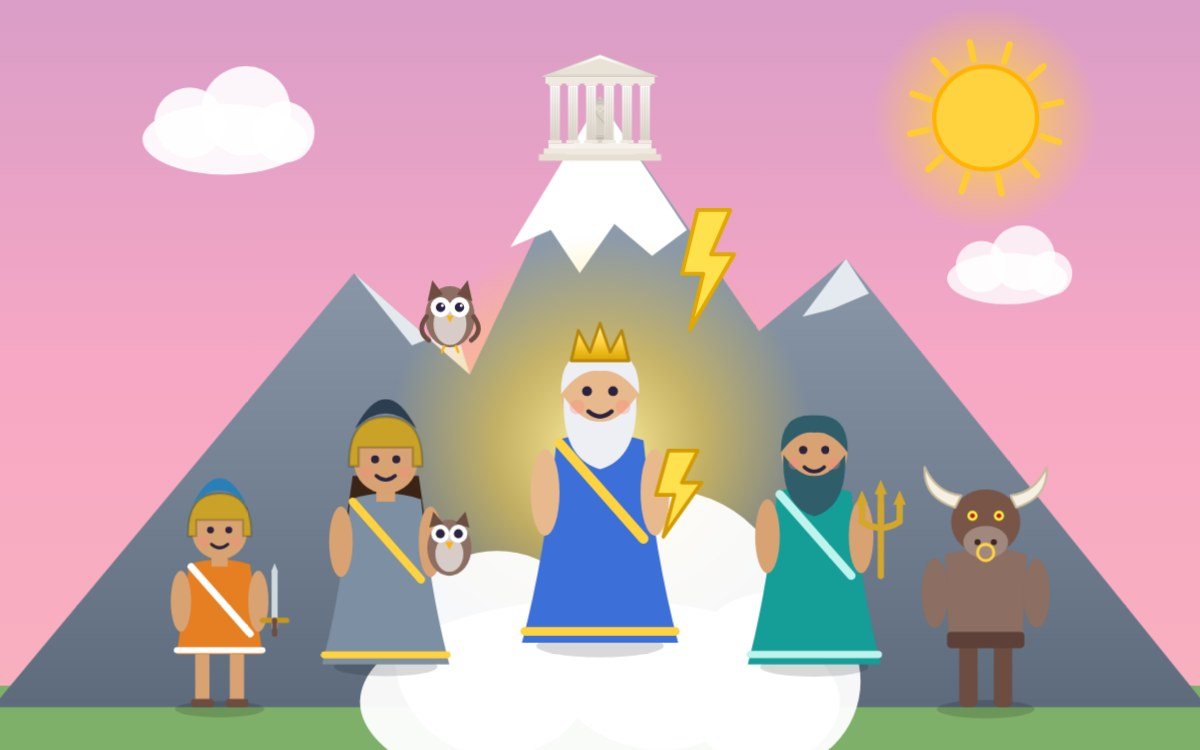
Learn that the Greeks believed in many gods, meet the twelve Olympians on their thrones and Hades in the Underworld, then match each god to their symbol, such as a trident or owl.
Discover how Greeks blamed Zeus for thunder and Poseidon for earthquakes, control the seasons by moving Persephone, and sort myth from science to see what these stories reveal about farming life.
Open Pandora's jar, keep Icarus at a safe height, weave with Arachne and turn food to gold with King Midas, then match each myth to its lesson, including the Greek idea of hubris.
Sort characters into immortal gods, human heroes and monsters, guide Theseus through the Labyrinth, defeat Medusa with Perseus's shield and find out which qualities, like courage and cleverness, the Greeks admired.
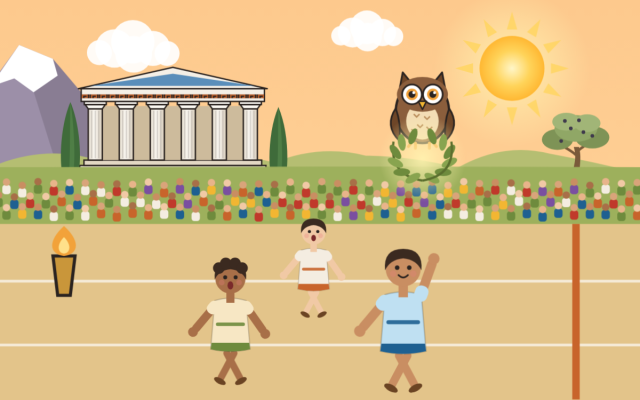
Choose between Athena's and Poseidon's gifts for Athens, build a temple, place offerings on the altar outside it, question the oracle at Delphi and learn that the Olympic Games honoured Zeus.
See how the Romans renamed the Greek gods, tap planets named after them, link words like atlas, panic, echo and museum to their myths, and decode sayings such as Achilles heel.
What the chapters cover in the national curriculum in England:
Years 3–6 history: Ancient Greece – a study of Greek life and achievements and their influence on the western world
About this adventure
Greek Gods and Myths is an interactive history game that teaches children aged 7–11 who the ancient Greek gods were, the myths told about gods and heroes, and what those stories reveal about life and beliefs in ancient Greece.
Guided by Glaux, Athena's owl, players meet the twelve Olympians on their thrones and match each god to a symbol, such as Zeus's thunderbolt or Poseidon's trident. They move Persephone between the Underworld and her mother Demeter to watch the seasons change, open Pandora's jar, keep Icarus at a safe height, and lead Theseus through the Labyrinth with Ariadne's thread.
Along the way they sort myth from science, build a temple, place offerings on an altar and question the oracle at Delphi. A final chapter shows how the Romans renamed the gods and how planets, words like panic and echo, and sayings still carry Greek myths today.
Questions and answers
Who were the 12 Olympian gods?
The Olympians were the twelve most important Greek gods, believed to live on Mount Olympus: Zeus, Hera, Poseidon, Demeter, Athena, Apollo, Artemis, Ares, Aphrodite, Hephaestus, Hermes and Dionysus. Some lists include Hestia instead of Dionysus.
Why did the ancient Greeks tell myths?
The Greeks told myths to explain things they did not understand, such as storms, earthquakes and the seasons, and to teach lessons about how to behave. Myths also show what mattered to them, like farming, the sea and respecting the gods.
How does the Persephone myth explain the seasons?
In the myth, Persephone ate pomegranate seeds in the Underworld, so she must spend part of every year there. While she is away, her mother Demeter is sad and crops stop growing, which the Greeks said caused autumn and winter.
What age is this Greek myths game for?
The game is made for children aged 7 to 11, matching the Ancient Greece unit in the KS2 history curriculum in England. It is pitched mainly at Year 5, with spoken narration and short text, so younger readers can follow it too.
What does the Greek gods and myths game include and how long does it take?
It has six chapters and a ten-question Myth Master Challenge, taking about 35 minutes to play through. Chapters can be played in any order, and each starts with a short animated introduction.
We count visits to make TapLearn better.We use one cookie, only on this site, to see how families find and use it. No adverts, and nothing is shared.One cookie, only on this site. No adverts.How we measure
 TapLearn