What you'll learn
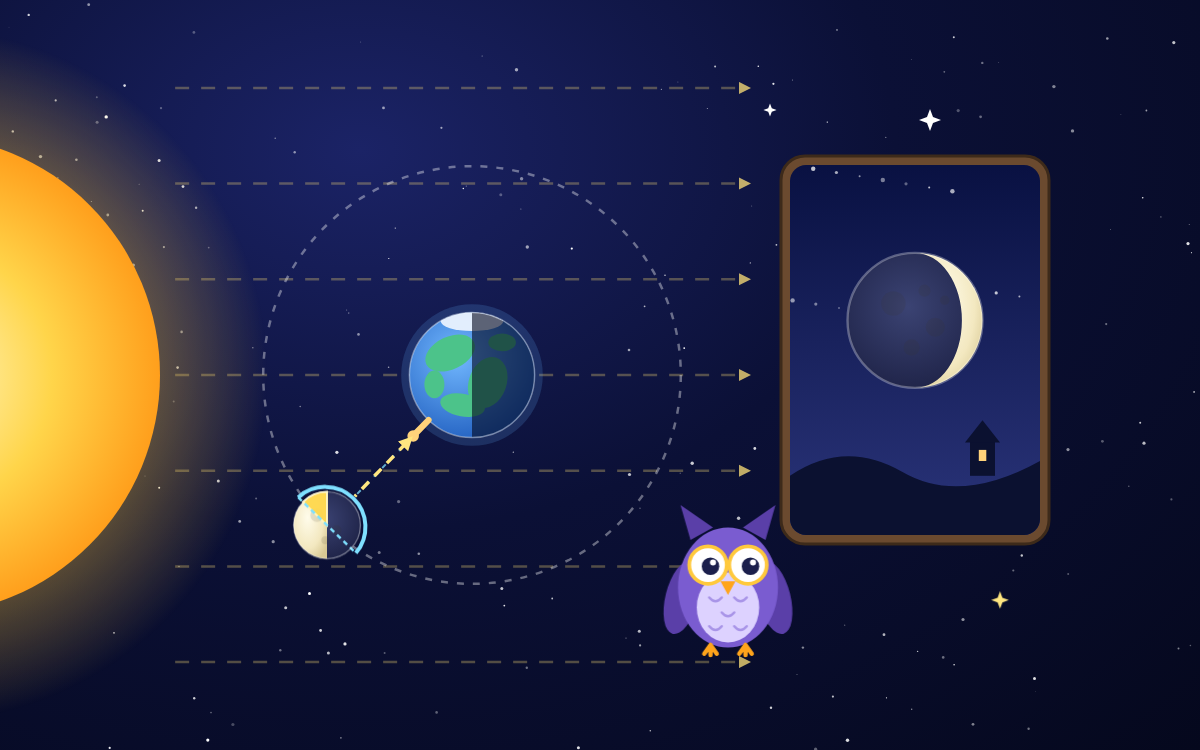
- The Moon orbits the Earth about once every 28 days
- The same side of the Moon always faces the Earth
- Moonlight is sunlight reflected off the Moon's rocky surface
- Why we see different amounts of the Moon's sunlit half
- Why Earth's shadow does not cause the phases of the Moon
- Name the phases in order using waxing, waning, crescent and gibbous
Chapter by chapter
- The Moon orbits the Earth: one trip about every 28 days Free to try
Year 5 science · 1
- Moonlight is sunlight: the Sun always lights half of the Moon
Year 5 science · 1
- Phases of the Moon: why we see more or less of its sunlit half
Year 5 science · 1
- Naming the phases: new, crescent, half, gibbous and full, waxing and waning
Year 5 science · 1
- The Moon's monthly cycle: predicting phases and spotting the Moon in the daytime
Year 5 science · 1
- Moonwatch Challenge (10 questions)
What the chapters cover in the national curriculum in England:
- Year 5 science: Describe the movement of the moon relative to the Earth
About this adventure
Phases of the Moon is an interactive science game that teaches children aged 8–11 how the Moon orbits the Earth and why it seems to change shape.
Children drag the Moon along its orbit while a day counter ticks to about 28 days. They switch on the Sun to see that moonlight is really reflected sunlight, then use a split screen to compare a view of space from above with the view from Earth. They find out that the Sun always lights half of the Moon, and that each phase depends on how much of that sunlit half faces us.
Along the way they test the common myth that Earth's shadow causes the phases, and learn the words waxing, waning, crescent and gibbous. A 10-question challenge rounds it all off. Nova the owl reads out every step, so there is very little text to read.
Questions and answers
Why does the Moon change shape?
The Moon doesn't really change shape; it only looks different because we see different amounts of its sunlit half. The Sun always lights half of the Moon, and as the Moon orbits the Earth, more or less of that lit half faces us.
Are the phases of the Moon caused by Earth's shadow?
No, the phases of the Moon are not caused by Earth's shadow. Earth's shadow points away from the Sun, and the Moon is usually nowhere near it. On the rare nights when a full Moon passes into it, we see a lunar eclipse instead.
How long does it take the Moon to orbit the Earth?
The Moon takes about 28 days, nearly a month, to travel once round the Earth. Scientists measure it more precisely as about 27.3 days, but primary schools in England usually teach roughly 28 days, which is the figure this game uses.
What age is this Moon phases game for?
This game is made for children aged 8 to 11 and follows the Year 5 Earth and space unit in the national curriculum for England. Younger stargazers can enjoy it with a grown-up, because every line is read aloud.
What does the Moonwatch game include and how long does it take?
The game has five short chapters, an optional refresher on light sources, and a 10-question Moonwatch Challenge, and takes about 35 minutes to play from start to finish. Children can start any chapter from the map and return to it whenever they like.
More to explore
See all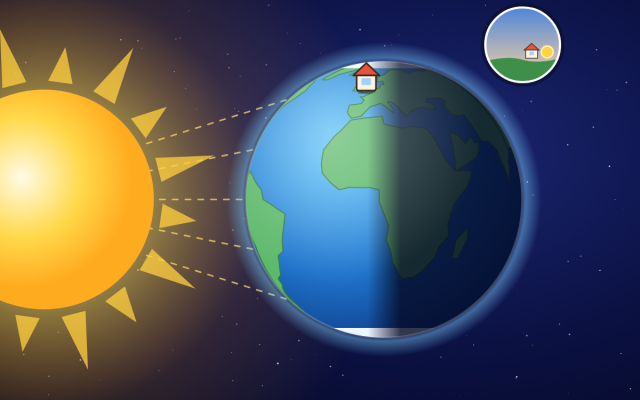
Day and Night: Spin the Earth to See Why the Sun Moves
Learn why we have day and night and why the Sun seems to cross the sky, by spinning the Earth and following o…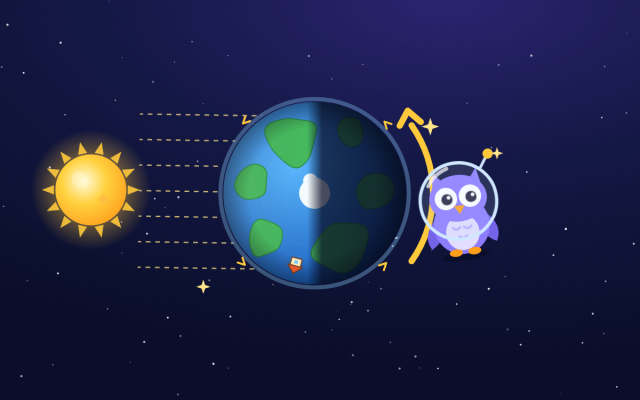
Earth and Sun: Spin the Planet to Make Day and Night
Learn how the Earth and Sun give us days, nights and years by spinning the Earth, racing planets round the Su…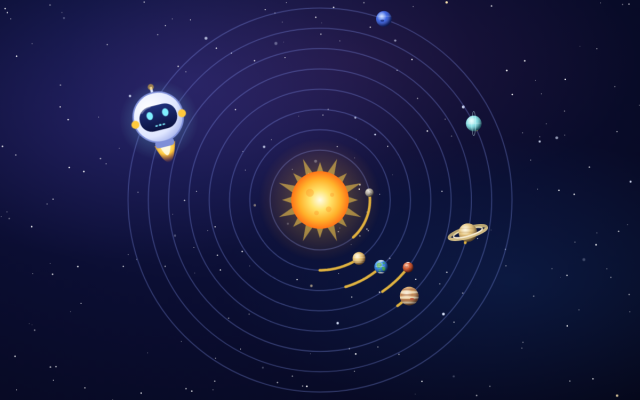
The Solar System: Ride the Earth Around the Sun
Learn how the Earth and planets move around the Sun and why the Sun, Earth and Moon are spheres by building t…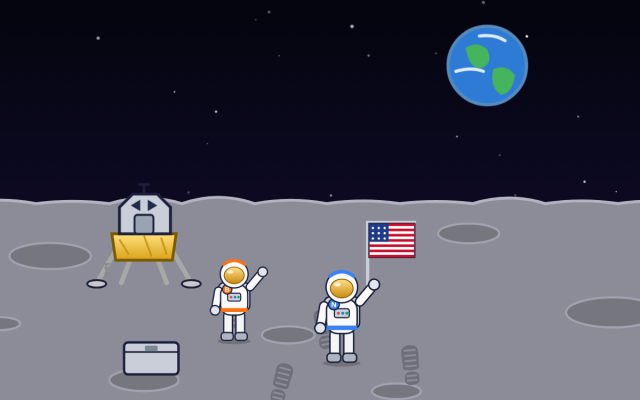
The Moon Landing: Blast Off with Apollo 11 and Columbus
Learn about the Moon landing in 1969 and the Apollo 11 crew, then sail with Columbus in 1492 and build a time…
Animal Life Cycles: Grow a Frog, Butterfly, Robin and Rabbit
Learn how animal life cycles work by helping a frog, butterfly, robin and rabbit grow, from egg or birth to a…
Skeletons and Muscles: Build a Body with Skelly
Learn how skeletons and muscles work together: build a skeleton, test how bones protect you, and make an arm…
The Heart and Circulatory System: Ride with Rosie
Learn how the heart and circulatory system work, then guide Rosie the red blood cell round the body, build yo…
 TapLearn