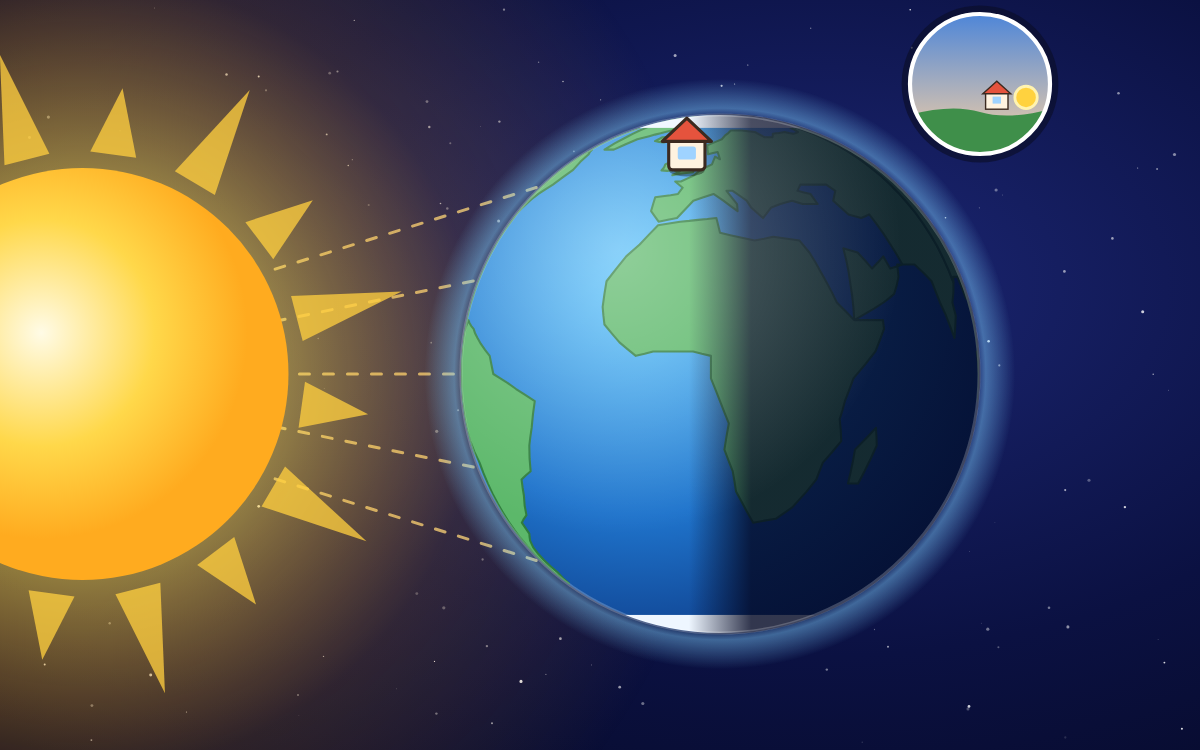
What you'll learn
- Day and night happen because the Earth spins on its axis
- One full rotation of the Earth takes 24 hours
- Sunrise is our part of the Earth turning towards the Sun
- The Sun appears to rise in the east and set in the west
- In England the Sun is highest around midday, in the south
- Why it can be day in England and night in Australia
Chapter by chapter
- Day and night: how Earth's rotation makes them Free to try
Year 5 science · 1
- Sunrise and sunset: turning towards and away from the Sun
Year 5 science · 1
- The Sun's path across the sky: rising in the east, setting in the west
Year 5 science · 1
- Does the Sun really move? Using Earth's rotation to explain it
Year 5 science · 1
- Day and night challenge (8 questions)
What the chapters cover in the national curriculum in England:
- Year 5 science: Use the idea of the Earth's rotation to explain day and night and the apparent movement of the sun across the sky
About this adventure
Day and Night is an interactive game that teaches children aged 8–11 how the Earth's rotation causes day and night and makes the Sun appear to move across the sky.
Players switch on the Sun and discover that it can only light half of the Earth at once. They spin the Earth on its axis to send a house in England into night and back into daylight, then time one complete rotation: 24 hours. Viewed from above the North Pole, the Earth turns anticlockwise, from west to east.
Back on the ground, facing south, players watch the Sun appear to rise in the east, climb highest at midday and set in the west while a tree's shadow shrinks and grows. A friendly narrator reads every line aloud, and a final challenge checks understanding.
Questions and answers
What causes day and night, in simple words?
Day and night happen because the Earth spins on its axis once every 24 hours. The half of the Earth facing the Sun has day, while the half facing away is in shadow and has night.
Why does the Sun rise in the east and set in the west?
The Sun seems to rise in the east because the Earth spins from west to east, which looks anticlockwise from above the North Pole. As our part of the Earth turns towards the Sun it appears in the east, and as we turn away it disappears in the west.
Does the Sun really move across the sky during the day?
No, the Sun's daily journey across the sky is only how it looks from Earth. The Earth turns and carries us with it, so the Sun seems to travel from east to west, just as trees seem to whizz past someone riding a roundabout.
What age is this day and night game for?
The game is designed for children aged 8 to 11 and matches the Year 5 Earth and space objective in the national curriculum in England. Younger children who are curious about space can also enjoy it with a little help from a grown-up.
What does the day and night game include and how long does it take?
It has four short chapters, an optional warm-up and an eight-question final challenge, taking about 30 minutes in total. Every line is read aloud, and children can start from any chapter and return to the menu at any time.
More to explore
See all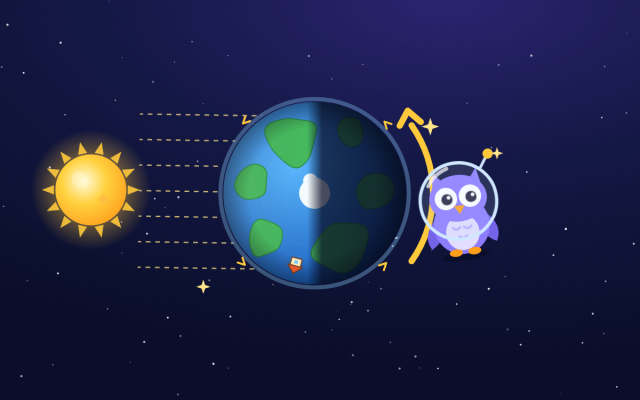
Earth and Sun: Spin the Planet to Make Day and Night
Learn how the Earth and Sun give us days, nights and years by spinning the Earth, racing planets round the Su…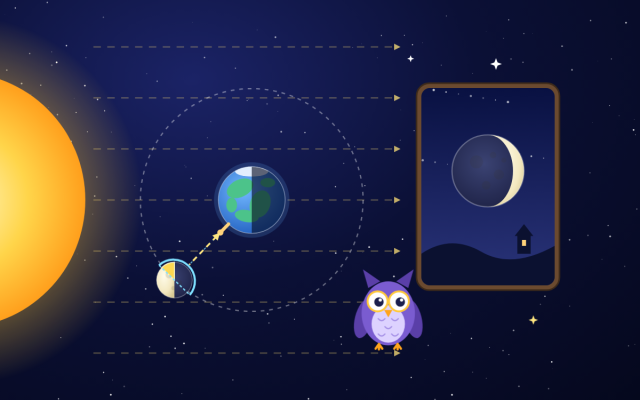
Phases of the Moon: A Moonwatch Adventure with Nova
Discover the phases of the Moon and why it seems to change shape: drag the Moon round the Earth, watch its su…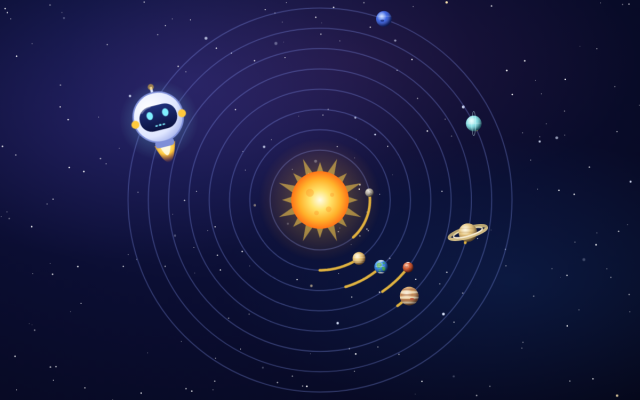
The Solar System: Ride the Earth Around the Sun
Learn how the Earth and planets move around the Sun and why the Sun, Earth and Moon are spheres by building t…
The Moon Landing: Blast Off with Apollo 11 and Columbus
Learn about the Moon landing in 1969 and the Apollo 11 crew, then sail with Columbus in 1492 and build a time…
Animal Life Cycles: Grow a Frog, Butterfly, Robin and Rabbit
Learn how animal life cycles work by helping a frog, butterfly, robin and rabbit grow, from egg or birth to a…
Skeletons and Muscles: Build a Body with Skelly
Learn how skeletons and muscles work together: build a skeleton, test how bones protect you, and make an arm…
The Heart and Circulatory System: Ride with Rosie
Learn how the heart and circulatory system work, then guide Rosie the red blood cell round the body, build yo…
 TapLearn