Small and regular is enough
School does the teaching. Your part at home is smaller, and it suits a busy life: show interest, talk, read together, and give a little practice now and then. Five minutes on most days does more than an hour you can't find. Missing a day, or a week, is fine.
If you only have a moment, the most useful thing is often just asking your child about their day and really listening to the answer.
Five-minute habits
- One question at bedtime or in the car: "What was the trickiest thing today?" or "What did you find out?"
- A page or two of reading together, with your child reading to you or you reading to them.
- A quick fact game: number bonds, times tables or spellings, asked while you're walking or waiting.
- "Teach me": ask your child to explain something they learned this week. Explaining is one of the best ways to remember.
- One short game chapter on a device, with a natural place to stop.
Learning hidden in everyday routines
Talk
Talking is where a lot of learning happens. Describe what you're doing, wonder aloud ("I wonder why the puddles have gone?") and ask questions that need more than a yes or no. New words picked up in conversation feed straight into reading and writing.
In the kitchen
- Weighing and measuring ingredients, and halving or doubling a recipe.
- Setting the oven timer, and working out when food will be ready.
- Cutting a pizza or a cake into halves, quarters and eighths.
- Reading a recipe out loud, step by step.
At the shop
- Younger children can find coins, count items into the basket, or spot the numbers on prices.
- Older children can add up the price of two or three things, work out the change, or compare two sizes of the same product.
- Let them read the shopping list and find things by reading the aisle signs.
Around the house and out and about
Pairing socks means counting in 2s. Reading a bus timetable is telling the time. Number plates, road signs and menus are all reading and maths without the worksheet.
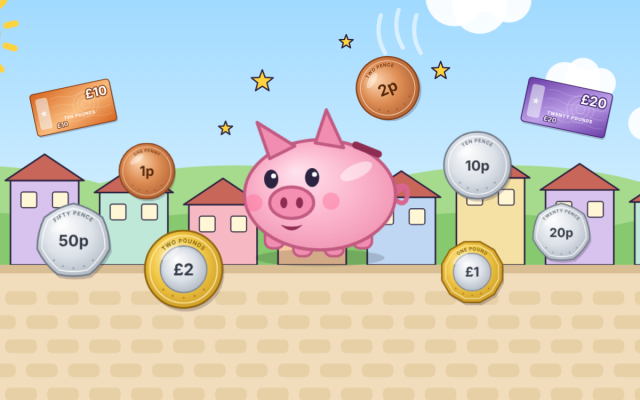
UK Coins and Notes: Penny's Money Street Adventure
Learn to recognise UK coins and notes and what each one is worth, by sorting coins, paying in Penny's shop an…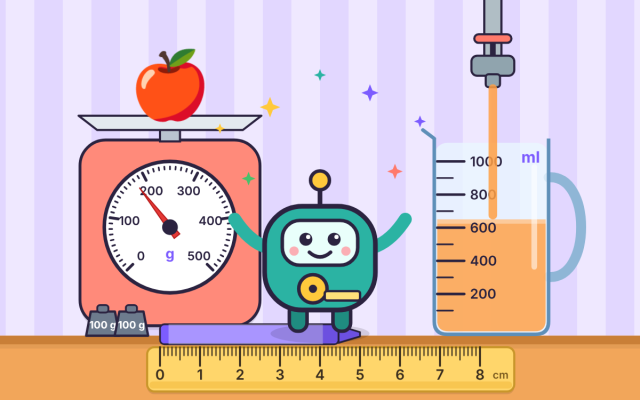
Measuring Length, Mass and Capacity: Pip's Measuring Town
Learn to measure, compare, add and subtract lengths, mass and capacity in m, cm, mm, kg, g, l and ml using ru…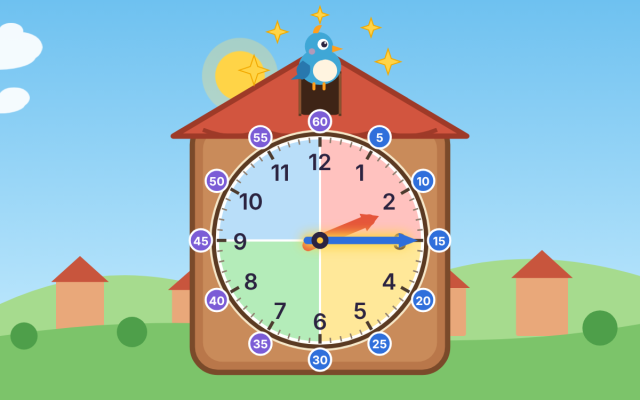
Telling the Time: Fix the Clocks of Time Town with Koo
Learn all about telling the time: read clocks to five minutes, quarter past and quarter to, draw the hands an…Reading together still counts
Reading together is worth keeping, even when your child can read on their own. Bedtime stories, comics, recipes and audiobooks on a car journey all help, because your child hears new words and enjoys stories without having to work hard at them. Our guide to helping with reading at home has more ideas.
One focus a week
Choosing one thing a week stops it feeling endless. It might be a times table, a set of spellings, or something the class teacher mentioned. Then you weave it into the week whenever a moment comes up.
If your child plays on TapLearn, the weekly email suggests one thing to try at home, based on what they've been practising, so you don't have to work out where to start. The skills report shows what's secure and which mix-ups to watch for, and Flip's quick review brings back earlier skills so they aren't forgotten.
Keep it light
- Stop while it's still fun, not when your child has had enough.
- Praise effort and good thinking, not just right answers.
- Let your child see you get things wrong and have another go.
- If homework is causing stress every night, have a word with the class teacher. They'd rather know.
 TapLearn