Learn to solve two-step word problems with adding and subtracting. Find the hidden question, build bar models and check answers on a train journey.
Online game, chapter 1 free · Year 4 (KS2) · ages 8–10 · national curriculum in England · no adverts · plays on a phone, tablet or computer · no sign-up to start.
An online maths game for Year 4 (KS2). It covers the national curriculum in England, Year 4 maths: “Solve addition and subtraction two-step problems in contexts, deciding which operations and methods to use and why”.
6 short chapters, about 45 minutes in all. Children can stop after any chapter.
Start playing for free. Plays in the browser on phones, tablets and computers: no app, no adverts.
Methods taught, by the names schools use: bar model.
Free for teachers: every chapter on the whiteboard with a free teacher account.
Last updated · Checked against the national curriculum in England by the TapLearn team
What you'll learn
How to spot the hidden first question in a two-step problem
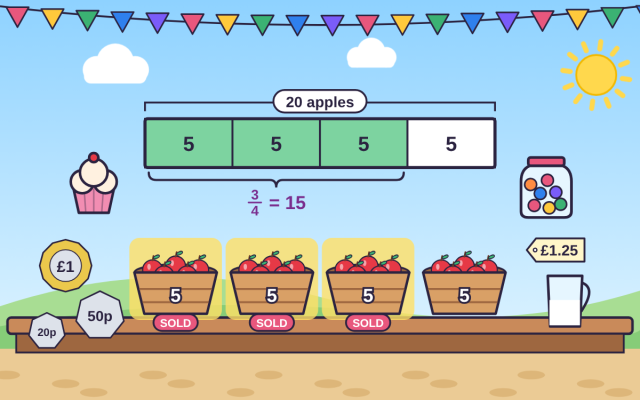
How to draw part-whole and comparison bar models for each step
Why words like "more" or "left" don't always mean add or subtract
When to calculate mentally and when to use the column method
How to check answers by estimating and using inverse operations
How to leave out numbers a word problem doesn't need
Chapter by chapter
Spot the two steps in a word problemStart playing for free
What the chapters cover in the national curriculum in England:
Year 4 maths: Solve addition and subtraction two-step problems in contexts, deciding which operations and methods to use and why
About this adventure
Two-Step Word Problems is an interactive maths game that teaches children aged 8–10 how to solve two-step adding and subtracting problems and decide which operation and method to use, following the Year 4 curriculum in England.
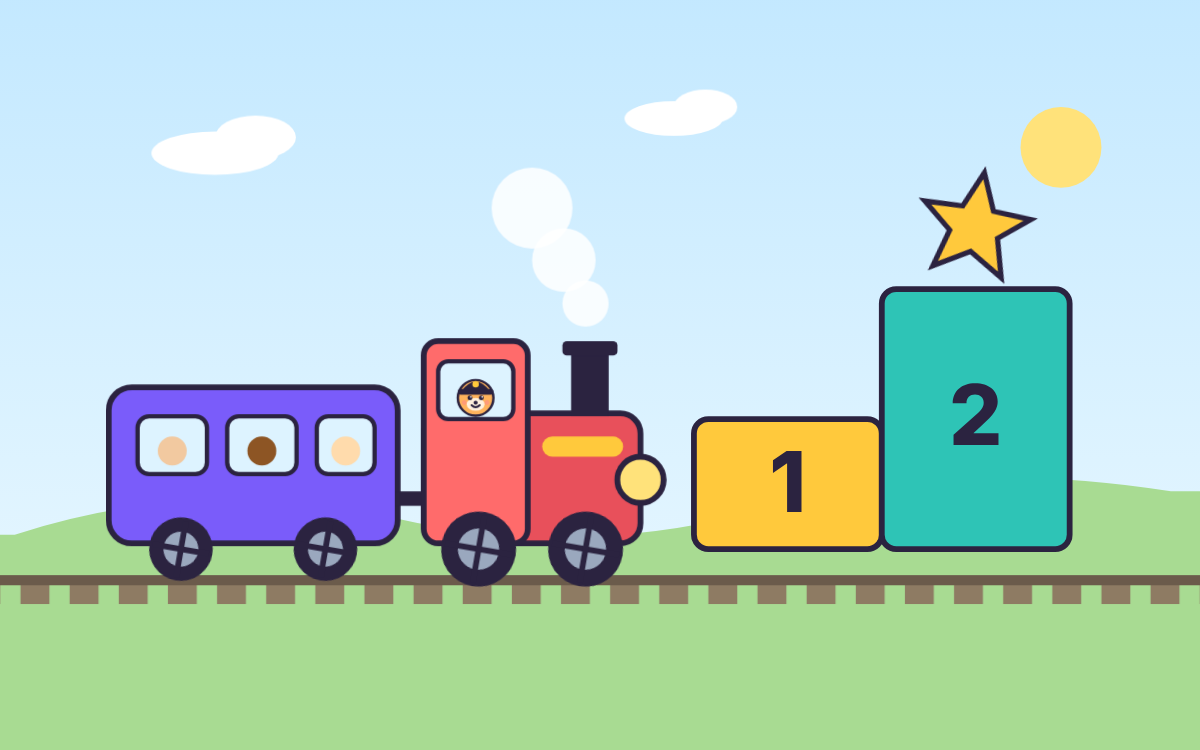
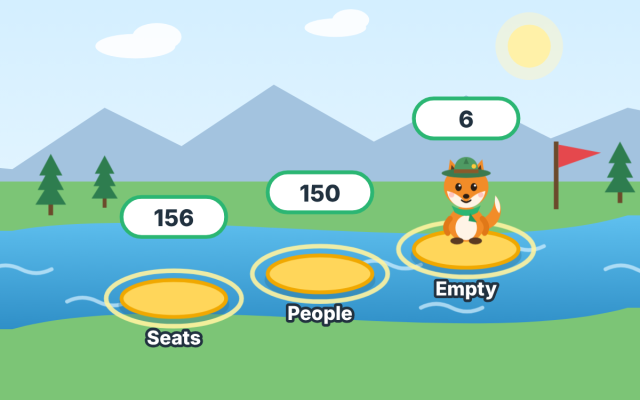
Children ride a train with Pip the conductor, stopping at stations where they tap the two events in a story, answer the hidden first question, and drag numbers into bar models that show the parts and the whole. They meet word traps, such as a problem that says "more" but needs subtracting, and learn to picture the story instead.
Along the way they choose between mental methods and the column method, round and adjust to calculate quickly, estimate to the nearest hundred, and work backwards using inverse operations to prove an answer. Typed answers, hints and a final eight-question challenge show what they can do.
Questions and answers
What is a two-step word problem?
A two-step word problem needs two calculations to reach the answer, and the result of the first calculation is used in the second. For example, 245 passengers, 120 get on, then 85 get off: work out 245 + 120 first, then subtract 85.
How do you know whether to add or subtract in a word problem?
Picture the story and ask whether you are finding the whole or a part. Joining parts to find a total means adding; finding a missing part or a difference means subtracting, even when the problem uses words like "more" or "left".
How does a bar model help with two-step problems?
A bar model turns the words into a picture of the parts and the whole, so you can see which calculation each step needs. Children usually draw one bar model for each step, writing a question mark where the unknown amount goes.
What age is this two-step word problems game for?
The game suits children aged 8 to 10. It follows the Year 4 maths curriculum in England, using numbers up to 10,000, and also works well as revision for Year 5 pupils who find word problems tricky.
What does the game include and how long does it take?
The game has six chapters and an eight-question final challenge, taking about 45 minutes in total. Each chapter opens with an animated introduction, is narrated aloud, and can be played on its own in any order.
We count visits to make TapLearn better.We use one cookie, only on this site, to see how families find and use it. No adverts, and nothing is shared.One cookie, only on this site. No adverts.How we measure


 TapLearn