Toys, Homes and School Then and Now: Gran's Memory Lane
Learn how toys, homes and school have changed since grandparents were young, then put old and new things in time order on Gran's Memory Lane.
Online game, chapter 1 free · Years 1 and 2 (KS1) · ages 5–7 · national curriculum in England · no adverts · plays on a phone, tablet or computer · no sign-up to start.
An online history game for Years 1 and 2 (KS1). It covers the national curriculum in England, Years 1–2 history: “Know where the people and events they study fit within a chronological framework and identify similarities and differences between ways of life in different periods”, and 1 more statement listed under the chapters.
5 short chapters, about 30 minutes in all. Children can stop after any chapter.
Start playing for free. Plays in the browser on phones, tablets and computers: no app, no adverts.
Free for teachers: every chapter on the whiteboard with a free teacher account.
Last updated · Checked against the national curriculum in England by the TapLearn team
What you'll learn
What living memory means and who can remember what
How toys changed from wood, metal and cloth to plastic and screens
How coal fires, dial phones and mangles did jobs at home
How classrooms changed from blackboards and inkwells to interactive whiteboards
How to put old and new objects in time order
Which parts of daily life have changed and which have stayed the same
Chapter by chapter
Living memory: who remembers what, and putting a family in time orderStart playing for free
Learn that living memory is the time people alive today can remember. Reveal family photos, peg them on a time line from about 90 years ago to now, and sort memories from events long, long ago.
Years 1–2 history · 1Years 1–2 history · 2
Toys then and now: wood, metal and cloth to plastic, batteries and screens
Open toy boxes from about 60 years ago, 30 years ago and now, play with every toy and colour in a black and white photo, then sort toys into then and now and find one that stayed the same.
Years 1–2 history · 2Years 1–2 history · 1
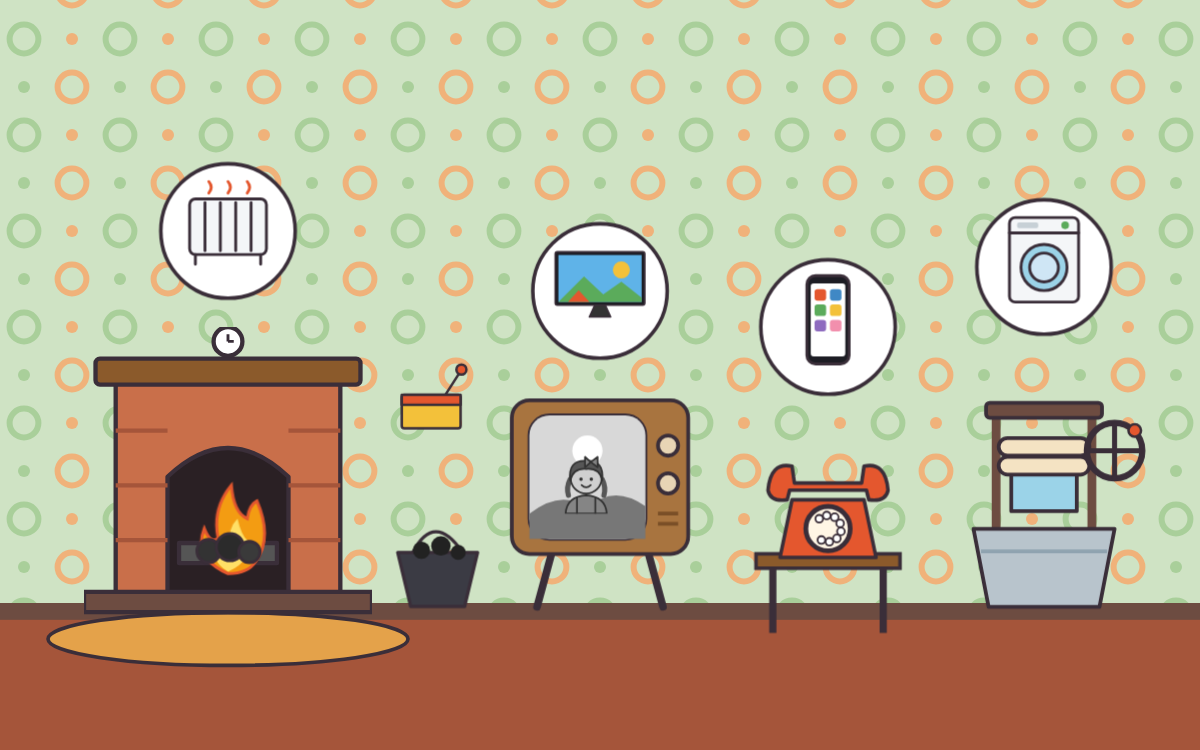
Homes then and now: coal fires, black and white TV, dial phones and washing day
Light a coal fire, switch on a black and white television, turn a telephone dial and squeeze washing through a mangle, then match each one to the radiator, flat TV, smartphone or washing machine that does the job now.
Years 1–2 history · 2Years 1–2 history · 1
School then and now: blackboards, rows of desks, school milk and playtime
Write on a blackboard, chant times tables, dip a pen in an inkwell, hand out school milk and play hopscotch, then pull a time lever to compare a classroom from about 60 years ago with one from today.
Years 1–2 history · 2Years 1–2 history · 1
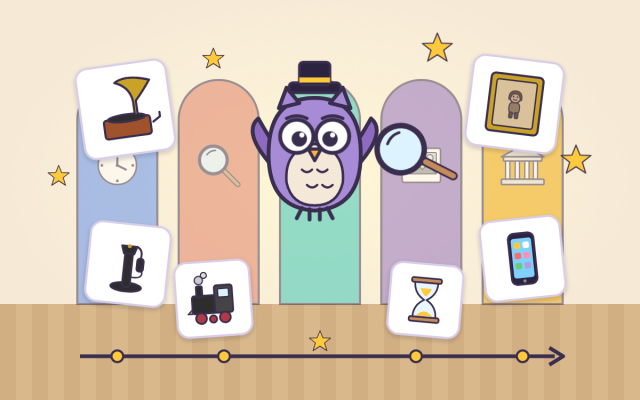
Putting old and new things in time order and spotting what has changed
Put telephones, televisions, music players and toys in chronological order on museum stands, using clues such as colour and screens, then decide which parts of everyday life have changed and which have stayed the same.
What the chapters cover in the national curriculum in England:
Years 1–2 history: Know where the people and events they study fit within a chronological framework and identify similarities and differences between ways of life in different periods
Years 1–2 history: Changes within living memory. Where appropriate, these should be used to reveal aspects of change in national life
About this adventure
Toys, Homes and School Then and Now is an interactive history game that teaches children aged 5 to 7 how everyday life has changed within living memory, since their parents and grandparents were young.
Gran Rosie guides players along Memory Lane. They reveal old family photos and peg them on a time line, open toy boxes from three generations, light a coal fire, turn a telephone dial, write with chalk on a blackboard and hand out little bottles of school milk.
Along the way children use the words then, now, past and present, learn that old photos were often black and white even though the world was colourful, and practise ordering objects from oldest to newest. They also spot what has stayed the same: children still play, learn and eat meals with their families.
Questions and answers
What does living memory mean in KS1 history?
Living memory is the time that people alive today can remember, roughly the last 80 to 100 years. In KS1, children compare their own lives with their parents' and grandparents' childhoods, for example how toys, homes and school have changed.
How have toys changed since grandparents were young?
About 60 years ago many toys were made of wood, metal or cloth and worked by hand or with a wind-up key. Today many toys are plastic and use batteries, buttons and screens, although teddy bears, balls and skipping ropes are still loved.
What was school like in the 1960s?
In the 1960s most children sat at wooden desks in rows facing a blackboard, and older pupils wrote with dip pens and ink from inkwells. Every child was given a small bottle of milk each day and played hopscotch and skipping, which are still played now.
What age is this then and now game for?
It is made for children aged 5 to 7 in Years 1 and 2, following the KS1 history curriculum for England. Every instruction and question is read aloud, so children who are still learning to read can play on their own.
What does the game include and how long does it take?
The game has five chapters, on living memory, toys, homes, school and time order, followed by a 10-question quiz. Playing everything takes about 30 minutes, and each chapter can also be played on its own.
We count visits to make TapLearn better.We use one cookie, only on this site, to see how families find and use it. No adverts, and nothing is shared.One cookie, only on this site. No adverts.How we measure
 TapLearn