Local History for Kids: Solve Town Clues with Biscuit
Learn how to find out about local history from buildings, photos and memories, then solve detective cases in the town of Millbrook.
Online game, chapter 1 free · Years 1 and 2 (KS1) · ages 5–7 · national curriculum in England · no adverts · plays on a phone, tablet or computer · no sign-up to start.
An online history game for Years 1 and 2 (KS1). It covers the national curriculum in England, Years 1–2 history: “Understand some of the ways in which we find out about the past and identify different ways in which it is represented”, and 2 more statements listed under the chapters.
5 short chapters, about 40 minutes in all. Children can stop after any chapter.
Start playing for free. Plays in the browser on phones, tablets and computers: no app, no adverts.
Free for teachers: every chapter on the whiteboard with a free teacher account.
Last updated · Checked against the national curriculum in England by the TapLearn team
What you'll learn
Name the sources historians use: photos, buildings, objects, memories and writing
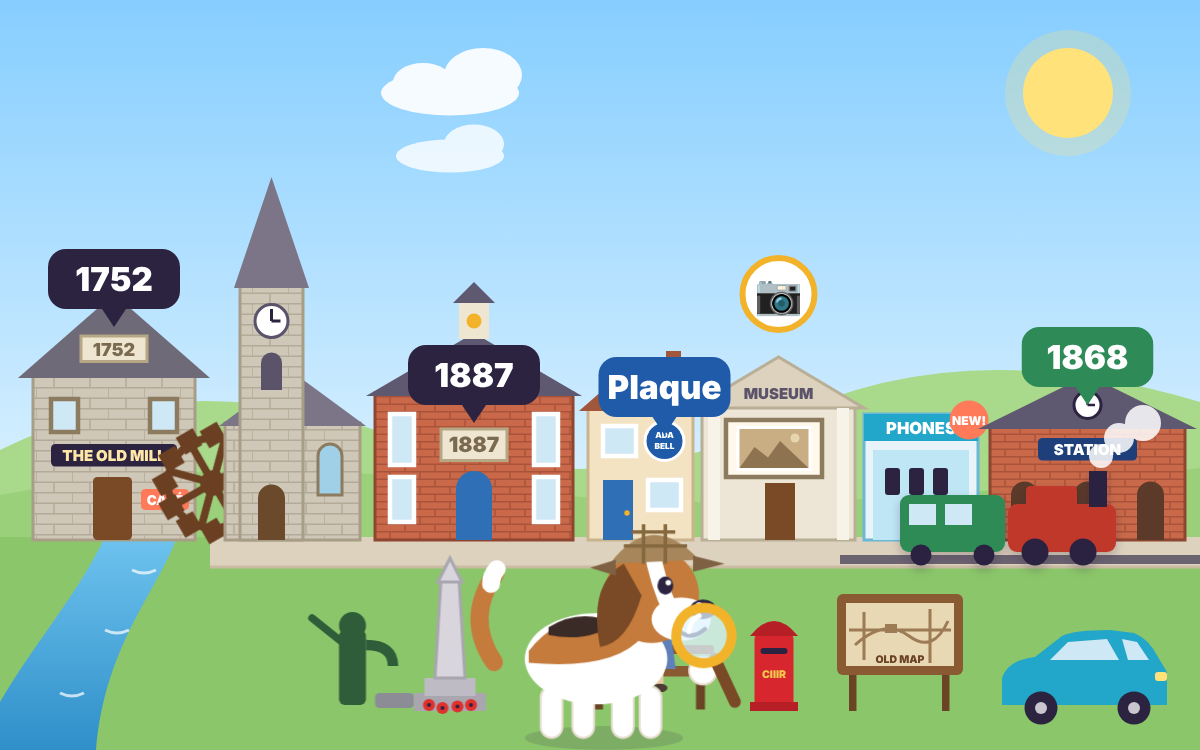
What a date stone, blue plaque and war memorial tell us
How street names and post box letters give clues about the past
Spot what has changed and stayed the same in old and new photos
Ask good questions and check memories against another source
Why a local person, place or event is significant
Chapter by chapter
Name the clues that tell us about the pastStart playing for free
Learn that historians find out about the past from sources such as photos, buildings, objects, memories and writing, by pinning clues to a board and hunting for five clues around Millbrook.
Years 1–2 history · 1
Read clues on old buildings and streets
Read a date stone, a blue plaque, a war memorial, street names and post box letters, then put buildings in order from oldest to newest using their dates.
Years 1–2 history · 2Years 1–2 history · 1
Compare old and new photos of the same place
Look at a photo of a high street in 1910, find clues that show it is old, learn why old photos are black and white, and spot what has changed and stayed the same today.
Years 1–2 history · 1Years 1–2 history · 3
Ask good questions and use people's memories
Choose good questions to ask an older person, use question words, pick out answers from Grandma Joyce's memory of a flood, and check her story against a newspaper from the time.
Years 1–2 history · 3Years 1–2 history · 1
Explain why local people, places and events are remembered
Learn what significant means, put a town's mill, railway, doctor and flood on a timeline, explain why they are remembered, and find plaques, statues and street names that remember them.
Years 1–2 history · 2Years 1–2 history · 3
Final case: local history detective quiz (10 questions)
What the chapters cover in the national curriculum in England:
Years 1–2 history: Understand some of the ways in which we find out about the past and identify different ways in which it is represented
Years 1–2 history: Significant historical events, people and places in their own locality
Years 1–2 history: Ask and answer questions, choosing and using parts of stories and other sources to show that they know and understand key features of events
About this adventure
Local History Detective is an interactive game that teaches children aged 5–7 how to find out about the past of their own town, matching the KS1 history curriculum in England. Biscuit the beagle narrates every step aloud, with captions.
Players learn that historians use sources: photos, buildings, objects, people's memories and writing such as old maps and newspapers. In the town of Millbrook they read a date stone, a blue plaque, a war memorial, street names and the royal letters on post boxes, then compare a photo of the High Street in 1910 with one from today to spot what has changed and what has stayed the same.
They also choose good questions to ask Grandma Joyce, pick out answers from her memory of a flood, check it against an old newspaper, and build a timeline of the people, places and events the town remembers.
Questions and answers
How can children find out about the history of their local area?
Children can find out about local history by looking for clues around them: old buildings with dates and plaques, memorials, street names, old photos and maps, and the memories of older people. Comparing these sources helps them see how a place has changed.
What does a blue plaque on a house mean?
A blue plaque shows that an important person lived or worked in that building. Plaques usually give the person's name, their dates and what they did, so they are a handy clue for young history detectives on a walk.
What does VR or CIIIR on a post box mean?
The letters on a British post box show which king or queen was on the throne when it was made. VR stands for Queen Victoria, so the box is more than 120 years old, while CIIIR stands for King Charles III and means it is new.
What age is this local history game for?
Local History Detective is made for children aged 5 to 7, in Year 1 and Year 2. It follows the KS1 history curriculum in England, which asks pupils to learn about significant events, people and places in their own locality.
What is in the Local History Detective game and how long does it take?
The game has five chapters and a final 10-question case, and takes about 40 minutes to play in full. Children tap clues in the town, compare photos, listen to a memory, build a timeline and answer questions with spoken help.
We count visits to make TapLearn better.We use one cookie, only on this site, to see how families find and use it. No adverts, and nothing is shared.One cookie, only on this site. No adverts.How we measure



 TapLearn