Learn to tell stories out loud with a beginning, middle and end, then make a story map, add story words and invent your own tale round a campfire.
Online game, chapter 1 free · Years 1 and 2 (KS1) · ages 5–7 · national curriculum in England · no adverts · plays on a phone, tablet or computer · no sign-up to start.
An online English game for Years 1 and 2 (KS1). It covers the national curriculum in England, Years 1–6 english: “Give well-structured descriptions, explanations and narratives for different purposes, including for expressing feelings”, and 3 more statements listed under the chapters.
6 short chapters, about 40 minutes in all. Children can stop after any chapter.
Start playing for free. Plays in the browser on phones, tablets and computers: no app, no adverts.
Free for teachers: every chapter on the whiteboard with a free teacher account.
Last updated · Checked against the national curriculum in England by the TapLearn team
What you'll learn
What the beginning, middle and end of a story each do
How to retell a story in order, in your own words
How a story map helps you remember the main events
Story words like Once upon a time, Suddenly, Luckily and In the end
How to say how a character feels, and why, using because
How asking What if? Creates new ideas for a story
Chapter by chapter
Beginning, middle and end: the three parts of a storyStart playing for free
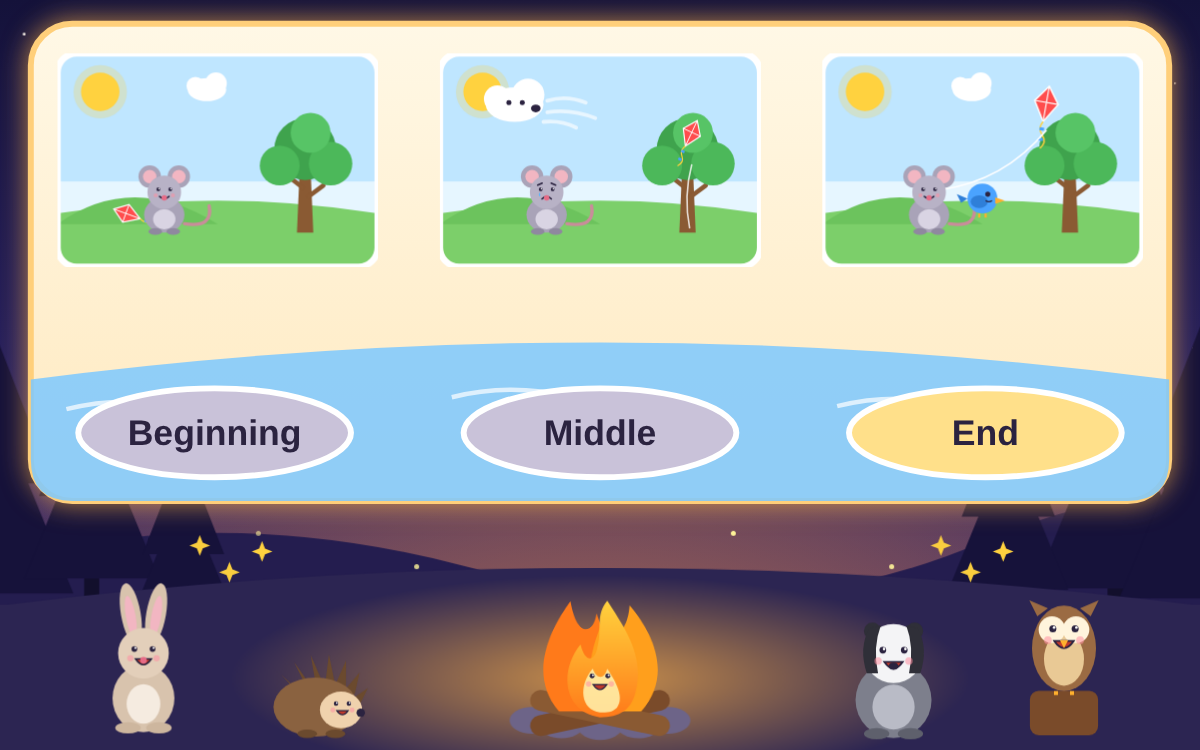
Learn what the beginning, middle and end of a story do by sorting Mo the mouse's kite story onto stepping stones and spotting short stories with a missing middle or end.
Years 1–6 english · 1Year 1 english · 2
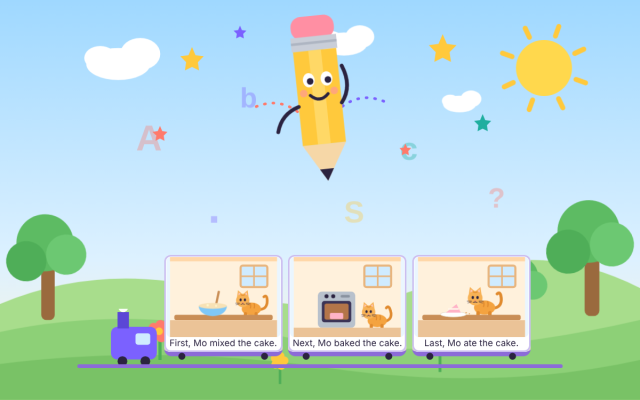
Retelling a story in order with a story map
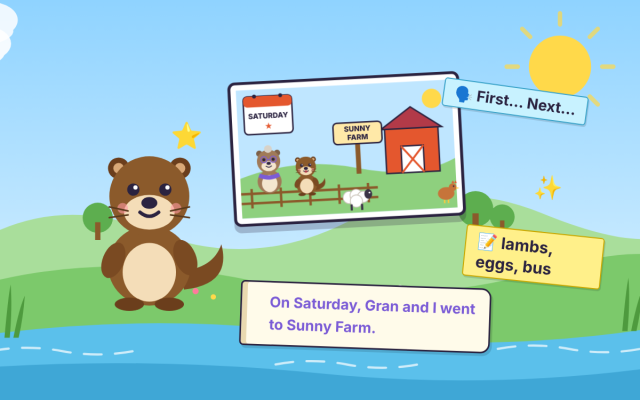
Listen to Bea the bear's birthday bake, rebuild it as a picture story map, judge which retellings keep the main events, then retell it out loud in your own words.
Year 1 english · 2Year 2 english · 3Years 1–6 english · 1
Linking a story with story words like One day and Suddenly
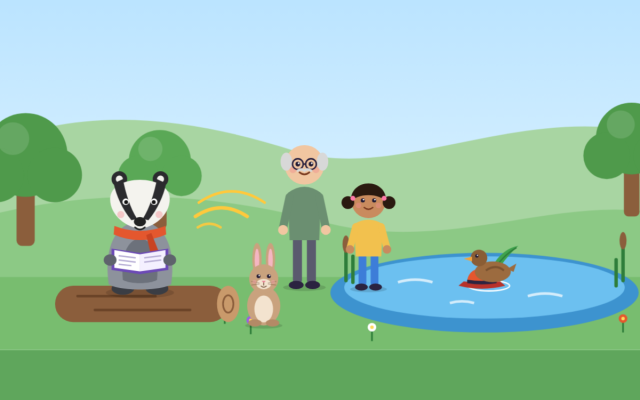
Swap Badger's long chain of "and then" for story words such as Once upon a time, One day, Suddenly, Luckily and In the end, and sort them into beginning, middle and end (storytelling language and sequencing words).
Years 1–6 english · 1Year 1 english · 2
Telling how story characters feel, and why
Meet six feeling words, choose how Bea feels at each moment of her story, finish "Bea felt... because..." sentences, then say a feeling and its reason out loud.
Years 1–6 english · 1
Imagining new story ideas by asking What if?
Spin a What If lantern to change Mo's story, such as a sleeping helper or a pond, and work out what else would change, then imagine what might happen after the end.
Years 1–6 english · 4
Inventing and telling your own story out loud
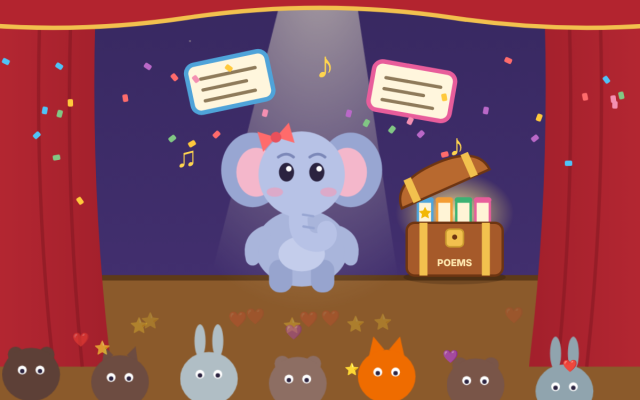
Choose a hero, a place and a problem, pick an ending that sorts the problem out, then tell the finished beginning, middle and end aloud to the campfire.
Years 1–6 english · 1Years 1–6 english · 4
Campfire Challenge: telling stories out loud (10 questions)
What the chapters cover in the national curriculum in England:
Years 1–6 english: Give well-structured descriptions, explanations and narratives for different purposes, including for expressing feelings
Year 1 english: Develop pleasure in reading, motivation to read, vocabulary and understanding by: becoming very familiar with key stories, fairy stories and traditional tales, retelling them and considering their particular characteristics
Year 2 english: Develop pleasure in reading, motivation to read, vocabulary and understanding by: becoming increasingly familiar with and retelling a wider range of stories, fairy stories and traditional tales
Years 1–6 english: Use spoken language to develop understanding through speculating, hypothesising, imagining and exploring ideas
About this adventure
Telling Stories Out Loud is an interactive storytelling game for children aged 5 to 7 that teaches them to retell stories they have heard and invent their own, with a clear beginning, middle and end.
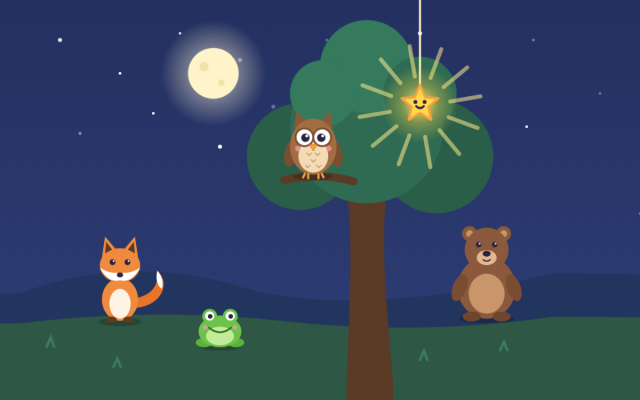
Players sit by a night-time campfire with Ember, a friendly flame, and an audience of woodland animals. They sort a story onto beginning, middle and end stepping stones, spot stories with a missing part, and build a story map to retell a tale in order and in their own words. They swap Badger's sleepy "and then" chain for story words such as Once upon a time, Suddenly, Luckily and In the end.
Later chapters explore how characters feel, using "because" to give a reason, and the storyteller's question "What if?" for changing a story. Finally, children choose a hero, a place and a problem, and tell their own story aloud to the campfire.
Questions and answers
What does retelling a story mean?
Retelling a story means telling a story you have heard in your own words, keeping the main events in the right order. Children don't need to remember every word, just who it is about, what goes wrong and how it is sorted out.
What are the beginning, middle and end of a story?
The beginning tells you who the story is about and where they are. The middle is where something happens, usually a problem. The end shows how the problem is sorted out and how the story finishes.
How can I help my child tell a story out loud?
Draw a quick story map of four to six pictures joined by a path, then let your child point to each picture as they tell the story. Prompting with story words such as One day, Suddenly and In the end helps them link the events.
What age is this storytelling game for?
The game is designed for children aged 5 to 7, in Year 1 and Year 2 of primary school. It follows the KS1 spoken language and reading goals for retelling stories and telling well-structured narratives.
What is in the game and how long does it take?
There are six chapters and a 10-question Campfire Challenge, taking about 40 minutes in total. Each chapter has a spoken introduction, short tasks with read-aloud questions, and a moment where the child tells part of a story out loud.
We count visits to make TapLearn better.We use one cookie, only on this site, to see how families find and use it. No adverts, and nothing is shared.One cookie, only on this site. No adverts.How we measure
 TapLearn