Introduce Yourself in Spanish: Lola's Theatre Talk
Learn to introduce yourself in Spanish in full sentences: name, age, home, family and a favourite animal, then plan and practise a short talk on stage.
Online game, chapter 1 free · Years 5 and 6 (KS2) · ages 9–11 · national curriculum in England · no adverts · plays on a phone, tablet or computer · no sign-up to start.
An online languages game for Years 5 and 6 (KS2). It covers the national curriculum in England, Years 3–6 languages: “Speak in sentences, using familiar vocabulary, phrases and basic language structures”, and 1 more statement listed under the chapters.
5 short chapters, about 45 minutes in all. Children can stop after any chapter.
Start playing for free. Plays in the browser on phones, tablets and computers: no app, no adverts.
Free for teachers: every chapter on the whiteboard with a free teacher account.
Last updated · Checked against the national curriculum in England by the TapLearn team
What you'll learn
Say your name, age and where you live in full Spanish sentences
Use tengo for age, not soy: Tengo diez años
Pronounce Spanish vowels, the silent h, j, ll and ñ clearly
Talk about family with un or una, mi or mis, and se llama
Describe a favourite animal and give a reason with porque
Plan a short talk and join sentences with y, pero and también
Chapter by chapter
Introduce yourself: name, age and where you liveStart playing for free
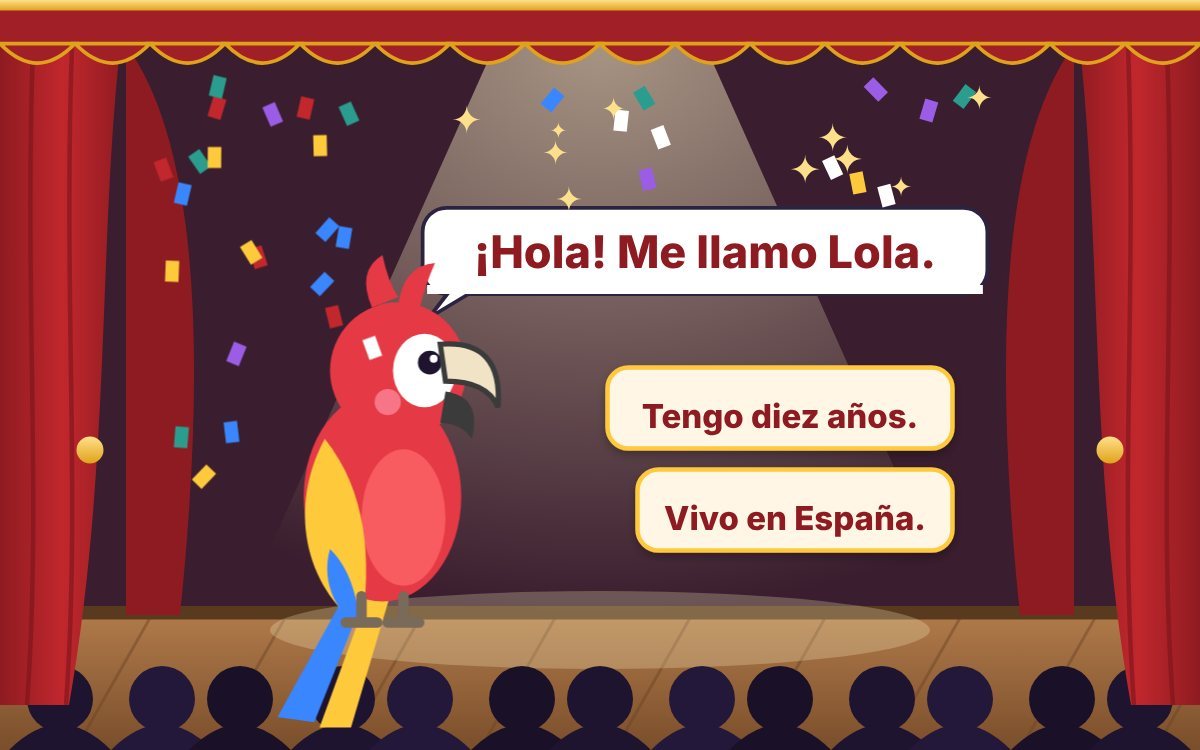
Say your name, age and where you live in full Spanish sentences (me llamo, tengo … años, vivo en) by listening to Lucía, building sentences from tiles and typing them.
Years 3–6 languages · 1
Speak clearly: Spanish vowels, silent h, j, ll and ñ
Practise the five pure Spanish vowels, the silent h, the throaty j, ll and ñ, plus accents and upside-down question marks, in a sound studio with a sound-sorting game and a tongue twister.
Years 3–6 languages · 1
Talk about your family: who you have and what they are called
Name family members and say who you have with tengo un or una, use mi and mis, and say what someone is called with se llama, using a wall of family photos.
Years 3–6 languages · 1
Describe a favourite animal and give a reason with porque
Say mi animal favorito es…, describe it with es grande or es rápido, and give a reason with porque, learning that favorito comes after the noun and that porque is not ¿por qué?
Years 3–6 languages · 1
Plan and give a short talk: order, joining words and presenting tips
Put a talk in order from greeting to goodbye, join sentences with y, pero and también, learn presenting tips like a key-word cue card, then build and rehearse your own talk aloud.
Years 3–6 languages · 1Years 3–6 languages · 2
The Grand Final: presenting in Spanish challenge (10 questions)
What the chapters cover in the national curriculum in England:
Years 3–6 languages: Speak in sentences, using familiar vocabulary, phrases and basic language structures
Years 3–6 languages: Present ideas and information orally to a range of audiences
About this adventure
Introduce Yourself in Spanish is an interactive game that teaches children aged 9–11 to prepare and give a short talk in Spanish about themselves, their family and a favourite animal, speaking in full sentences with clear pronunciation.
With Lola the parrot, players visit the rooms of a theatre. They listen to model sentences, build them from word tiles and type them with accent keys: me llamo, tengo diez años (Spanish uses 'I have' for age), vivo en, tengo una hermana, mi hermano se llama and mi animal favorito es el perro porque es divertido. A sound studio practises the five pure vowels, the silent h, the throaty j, ll and ñ.
On the main stage, players put a talk in order, join ideas with y, pero and también, learn presenting tips such as using a key-word cue card, then build and rehearse their own talk before a final challenge.
Questions and answers
How do you introduce yourself in Spanish?
Start with ¡Hola! Me llamo… (my name is), then say your age with Tengo… años and where you live with Vivo en…, for example: ¡Hola! Me llamo Sam. Tengo diez años. Vivo en Inglaterra.
Why do you say tengo for your age in Spanish?
Spanish uses the verb tener (to have) for age, so Tengo diez años literally means I have ten years. Saying soy diez años, as English speakers often try, is a common mistake.
How do you pronounce the h, j, ll and ñ in Spanish?
The h is always silent, so hola sounds like OH-lah. The j is a breathy sound like the ch in loch, ll usually sounds like the y in yes, and ñ says ny, as in años (AN-yos).
What age is this Spanish presenting game for?
It is written for children aged 9 to 11, matching Years 5 and 6 of the KS2 languages curriculum in England. An optional warm-up on greetings and numbers to twelve helps anyone who needs a refresher.
What does the game include and how long does it take?
There are five chapters, an optional warm-up and a ten-question final challenge, taking about 45 minutes in total. Chapters can be played separately, and each one ends with a try-at-home idea for practising aloud.
We count visits to make TapLearn better.We use one cookie, only on this site, to see how families find and use it. No adverts, and nothing is shared.One cookie, only on this site. No adverts.How we measure

 TapLearn