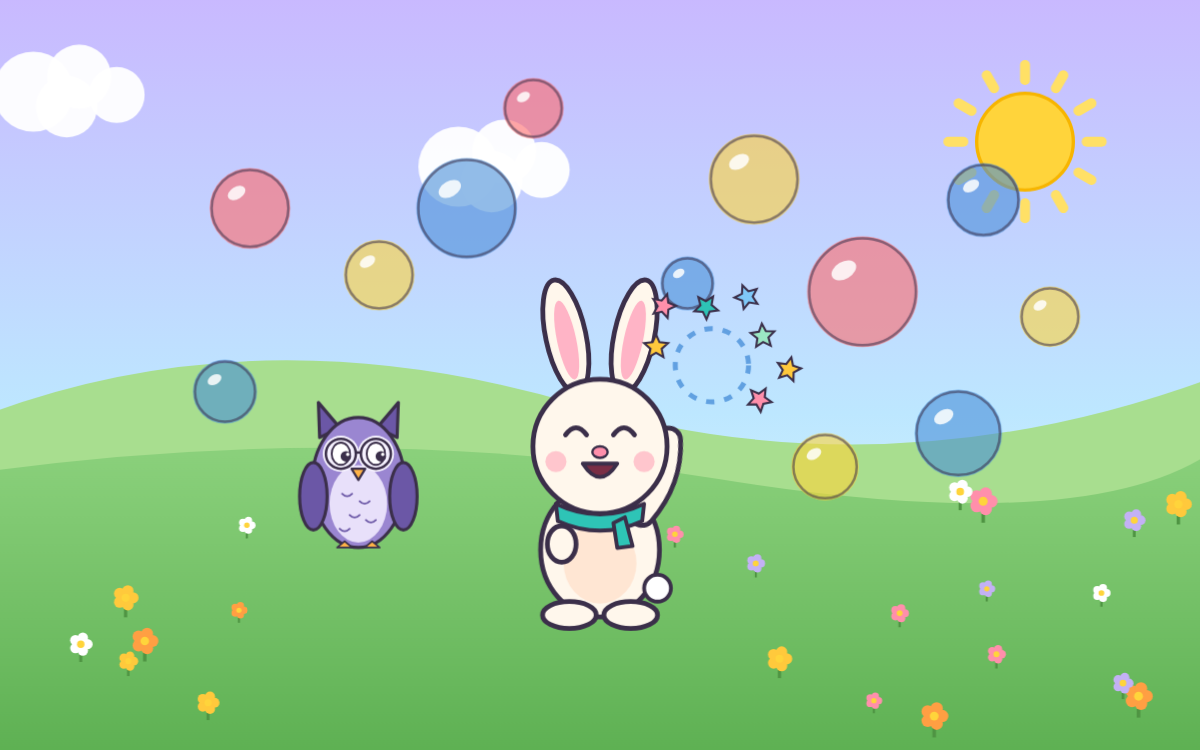
Good Listening Skills: Pip's Listening Garden
Learn good listening skills: how to listen carefully, follow instructions and ask questions, by helping Pip the rabbit and friends in a garden.
- Ages 4–5
- About 35 min
- Easy start
- Speaking & Listening
Learn good listening skills: how to listen carefully, follow instructions and ask questions, by helping Pip the rabbit and friends in a garden.
Reception english · 1 Reception english · 2
Reception english · 1
Reception personal, social and emotional development · 3 Reception english · 2
Reception personal, social and emotional development · 3 Reception english · 2
Reception english · 4 Reception english · 2 Reception english · 5
Reception english · 6 Reception english · 4
See every English chapter in the chapter library
What the chapters cover in the national curriculum in England:
Good Listening Skills is an interactive game that teaches children aged 4–5 how to listen carefully, why listening matters, and how to follow instructions, make comments and ask questions. It follows the EYFS Reception goals for listening, attention and understanding.
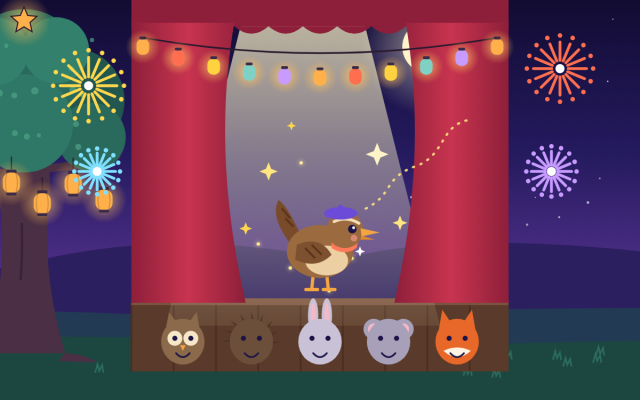
Children help Pip the rabbit switch on five listening helpers: ears listening, turning towards the talker, a quiet mouth, a calm body and a thinking brain. They tidy a playroom by following two- and three-step instructions in order, and freeze at a chime during bubble play to hear a new rule.
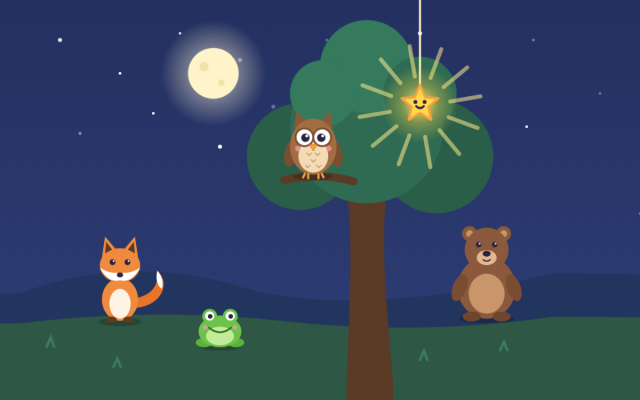
At show and tell, they remember friends' news and pick comments that stay on topic. They then ask questions to solve a mystery box, and practise saying "Can you say that again, please?" when noise drowns out the words. Every instruction can be heard again.
Good listening means turning towards the person talking, keeping your mouth quiet and body calm, and thinking about the words you hear. Every child listens a little differently, so the thinking part matters most.
Listening keeps children safe, because they hear warnings like "Stop, a bike is coming". It also helps them learn new things and shows friends that they care about what they say.
Give two or three jobs in one go and count them on your fingers together while you say them. Ask your child to wait until you finish, then do the jobs in order: first, then, then.
It is made for children aged 4 to 5 in Reception. It matches the EYFS goals for listening, attention and understanding, and every line is read aloud so pre-readers can play on their own.
It has six short chapters and an eight-question Super Listener Challenge, taking about 35 minutes in total. Children can play one chapter at a time and each one ends with a try-at-home idea.
 TapLearn
Getting it ready…
Great work on chapter 1! To open the next chapters, ask a grown-up to take a look.
To play this game, ask a grown-up to take a look. There are lots of free games you can play right now too!
Playing in class? Ask your teacher to get a free class link. Then your teacher can open every chapter on the board, and you can keep playing at home.
Teachers: play every chapter with your class, free
taplearn.co.uk/teachers
A free teacher account: games on the board, a class link for home, and no pupil data.
A teacher? Every chapter is free for your class. Get a free teacher account
A teacher? Every chapter is free for your class. Get a free teacher account
Create a free family account and your child can play every chapter of every game for 7 days, with no card needed. Their progress is kept. After that, the free plan is free for ever, and membership is £6.99 (about $9.35) a month if you'd like to keep every chapter.
That's all the learning time for today. Great work! Flip will be ready to play again tomorrow.