What you'll learn
- Say ideas and feelings in a full sentence, not one word
- Use the right words for yesterday, now and tomorrow
- Join two ideas with and, then or because
- Tell what happened in order: first, then, at the end
- Add detail about who, what and where
- Choose please, thank you, sorry or excuse me at the right time
Chapter by chapter
- Saying ideas and feelings in full sentences Free to try
Reception english · 1 Reception english · 2 Reception english · 3
- Saying what happened, what is happening and what will happen
Reception english · 1 Reception english · 2 Reception english · 4
- Joining ideas with and, then and because
Reception english · 1 Reception english · 5 Reception english · 2
- Telling what happened in order and with detail
Reception english · 4 Reception english · 1 Reception english · 5 Reception english · 6
- Using polite words: please, thank you, sorry and excuse me
Reception english · 7 Reception english · 2
- Big Chatter Show: talking in full sentences challenge (10 questions)
See every English chapter in the chapter library
What the chapters cover in the national curriculum in England:
- Reception english: Express their ideas and feelings about their experiences using full sentences, including use of past, present and future tenses and making use of conjunctions, with modelling and support from their teacher
- Reception english: Articulate their ideas and thoughts in well-formed sentences
- Reception english: The development of children's spoken language underpins all seven areas of learning and development. Children's back-and-forth interactions from an early age form the foundations for language and cognitive development. The number and quality of the conversations they have with adults and peers throughout the day in a language-rich environment is crucial
- Reception english: Describe events in some detail
- Reception english: Connect one idea or action to another using a range of connectives
- Reception english: Through conversation, storytelling and role play, where children share their ideas with support and modelling from their teacher, and sensitive questioning that invites them to elaborate, children become comfortable using a rich range of vocabulary and language structures
- Reception english: Develop social phrases
About this adventure
Talking in Full Sentences is an interactive speaking game for Reception children aged 4–5 that helps them share ideas, feelings and events in full sentences, as the EYFS early learning goal for speaking expects.
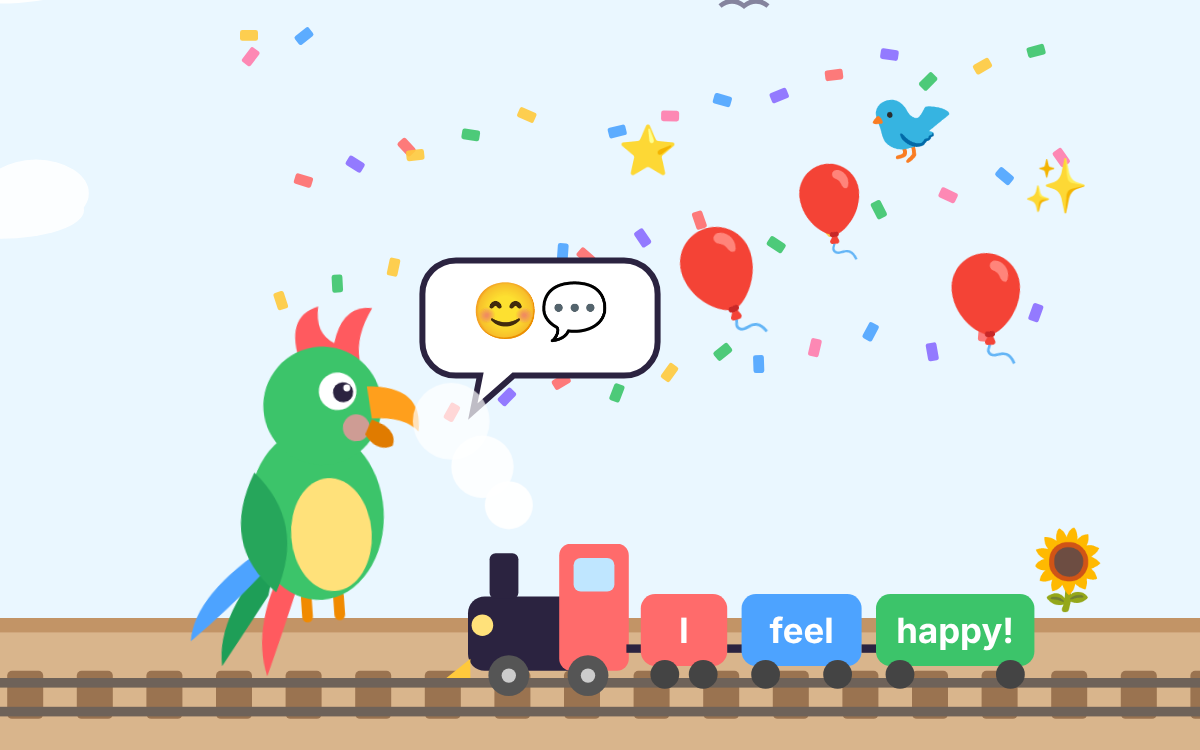
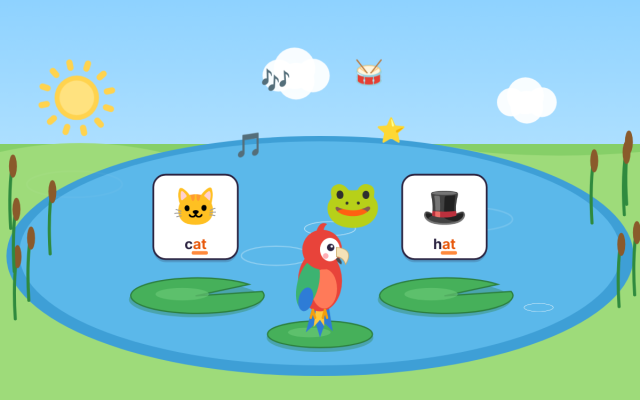
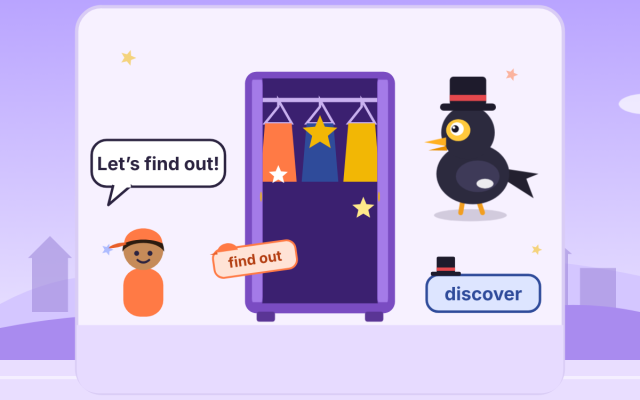
Pip the parrot only squawks single words, so children help him by choosing or finishing sentences that the game reads aloud. They pick between “Ball!” and “I want to play with the ball”, match sentences to yesterday, now and tomorrow, and build bridges with joining words such as and, then and because. Every question and answer is spoken, so no reading is needed.
Children also put picture stories in order, add detail about who, what and where, and choose polite words in a busy café. Regular “say it out loud” moments get them talking, and each chapter ends with a simple talking idea for grown-ups to try at home.
Questions and answers
What does speaking in full sentences mean for a 4-year-old?
It means saying a whole idea with all the little words, such as “I want to play with the ball” instead of “Ball!”. Children around 4 to 5 are learning to do this and to join ideas with words like and and because.
Is it normal for my child to say goed instead of went?
Yes, saying goed or runned is a normal stage for young children. It shows they have noticed that many words add -ed for the past. Simply say it back the right way, such as “Yes, you went to the park”, without correcting them.
How can I help my child speak in full sentences at home?
Chat together often, at meals, bath time and on walks, and give your child time to answer. When they use one word, say the full sentence back, and ask open questions like “What happened next?” to help them say more.
What age is this talking game for?
The game is designed for Reception children aged 4 to 5 and follows the EYFS communication and language goals. Everything is read aloud, so children who are not reading yet can play on their own or with a grown-up.
What does the game include and how long does it take?
The game has five short chapters and a 10-question Big Chatter Show challenge, taking about 35 minutes in total. Children can play one chapter at a time and pick any chapter from the Chatter Lane map.
 TapLearn