Rosa Parks and Emily Davison: Stand Up for Fairness
Learn who Rosa Parks and Emily Davison were and how they changed unfair rules, then ride Rosa's bus and march with the suffragettes.
Online game, chapter 1 free · Years 1 and 2 (KS1) · ages 5–7 · national curriculum in England · no adverts · plays on a phone, tablet or computer · no sign-up to start.
An online history game for Years 1 and 2 (KS1). It covers the national curriculum in England, Years 1–2 history: “The lives of significant individuals in the past who have contributed to national and international achievements, some should be used to compare aspects of life in different periods”, and 1 more statement listed under the chapters.
4 short chapters, about 35 minutes in all. Children can stop after any chapter.
Start playing for free. Plays in the browser on phones, tablets and computers: no app, no adverts.
Free for teachers: every chapter on the whiteboard with a free teacher account.
Last updated · Checked against the national curriculum in England by the TapLearn team
What you'll learn
Who Rosa Parks was and why she refused to give up her seat
What the Montgomery bus boycott was and what it changed
What voting means and why the suffragettes wanted votes for women
How Emily Davison campaigned, and what changed in 1918 and 1928
How to put events from both lives on a timeline
How the two women's lives were alike and different
Chapter by chapter
Rosa Parks and the bus: saying no to unfair rulesStart playing for free
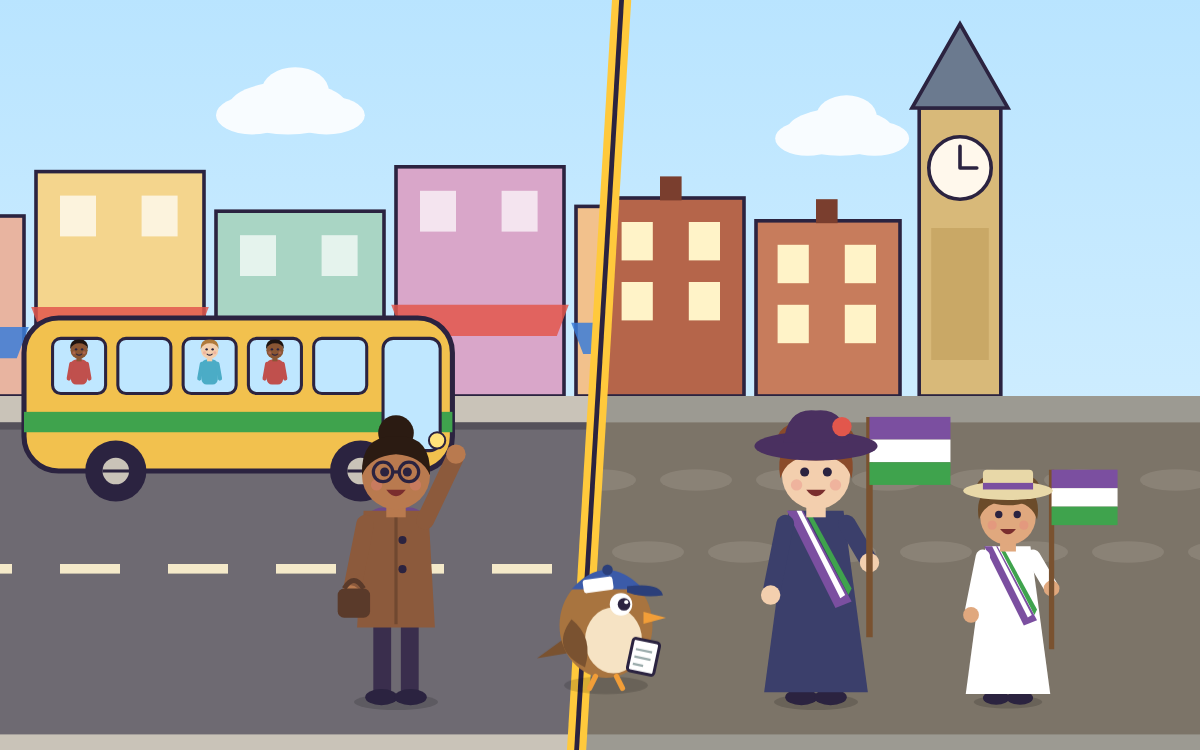
Learn about Rosa Parks' life, the segregated buses of Montgomery, her calm refusal in 1955 and the bus boycott that changed the rules, by filling a bus and helping people walk to work.
Years 1–2 history · 1
Emily Davison and the suffragettes: fighting for votes for women
Learn what voting is, who could vote before 1918, and how Emily Davison and the suffragettes campaigned, by painting their flag and opening the polling station in 1918 and 1928.
Years 1–2 history · 1
Timeline: putting Emily's and Rosa's lives in time order
Order events from both women's lives on a timeline from long ago to today, compare year numbers, and see that Rosa was born in 1913, the year Emily died.
Years 1–2 history · 2
Same and different: comparing Rosa and Emily, then and now
Sort facts into Rosa, Emily or both to find similarities and differences, compare their ways of protesting, and slide a bus and a polling station from then to now.
What the chapters cover in the national curriculum in England:
Years 1–2 history: The lives of significant individuals in the past who have contributed to national and international achievements, some should be used to compare aspects of life in different periods
Years 1–2 history: Know where the people and events they study fit within a chronological framework and identify similarities and differences between ways of life in different periods
About this adventure
Rosa Parks and Emily Davison: Stand Up for Fairness is an interactive KS1 history game that teaches children aged 5–7 about two brave women who stood up to unfair rules and helped bring about change. It covers the national curriculum for Years 1 and 2 on significant individuals and comparing life in different periods.
Guided by Pip, a sparrow reporter, children tap seats to discover the segregation rules on buses in Montgomery, watch Rosa calmly refuse to give up her seat in 1955, and help thousands of people join the 381-day bus boycott. In London they hold a class vote to learn what voting means, paint the purple, white and green suffragette flag, and see who could vote in 1918 and 1928.
They then build a timeline showing that Emily lived first and Rosa was born the year Emily died, sort facts into Rosa, Emily or both, and slide between then and now. Emily's death at the 1913 Derby is told gently and briefly.
Questions and answers
Who was Rosa Parks, in simple words?
Rosa Parks was an American woman who, in 1955 in Montgomery, Alabama, refused to give up her bus seat to a white passenger. Her arrest led to a 381-day bus boycott, and in 1956 the unfair bus rules were ended.
Why did Rosa Parks not give up her seat?
Rosa Parks did not stay seated because she was physically tired. She said the only tired she was, was tired of giving in to unfair rules that treated Black people worse than white people.
What did Emily Davison do for votes for women?
Emily Davison was a British suffragette who campaigned for women to be allowed to vote. She marched, hid in Parliament on census night 1911 and went to prison nine times. She died after being hit by the King's horse at the 1913 Derby.
What age is this Rosa Parks and Emily Davison game for?
The game is made for children aged 5 to 7, in Year 1 and Year 2. Everything is read aloud, there is little text on screen at once, and children answer by tapping, sorting and ordering.
What does the game include and how long does it take?
The game has four chapters and a ten-question Fairness Champion Challenge, and takes about 35 minutes to play in full. Each chapter starts with a short animated introduction and ends with a newspaper front page and a badge.
We count visits to make TapLearn better.We use one cookie, only on this site, to see how families find and use it. No adverts, and nothing is shared.One cookie, only on this site. No adverts.How we measure

 TapLearn