Retelling Stories You Know: Story Maps with Thimble the Mouse
Reception: learn to retell stories you know in order, with story words, your own words and new vocabulary, and predict what happens next with Thimble.
Online game, chapter 1 free · Reception (EYFS) · ages 4–5 · Early Years (EYFS) framework · no adverts · plays on a phone, tablet or computer · no sign-up to start.
An online English game for Reception (EYFS). It covers the national curriculum in England, Reception english: “Demonstrate understanding of what has been read to them by retelling stories and narratives using their own words and recently introduced vocabulary”, and 3 more statements listed under the chapters.
6 short chapters, about 30 minutes in all. Children can stop after any chapter.
Start playing for free. Plays in the browser on phones, tablets and computers: no app, no adverts.
Free for teachers: every chapter on the whiteboard with a free teacher account.
Last updated · Checked against the national curriculum in England by the TapLearn team
What you'll learn
Retell a well-known story in order: beginning, middle and end
Join story parts with first, next, then and finally
Say a story's repeated lines and use 'Once upon a time'
Retell parts in their own words without changing what happened
Understand and use new story words such as meadow and sturdy
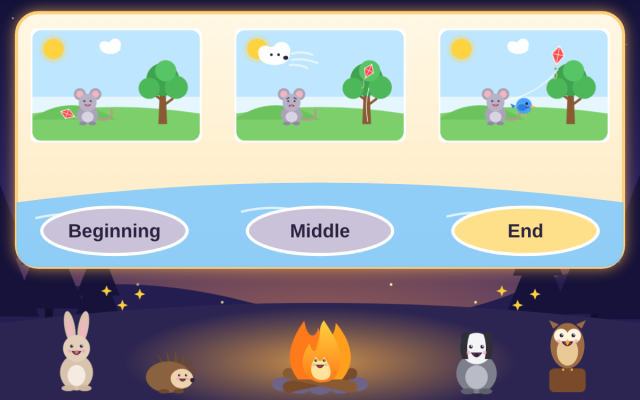
Listen to The Gingerbread Man, then tap the muddled pictures back into order on a story path and spot the beginning, middle and end, joining the parts with first, next, then and finally (sequencing).
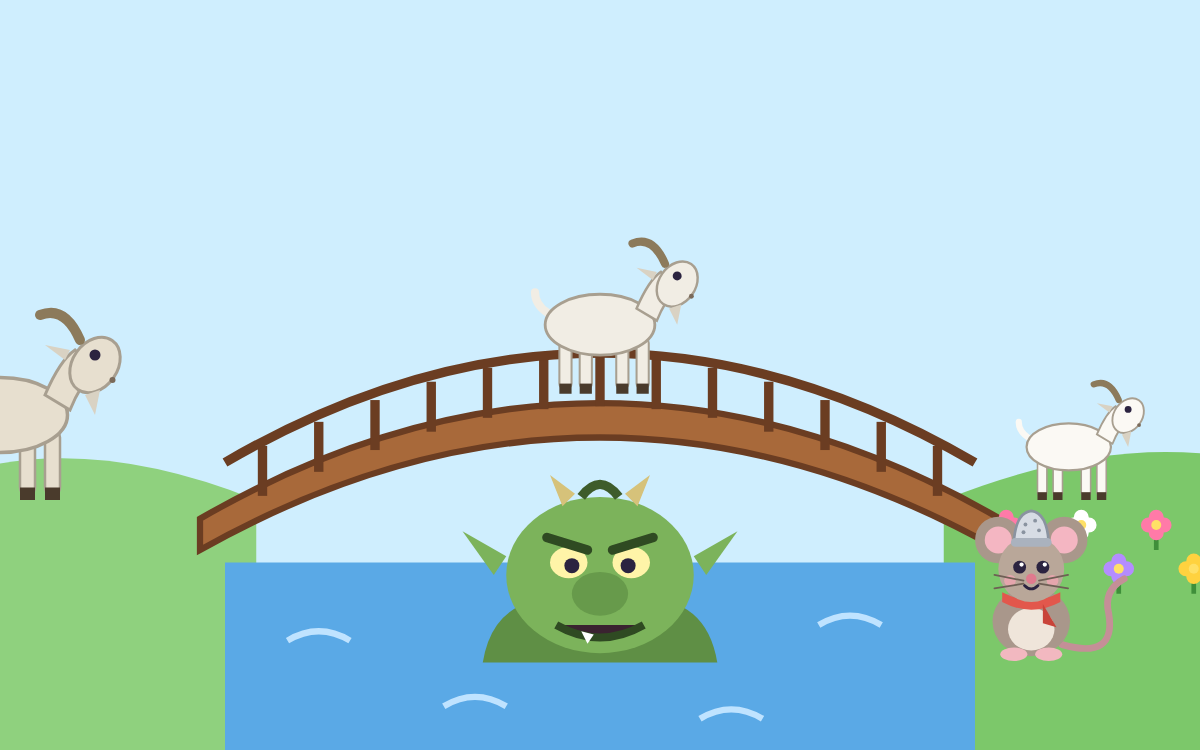
Help three billy goats trip-trap over the troll's bridge and choose the troll's exact repeated line each time, while learning story openers and endings such as 'Once upon a time' and 'happily ever after'.
Hear parts of The Little Red Hen and pick which puppet retold each part in their own words without changing what happened, then spot the bits worth saying exactly, such as 'Not I!'
Catch five words from the tales in a word jar (meadow, dough, mill, cunning and sturdy), say each one out loud, then use them in story sentences and in new everyday situations.
Use clues from The Three Little Pigs and Goldilocks's porridge to say what will happen next, noticing how stories often come in threes and how the third time is different (prediction).
Build a six-picture story map of The Little Red Hen, retell the whole tale from it with story words and own words, then make a new version by swapping one character.
What the chapters cover in the national curriculum in England:
Reception english: Demonstrate understanding of what has been read to them by retelling stories and narratives using their own words and recently introduced vocabulary
Reception english: Retell the story, once they have developed a deep familiarity with the text, some as exact repetition and some in their own words
Reception english: Anticipate – where appropriate – key events in stories
Reception expressive arts and design: Invent, adapt and recount narratives and stories with peers and their teacher
How to play
Press Start and Thimble the mouse reads everything aloud, so no reading is needed.
Choose a story book, then listen to the tale while the pictures appear one by one.
Tap pictures to put them in order, tap answers to choose, and tap the speaker on any answer to hear it again.
After a wrong tap, Thimble gives a spoken hint and the child tries again; only the first try is counted.
When Thimble says 'Your turn!', the child says the line out loud and taps the green tick.
The Story Star quiz at the end asks eight questions, one from each idea.
A worked example
Question: the wolf blew down the straw house and the stick house. Now he huffs and puffs at the brick house. What will happen?
Think back: what happened to the first two houses? They blew down because straw and sticks are not strong.
Look for a clue: bricks are sturdy, which means strong, so they won't fall down.
Remember the pattern: in stories that come in threes, the third time is often different.
Answer: the brick house stays standing.
Common mistakes and how to fix them
Starts the retelling partway through, with the exciting part, and misses the beginningAsk 'Who was in the story at the very start, and what were they doing?' before anything else.
Mixes up what happens in the middle and at the endLay out three drawings and point: 'This is the beginning, this is the middle, this is the end.' Retell touching each one.
Changes what happened when using their own words, for example saying the animals helped the henAsk 'Is that what happened in the book?' and look back at the page together, then try the sentence again.
Muddles a repeated line with one from another storyMatch lines to characters: 'Who says Not I? Who says Run, run, as fast as you can?'
Guesses what happens next without using cluesAsk 'What happened last time?' and 'What can you see in the picture?' before they guess.
Try it at home
After a bedtime story, ask what happened first, next and at the end, then draw three quick pictures together and tell it back.
Pause before a favourite repeated line and let your child say it in a big character voice.
Pick one new story word and use it during the day, for example 'This bag is sturdy!'
Stop at an exciting moment and ask 'What do you think will happen next? Why?'
In the classroom
Play a chapter on the whiteboard and let the class chant the repeated lines together.
After the story-map chapter, children draw their own story map and retell it to a partner with actions.
Use the predicting chapter as a starter before reading a new traditional tale.
Children play in pairs on tablets, taking turns to tap and to say the 'Your turn' lines aloud.
About this adventure
Retelling Stories You Know is an interactive online game for Reception (ages 4 to 5) that teaches children to retell well-known traditional tales in order, using some of the story's own words and some of their own. It follows the EYFS framework in England: demonstrate understanding of what has been read to them by retelling stories using their own words and recently introduced vocabulary, and anticipate key events in stories.
There are six chapters and a Story Star quiz, set in the book den of Thimble, a story mouse. Every story is told and read aloud first; then the child tries it with spoken hints, and finally alone in the quiz. Children tap pictures into order on a story path, tap a bridge to help three goats trip-trap across, choose which puppet kept the story the same, and say repeated lines out loud.
The key ideas are story order (beginning, middle and end, joined with first, next, then and finally), story language such as "Once upon a time" and repeated refrains, retelling in your own words without changing what happened, new story words, predicting from clues, and using a story map to retell a whole tale.
Questions and answers
How do I help my Reception child retell a story?
Read the same story several times until your child knows it well, then ask what happened first, next and at the end. Drawing three or four quick pictures as a story map gives them something to point to while they tell it back.
What does retelling a story in your own words mean for a 4-year-old?
It means telling what happened using words they choose, while keeping the story the same. 'The hen spotted some seeds' is a good retelling of 'the hen found some grains of wheat'; 'the hen found a gold coin' changes the story.
Why are repeated refrains important in stories for young children?
Repeated lines like 'Who's that trip-trapping over my bridge?' help children remember a story and join in confidently. Saying them exactly, in a character voice, makes a child's retelling sound like the real story and builds memory for longer tales.
What do Reception children learn about retelling stories?
By the end of Reception, children should show they understand stories read to them by retelling them in their own words with recently introduced vocabulary, and anticipate key events. Development Matters adds retelling some parts exactly and some in their own words.
Is there an interactive story retelling game for a Reception class?
Yes, this game plays in a web browser on a classroom whiteboard, tablets or computers. The class can listen to each tale, call out the repeated lines together, vote on which picture comes next on the story path and then retell it with actions.
What is included in the Retelling Stories You Know game?
It has six chapters and an eight-question Story Star quiz, taking about 30 minutes in all. Every line is read aloud, so children who can't read yet can play, and it uses The Gingerbread Man, The Three Billy Goats Gruff, The Little Red Hen and The Three Little Pigs.
We count visits to make TapLearn better.We use one cookie, only on this site, to see how families find and use it. No adverts, and nothing is shared.One cookie, only on this site. No adverts.How we measure
 TapLearn