Making Inferences for Years 1 and 2: Story Detectives with Bramble
Learn how to make inferences in stories: use clues and what you know to work out how characters feel, what they think and why they act.
Online game, chapter 1 free · Years 1 and 2 (KS1) · ages 5–7 · national curriculum in England · no adverts · plays on a phone, tablet or computer · no sign-up to start.
An online English game for Years 1 and 2 (KS1). It covers the national curriculum in England, Year 1 english: “Understand both the books they can already read accurately and fluently and those they listen to by: drawing on what they already know or on background information and vocabulary provided by the teacher”, and 4 more statements listed under the chapters.
5 short chapters, about 30 minutes in all. Children can stop after any chapter.
Start playing for free. Plays in the browser on phones, tablets and computers: no app, no adverts.
Free for teachers: every chapter on the whiteboard with a free teacher account.
Last updated · Checked against the national curriculum in England by the TapLearn team
What you'll learn
What an inference is: a clue plus what you already know
How actions like stamping or hiding show a character's feelings
How said words like shouted, sobbed and whispered are clues
Why characters do things, and what they are like
The difference between right there and detective questions
How to prove an answer with a clue from the story
Chapter by chapter
Clues and what you know: making an inferenceStart playing for free
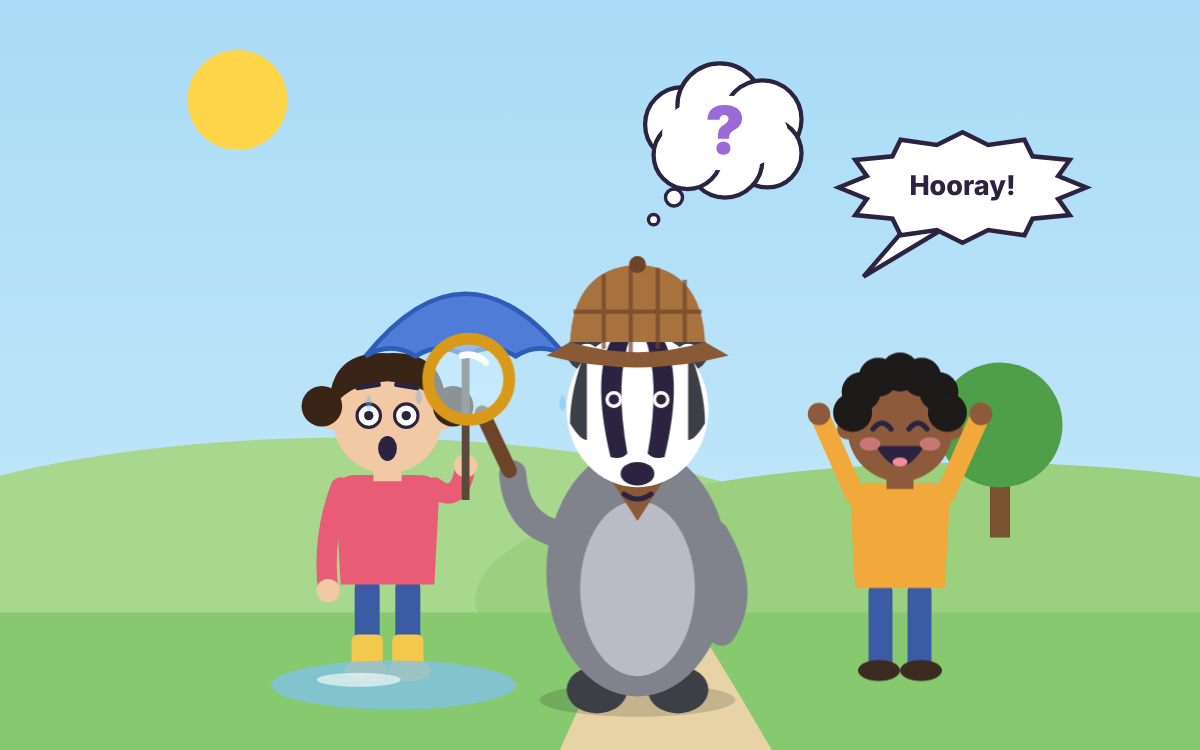
Learn that an inference is a clue plus what you already know, by spotting clues on a rain-soaked character, opening mystery boxes and sorting what a story tells us from what we work out.
Year 1 english · 1Year 2 english · 2Year 1 english · 3Year 2 english · 4
Feelings from what characters do
Infer how characters feel from what they do, such as stamping, hiding, yawning or grinning, by watching characters act and tapping the action words that are clues.
Year 1 english · 3Year 2 english · 4
Feelings from what characters say and how they say it
Infer how characters feel from what they say and how they say it, such as shouted, sobbed or whispered, including what to do when their words and actions don't match.
Year 1 english · 3Year 2 english · 4
What characters think and want, and why they do things
Work out what characters think and want, why they act and what they are like, using clues from the story plus background facts given in the game, such as hedgehogs hibernating.
Year 1 english · 1Year 2 english · 2Year 1 english · 3Year 2 english · 4
Answering and asking questions about a story
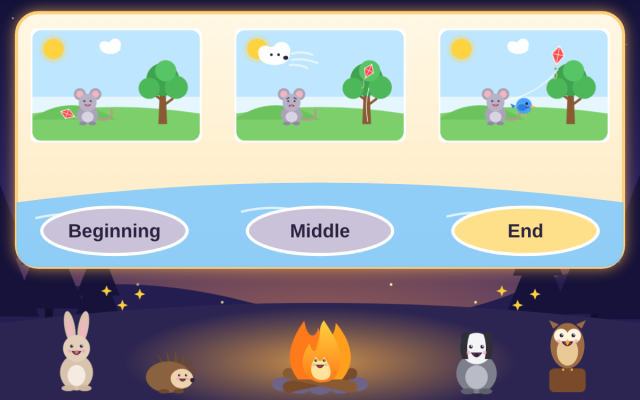
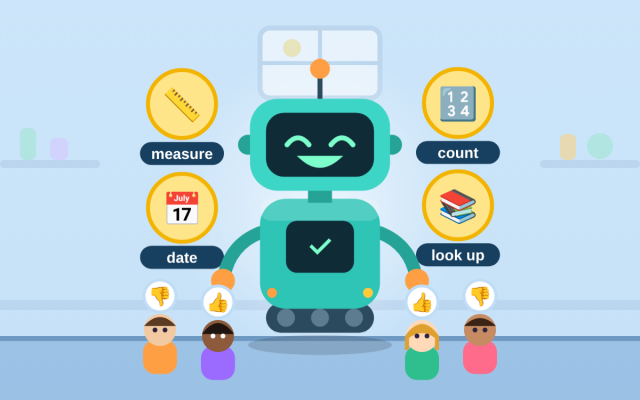
Answer questions about a short story, sort ones answered in the text from ones that need inference, prove answers with a sentence, and build good questions of your own (right there questions).
Year 2 english · 5Year 2 english · 4
The Big Case: Story Detective Challenge (10 questions)
What the chapters cover in the national curriculum in England:
Year 1 english: Understand both the books they can already read accurately and fluently and those they listen to by: drawing on what they already know or on background information and vocabulary provided by the teacher
Year 2 english: Understand both the books that they can already read accurately and fluently and those that they listen to by: drawing on what they already know or on background information and vocabulary provided by the teacher
Year 1 english: Understand both the books they can already read accurately and fluently and those they listen to by: making inferences on the basis of what is being said and done
Year 2 english: Understand both the books that they can already read accurately and fluently and those that they listen to by: making inferences on the basis of what is being said and done
Year 2 english: Understand both the books that they can already read accurately and fluently and those that they listen to by: answering and asking questions
About this adventure
Making Inferences is an interactive reading game that teaches children aged 5–7 how to work out things a story doesn't say, using clues in the text and what they already know. It follows the KS1 English reading curriculum for Years 1 and 2.
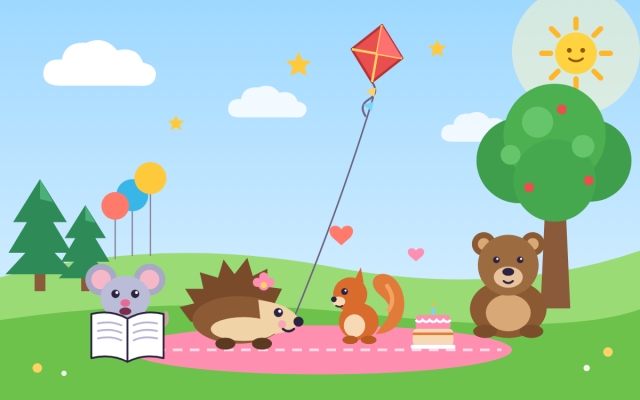
Children join Bramble the badger in his detective den and solve five cases. They tap clues hidden in pictures, open mystery boxes, find the action and speech words that show a character's feelings, and learn the detective formula: a clue plus what I know makes an inference. Tricky cases show why you must read the whole sentence, and what to do when a character's words and actions don't match.
Later, children sort questions answered right there in the story from ones that need detective thinking, prove their answers with a sentence from the text and build questions of their own, before a ten-question Big Case.
Questions and answers
What does making an inference mean for kids?
Making an inference means working out something a story doesn't say, by putting a clue from the words together with what you already know. A dripping umbrella tells you it is raining, even if the story never says so.
How do you teach inference in KS1?
Start with pictures and everyday clues, then move on to short sentences. Ask children 'how do you know?' so they point to the clue, and show them that a clue plus what they already know makes an inference.
What is the difference between a right there question and an inference question?
A right there question has its answer written in the story, such as the colour of a hat. An inference question asks you to work something out from clues, such as how the hat ended up in a tree.
What age is this inference game for?
It is designed for children aged 5 to 7 in Years 1 and 2 (KS1). Every line is read aloud, so children who are still learning to read can play, and older children can use it to practise.
What does the game include and how long does it take?
There are five detective cases, an optional feelings warm-up and a ten-question Big Case at the end. Playing everything takes about 30 minutes, and each case can be played on its own.
We count visits to make TapLearn better.We use one cookie, only on this site, to see how families find and use it. No adverts, and nothing is shared.One cookie, only on this site. No adverts.How we measure
 TapLearn