Fables and Fairy Tales: A World Trip with Hoot the Owl
Learn what fables and fairy tales are, then retell tales from Greece, Ghana, India and China, find their morals and spot special story language with Hoot.
Online game, chapter 1 free · Year 2 (KS1) · ages 6–8 · national curriculum in England · no adverts · plays on a phone, tablet or computer · no sign-up to start.
An online English game for Year 2 (KS1). It covers the national curriculum in England, Year 2 english: “Develop pleasure in reading, motivation to read, vocabulary and understanding by: listening to, discussing and expressing views about a wide range of contemporary and classic poetry, stories and non-fiction at a level beyond that at which they can read independently”, and 2 more statements listed under the chapters.
5 short chapters, about 35 minutes in all. Children can stop after any chapter.
Start playing for free. Plays in the browser on phones, tablets and computers: no app, no adverts.
Free for teachers: every chapter on the whiteboard with a free teacher account.
Last updated · Checked against the national curriculum in England by the TapLearn team
What you'll learn
The difference between a fable and a fairy tale
Where Anansi stories, Aesop's fables and Yeh-Shen come from
How to retell a tale with the main events in order
How to find the moral of a fable and link it to real life
Story openings, endings, repeated refrains and the rule of three
What is the same and different in two versions of a tale
Chapter by chapter
Fables and fairy tales from around the worldStart playing for free
Learn that a fable is a short story with a moral and a fairy tale is full of magic, by collecting tales on a world map and sorting six well-known stories.
Year 2 english · 1Year 2 english · 2
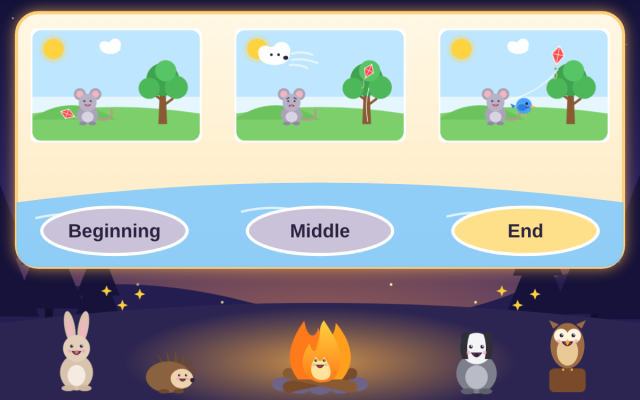
Retelling a tale in the right order
Watch The Lion and the Mouse and Anansi's tale from Ghana, then retell each one by putting the main events in order and choosing joining words such as One day and In the end.
Year 2 english · 2
Finding the moral of a fable
Help the tortoise win the race, then find the lesson in four fables from Greece and India and match each moral to an everyday situation, giving a view on whether the ant should share.
Year 2 english · 1
Story language: openings, endings, repeats and threes
Spot the recurring language of traditional tales: sort story openings from endings, fill in repeated refrains, find tales with threes, answer Krik? Krak! and build a story opening (the rule of three).
Year 2 english · 3
Comparing two versions of the same tale
Compare Cinderella with Yeh-Shen and Little Red Riding Hood with Lon Po Po, sorting what is the same and different, then choose a favourite version and give a reason.
What the chapters cover in the national curriculum in England:
Year 2 english: Develop pleasure in reading, motivation to read, vocabulary and understanding by: listening to, discussing and expressing views about a wide range of contemporary and classic poetry, stories and non-fiction at a level beyond that at which they can read independently
Year 2 english: Develop pleasure in reading, motivation to read, vocabulary and understanding by: becoming increasingly familiar with and retelling a wider range of stories, fairy stories and traditional tales
Year 2 english: Develop pleasure in reading, motivation to read, vocabulary and understanding by: recognising simple recurring literary language in stories and poetry
About this adventure
Fables and Fairy Tales is an interactive game that teaches children aged 6–8 what fables, fairy tales and traditional tales are, how to retell them and what lessons they teach, following the Year 2 English curriculum.
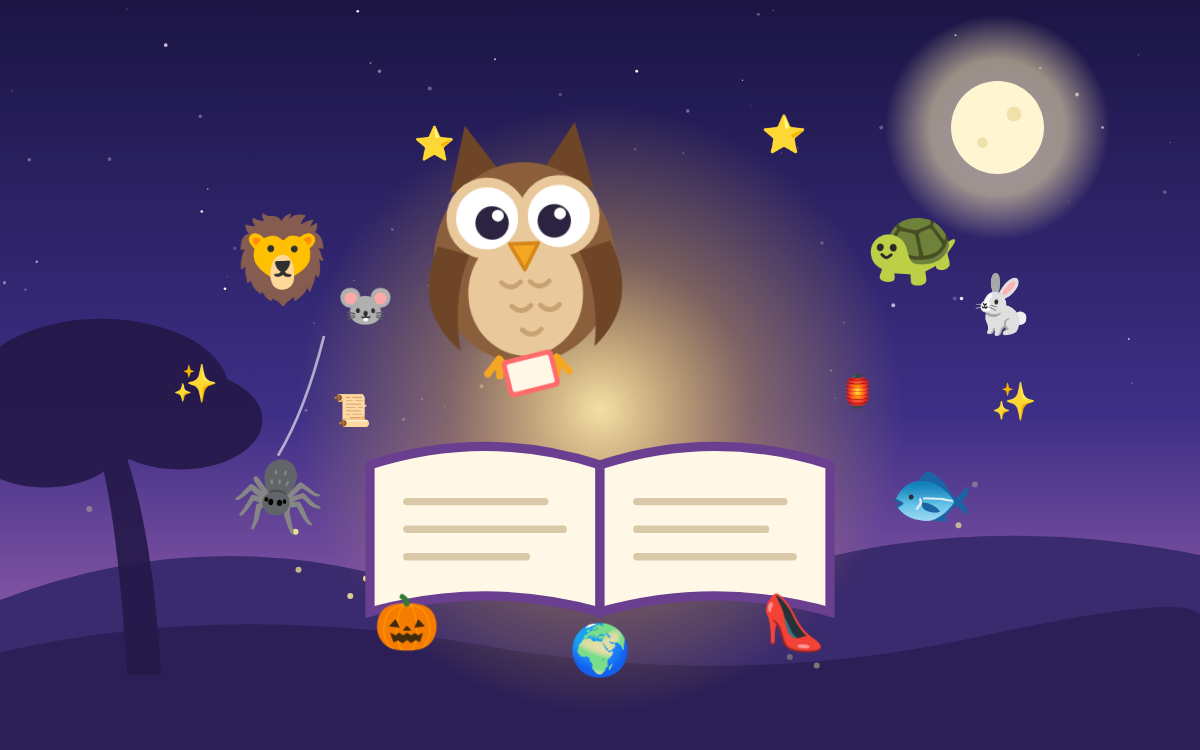
Hoot the Story Owl flies the player around a world map to collect tales: Aesop's fables from Greece, Anansi the spider from Ghana, the Panchatantra from India, Yeh-Shen from China and the Brothers Grimm from Germany. Children watch animated tellings of The Lion and the Mouse and How Anansi Got the Stories, then put the main events in order and choose joining words like One day and In the end.
Along the way they race the tortoise and the hare to find a moral (the lesson a story teaches), sort story openings from endings, join in with repeated refrains, and compare Cinderella with Yeh-Shen and Little Red Riding Hood with Lon Po Po, giving their own view with a reason.
Questions and answers
What is the difference between a fable and a fairy tale?
A fable is a short story, often with animals that act like people, that teaches a lesson called a moral. A fairy tale has magic in it, often with kings, queens and castles, and it doesn't need a fairy at all.
What is the moral of a story, in simple words?
The moral is the lesson a story teaches us about how to behave. In The Tortoise and the Hare the moral is slow and steady wins the race: keep going, don't give up and don't show off.
Where do Anansi stories come from?
Anansi stories began with the Akan (Ashanti) people of Ghana in West Africa and later travelled to the Caribbean. Anansi is a small but clever spider who uses tricks, and in Ghana the tales are called Anansesem, meaning spider stories.
What age is this fables and fairy tales game for?
It is written for Year 2 children, aged 6 to 7, and follows the KS1 English reading curriculum for England. Confident 5-year-olds and 8-year-olds who want to revisit traditional tales will also enjoy it.
What does the game include and how long does it take?
There are five narrated chapters, each with an animated introduction, hands-on activities and a three-question check, plus a ten-question final challenge. Playing everything takes about 35 minutes, and each chapter can be played on its own.
We count visits to make TapLearn better.We use one cookie, only on this site, to see how families find and use it. No adverts, and nothing is shared.One cookie, only on this site. No adverts.How we measure
 TapLearn