What you'll learn
- Which imperial units measure length, mass and capacity
- 1 inch is about 2.5 centimetres, and 1 foot is about 30 cm
- 1 kilogram is about 2.2 pounds (lb), and 1 lb about 450 g
- 1 pint is about 568 ml, and 1 gallon about 4.5 litres
- Why lb means a weight, not money, and where the letters come from
- How to compare amounts by converting them into the same unit first
Chapter by chapter
- Imperial units: inches, feet, ounces, pounds, pints and gallons Free to try
Year 5 maths · 1
- Inches and centimetres: 1 inch is about 2.5 cm
Year 5 maths · 1
- Pounds, ounces and kilograms: 1 kg is about 2.2 lb
Year 5 maths · 1
- Pints, gallons and litres: 1 pint is about 568 ml
Year 5 maths · 1
- Comparing and solving problems with imperial and metric units
Year 5 maths · 1
- Grand Market Challenge (10 questions) (10 questions)
What the chapters cover in the national curriculum in England:
- Year 5 maths: Understand and use approximate equivalences between metric units and common imperial units such as inches, pounds and pints
About this adventure
Imperial Units for Kids is an interactive maths game that teaches children aged 9–11 how imperial units such as inches, pounds and pints compare with metric units. It follows the Year 5 maths curriculum in England.
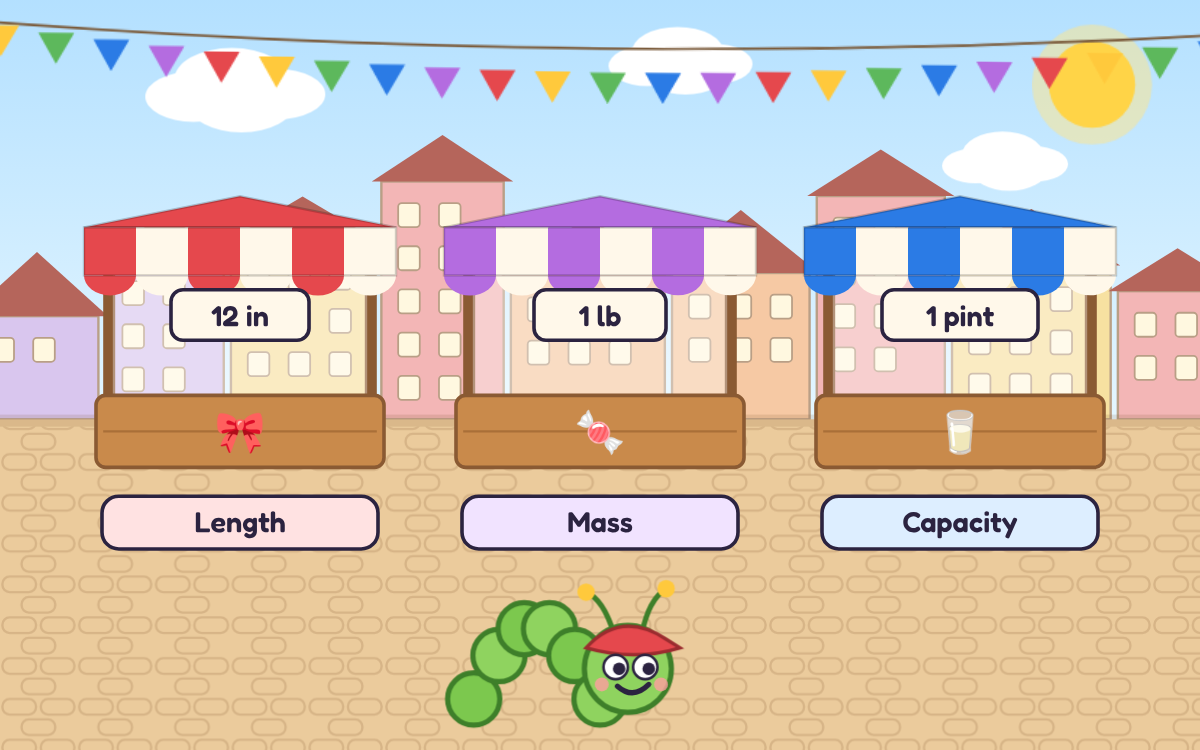
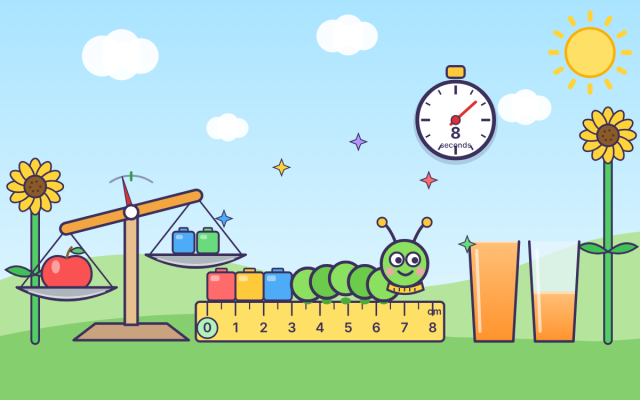
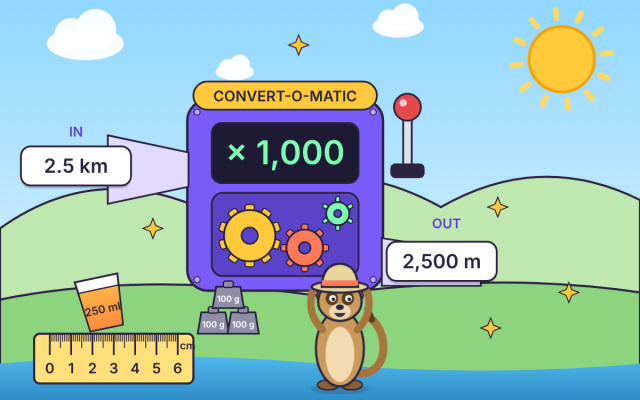
Players help Ivy the Inchworm run five market stalls. They slide a marker along a ruler marked in inches and centimetres to find that 1 inch is about 2.5 cm. They balance a 1 kg bag of sugar against pound weights to see that 1 kg is about 2.2 lb. They pour a pint of milk into a measuring jug and find it holds about 568 ml.
The ≈ sign means 'approximately equal'. It appears throughout because these conversions are close but not exact. Children type their own answers and solve mixed problems by changing both amounts into the same unit first. A narrator reads every step aloud.
Questions and answers
What are imperial units, in simple words?
Imperial units are older British units of measurement. They include inches and feet for length, ounces and pounds for mass, and pints and gallons for capacity. Most measuring today uses metric units, but imperial units still appear on milk bottles, road signs and old recipes.
How many centimetres are in an inch?
One inch is about 2.5 centimetres, and the exact figure is 2.54 cm. Children in Year 5 use 2.5 cm, so 2 inches is about 5 cm and 4 inches is about 10 cm. 12 inches make 1 foot, which is about 30 cm.
Which is heavier, a pound or a kilogram?
A kilogram is heavier than a pound. One kilogram is about 2.2 pounds, and one pound is about 450 grams, a little less than half a kilogram. Pounds are written lb, from the Latin word libra.
What age is this imperial units game for?
The game is designed for children aged 9 to 11 and follows the Year 5 maths objective on imperial units in England. There is an optional metric warm-up for children who want a quick reminder of centimetres, grams and millilitres first.
What does the game include and how long does it take?
It has five chapters, an optional metric warm-up and a 10-question final challenge, and takes about 45 minutes in total. Every line is read aloud and children type some answers on a number pad. They can play the chapters in any order from the market map.


 TapLearn