What you'll learn
- What a fronted adverbial is and how it tells when, where or how
- Where to put the comma after a fronted adverbial, even a long one
- How to use inverted commas around only the spoken words
- What a reporting clause is and where its comma goes
- Why the end punctuation goes inside the inverted commas
- How to punctuate a sentence with a fronted adverbial and direct speech
Chapter by chapter
- Fronted adverbials: openers for when, where and how Free to try
Years 3–4 english · 1 Year 4 english · 2
- Commas after fronted adverbials
Years 3–4 english · 1 Year 4 english · 2
- Direct speech: inverted commas around spoken words
Years 3–4 english · 3 Year 4 english · 4
- Punctuating direct speech: reporting clause comma and end punctuation inside
Years 3–4 english · 3 Year 4 english · 4
- Putting it together: fronted adverbials and direct speech
Years 3–4 english · 1 Years 3–4 english · 3 Year 4 english · 4 Year 4 english · 2
- Grand Terminus Challenge: commas and speech punctuation (10 questions)
What the chapters cover in the national curriculum in England:
- Years 3–4 english: Indicate grammatical and other features by: using commas after fronted adverbials
- Year 4 english: Punctuation: use of commas after fronted adverbials
- Years 3–4 english: Indicate grammatical and other features by: using and punctuating direct speech
- Year 4 english: Punctuation: use of inverted commas and other punctuation to indicate direct speech
About this adventure
Commas and Speech Punctuation is an interactive game that teaches children aged 7–10 how to use commas after fronted adverbials and how to punctuate direct speech, following the Year 4 English curriculum in England.
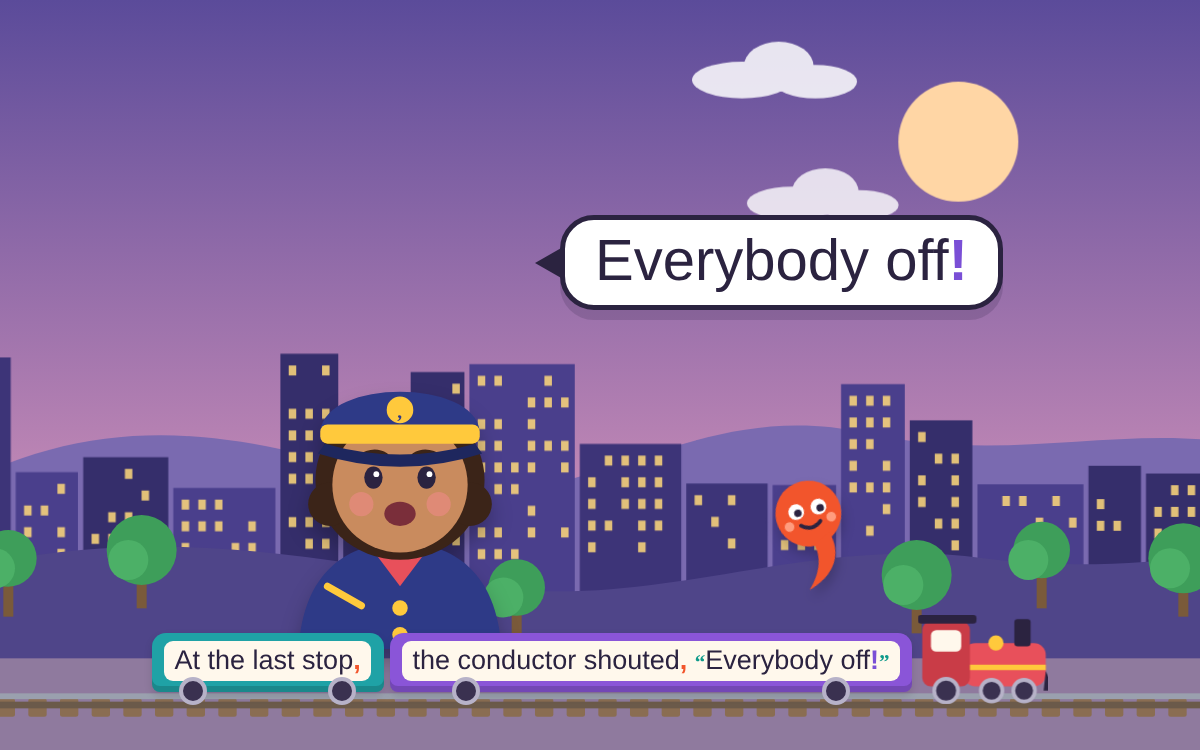
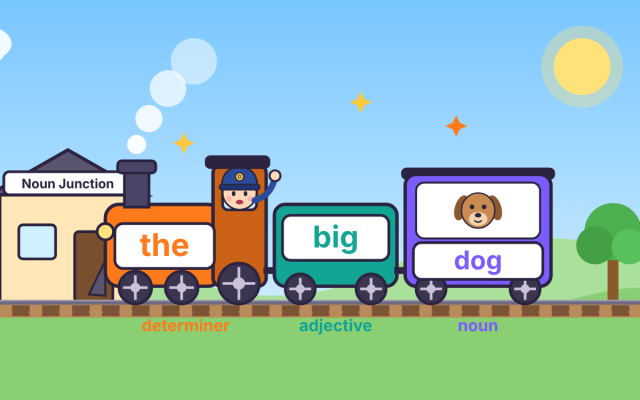
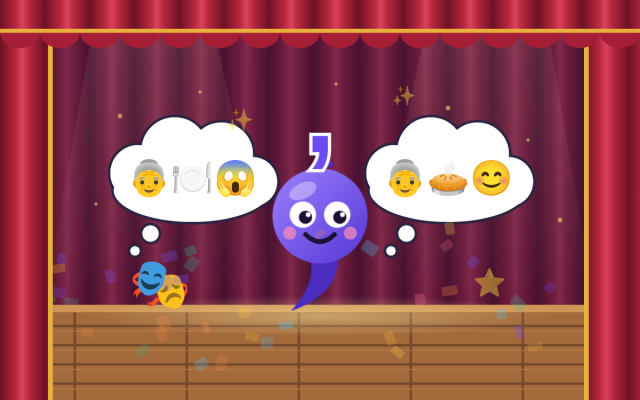
Children travel with Cora the conductor and Pip the comma. They spot fronted adverbials, the openers that tell when, where or how something happens, and put a comma straight after them. Then they turn speech bubbles into sentences. They put inverted commas around the spoken words, a comma after the reporting clause (the part that says who spoke) and the end mark inside, as in The conductor shouted, “Sit down!”
Children add each mark themselves, and the feedback explains common mistakes, such as a comma placed too early. Every instruction is read aloud, and two optional warm-ups recap capital letters, end marks and words that tell when, where and how.
Questions and answers
What is a fronted adverbial?
A fronted adverbial is a word or phrase at the start of a sentence that tells you when, where or how something happens, such as After lunch or Slowly. A comma follows it, as in After lunch, we played football.
Where does the comma go in direct speech?
When the reporting clause comes first, the comma goes straight after it, just before the opening inverted commas: The conductor shouted, “Sit down!” The reporting clause is the part that tells you who is speaking and how.
Does the exclamation mark go inside or outside the speech marks?
The exclamation mark goes inside the inverted commas when it belongs to the spoken words, so you write “Sit down!” rather than “Sit down”! The same rule applies to question marks and full stops that end the spoken words.
What age is this punctuation game for?
The game is for children aged 7 to 10 and matches what Year 4 pupils in England learn about fronted adverbials and direct speech. Younger children can start with the optional warm-ups, and older children can use it for revision.
What does the game include and how long does it take?
The game has five chapters, two optional warm-ups and a 10-question final challenge, and it takes about 40 minutes to play in full. Children can start any chapter from the map and come back to it at any time.

 TapLearn