What you'll learn
- Simplify fractions by dividing by the highest common factor
- Use the lowest common multiple to find a common denominator
- Compare and order fractions, including improper fractions greater than 1
- Add and subtract fractions with different denominators using equivalent fractions
- Add and subtract mixed numbers, exchanging a whole when needed
- Change improper fraction answers like 5/4 into mixed numbers
Chapter by chapter
- Simplifying fractions using common factors Free to try
Year 6 maths · 1
- Using common multiples to give fractions the same denominator
Year 6 maths · 1
- Comparing and ordering fractions, including fractions greater than 1
Year 6 maths · 2
- Adding and subtracting fractions with different denominators
Year 6 maths · 3
- Adding and subtracting mixed numbers
Year 6 maths · 3
- Fraction Champion Challenge (10 questions)
What the chapters cover in the national curriculum in England:
- Year 6 maths: Use common factors to simplify fractions; use common multiples to express fractions in the same denomination
- Year 6 maths: Compare and order fractions, including fractions > 1
- Year 6 maths: Add and subtract fractions with different denominators and mixed numbers, using the concept of equivalent fractions
About this adventure
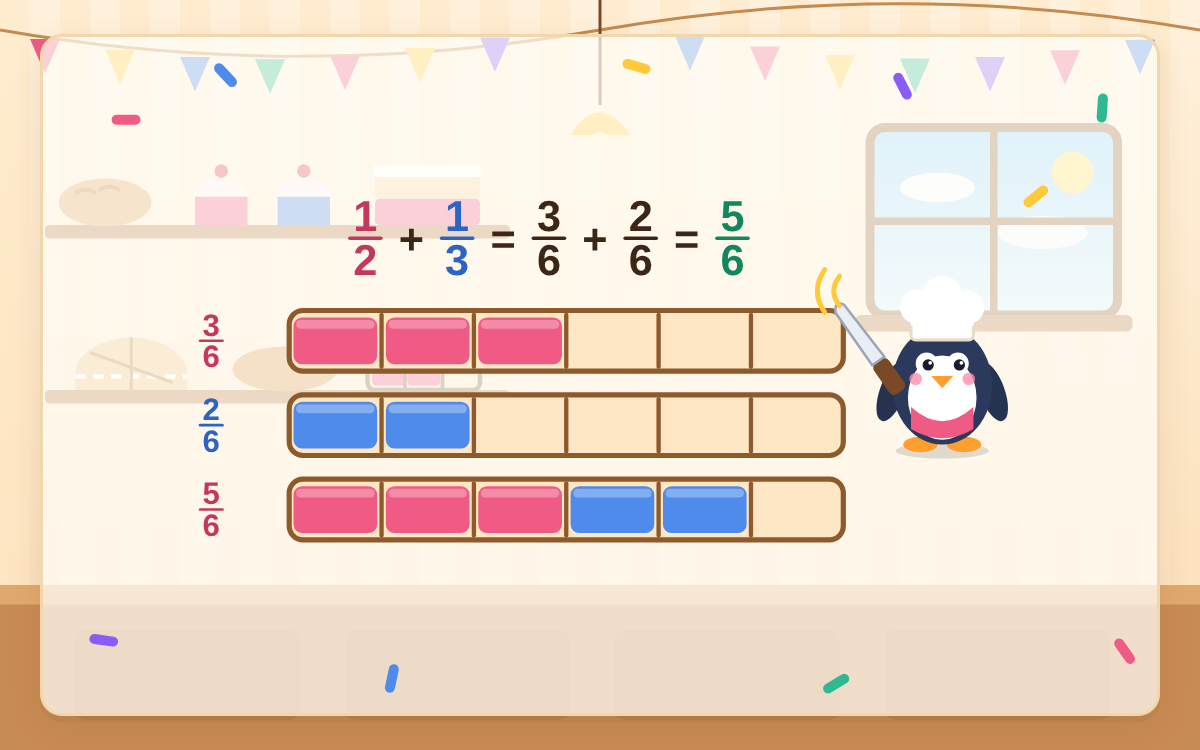
Adding and Subtracting Fractions is an interactive maths game that teaches children aged 9–11 to simplify, compare, order, add and subtract fractions, matching Year 6 of the national curriculum in England. Pip the penguin baker reads every line aloud, with captions on screen.
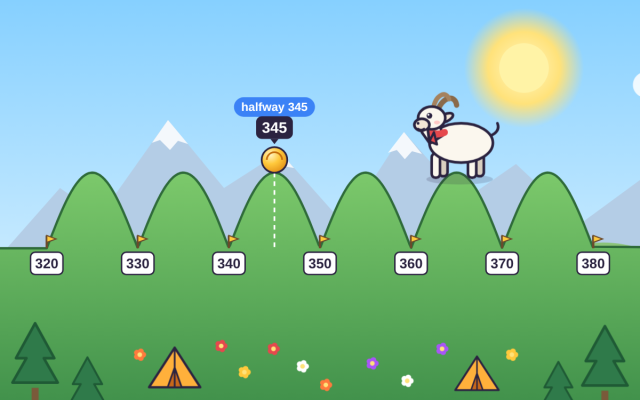
Players cut cake trays into equal slices and join them back together. They find the highest common factor to put a fraction in its simplest form, and use the lowest common multiple to give two fractions a common denominator. They drop improper fractions such as 7/4 onto a number line and type answers on a fraction keypad.
The game tackles common mix-ups head on, such as why 1/2 + 1/3 cannot be 2/5 and why a bigger denominator means smaller pieces. For mixed numbers, children learn to exchange a whole before subtracting. Optional warm-ups recap factors, multiples and mixed numbers first.
Questions and answers
How do you add fractions with different denominators?
To add fractions with different denominators, rewrite them with a common denominator first, then add the numerators and keep the denominator the same. For example, 1/2 + 1/3 = 3/6 + 2/6 = 5/6. You never add the denominators together.
How do you simplify a fraction?
You simplify a fraction by dividing the numerator and the denominator by the same common factor. Dividing by the highest common factor does it in one step, so 12/18 divided by 6 gives 2/3, which is in its simplest form.
How do you subtract mixed numbers when the first fraction is too small?
When the first fraction is smaller, exchange one whole for equal parts before you subtract. For 3 1/4 − 1 1/2, write 1/2 as 2/4, change 3 1/4 into 2 5/4, then subtract to get 1 3/4.
What age is this fractions game for?
The game is pitched at Year 6, for children aged 10 to 11, and matches the KS2 maths curriculum in England. Confident Year 5 children can play too, and optional warm-ups recap factors, multiples and mixed numbers before the harder chapters.
What does the fractions game include and how long does it take?
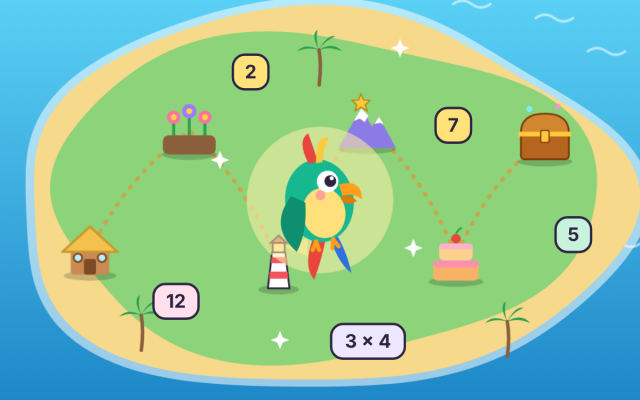
It includes five chapters with animated introductions, hands-on cake-cutting activities and typed answers, plus a 10-question Champion Challenge. Playing everything takes about 50 minutes, and children can start any chapter from the bakery map.
 TapLearn